CM Himanta flags Assam as creative digital economy hub
Synopsis
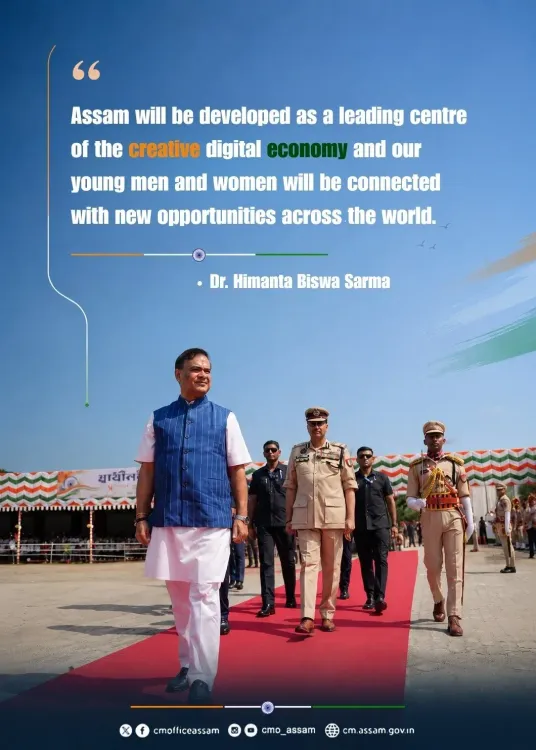
On Independence Day 2026, Assam CM Himanta Biswa Sarma called for the state to become a leading creative digital economy hub, emphasising connecting the state's youth to global opportunities as part of India's broader digital growth push.
Key Takeaways
Chief Minister Dr Himanta Biswa Sarma declared an ambition to make Assam a leading hub for the creative digital economy on Independence Day, 15 August 2026 .
The vision explicitly targets connecting Assam's youth to global opportunities, addressing persistent out-migration and youth unemployment concerns.
The 'creative digital economy' framing covers content, design, gaming, and platform entrepreneurship — not just conventional IT.
Assam has been aligning with India's Digital India programme (launched 2015 ) to reduce regional economic disparities.
Concrete follow-through — budget allocations, IT infrastructure, skill programmes, and private partnerships — will determine whether the vision translates into measurable outcomes.
On Independence Day, 15 August 2026, Chief Minister Dr Himanta Biswa Sarma set out a pointed ambition for Assam: transform the northeastern state into a leading hub for the creative digital economy and plug its youth directly into global opportunity. The message, shared by the Chief Minister's Office of Assam on X, landed on a day when the entire country was taking stock of how far it has come — and how far it still needs to go.
What Sarma is betting on
The framing is deliberate. By pairing 'creative' with 'digital economy', Sarma is signalling more than IT parks and coding bootcamps. The creative digital economy spans content production, gaming, design, animation, and platform-driven entrepreneurship — sectors where young people with smartphones and skills can compete globally without leaving their home state. For a region historically dependent on agriculture, tea, and oil, that is a meaningful pivot.
Assam has been working to align with India's Digital India programme, launched in 2015, which pushed states to build digital infrastructure and nurture local digital economies. Northeastern states have had ground to make up — but the gap is also an opportunity, because the cost base is lower and the talent pool is largely untapped.
Youth at the centre of the pitch
The explicit focus on 'connecting the State's youth to global opportunities' is the sharper half of the statement. Assam has a young population, and youth unemployment and out-migration have been persistent policy headaches. A credible digital economy strategy — backed by skill programmes, infrastructure investment, and private-sector partnerships — could reverse that flow. The question the Independence Day speech raises, without yet answering, is what concrete mechanisms follow the vision: state budget allocations, IT corridor announcements, or tie-ups with national startup platforms.
Where this fits India's northeast story
Across the northeast, state governments have been racing to reduce economic disparities with the rest of India by latching onto digital and services sectors. Sarma's articulation on Independence Day places Assam firmly in that competitive frame — not as a laggard seeking catch-up, but as a state with a specific hub ambition. Whether the infrastructure, policy bandwidth, and private investment follow will define whether this remains an aspiration or becomes a transformation.
The next test will be in the numbers: budget lines, job creation figures, and the count of young Assamese entrepreneurs who build globally without leaving home.
Frequently Asked Questions
What did Assam CM Himanta Biswa Sarma say on Independence Day 2026?
CM Himanta Biswa Sarma emphasised developing Assam into a leading hub for the creative digital economy and connecting the state's youth to global opportunities, as shared by the Chief Minister's Office on Independence Day, 15 August 2026.
What is the creative digital economy Sarma referred to?
The creative digital economy encompasses sectors such as content creation, gaming, animation, design, and platform-based entrepreneurship — areas where skilled youth can compete globally, often without relocating.
How does Assam's digital economy push fit India's national policy?
Assam's push aligns with India's Digital India programme, launched in 2015, which encourages states to build digital infrastructure, foster digital economies, and reduce regional economic disparities.
Why is youth connectivity to global opportunities important for Assam?
Assam has faced persistent youth unemployment and out-migration. A credible digital economy strategy could create local opportunities that retain talent and reduce the need for young people to move to larger cities.
What should we watch for after Sarma's Independence Day speech on the digital economy?
Key indicators to watch include state budget allocations for digital infrastructure, announcements of IT parks or skill development programmes, and any partnerships with national startup or digital platforms.