HP CM Office Vows to Break Drug Mafia, Launches Chitta-Mukt Phase 2
Synopsis
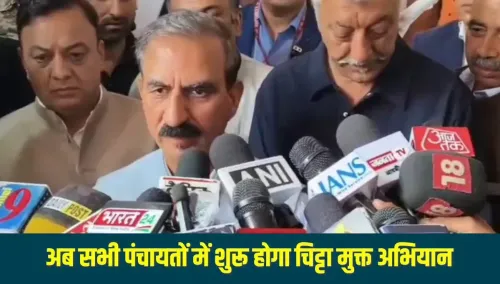
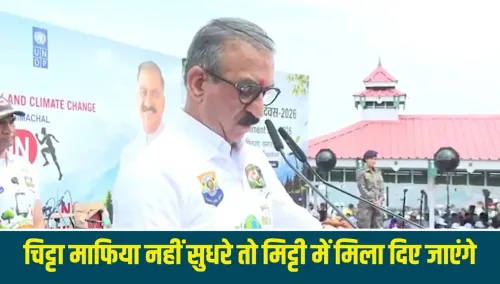
The Chief Minister's Office of Himachal Pradesh, on Independence Day 2026, vowed to dismantle drug mafias and announced the second phase of the Chitta-Mukt Abhiyan from Una on 7 September 2026, combining enforcement with youth employment to fight heroin abuse.
Key Takeaways
The Chief Minister's Office of Himachal Pradesh announced the second phase of the Chitta-Mukt Abhiyan on 15 August 2026 .
Phase 2 will launch from Una district on 7 September 2026 .
The campaign targets chitta (heroin) trafficking networks and pledges to 'break the back of drug mafias'.
The government is pairing anti-narcotics enforcement with youth employment schemes to address demand-side drivers of addiction.
Una was chosen as the launch site due to its proximity to Punjab and its position on known drug supply routes.
The campaign is designed as a multi-phase, society-wide effort with participation from all community sections.
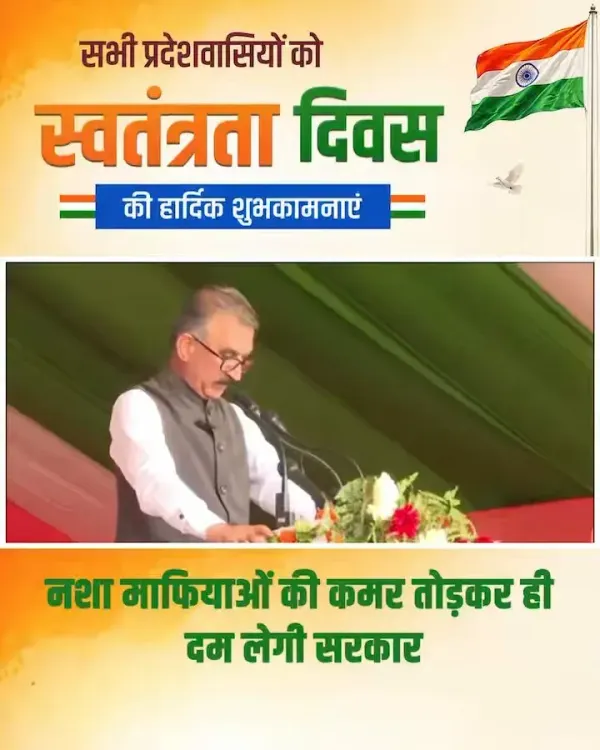
On Independence Day, 15 August 2026, the Chief Minister's Office of Himachal Pradesh drew a hard line against drug networks — promising to 'break the back of narcotics mafias' and announcing that the second phase of the state's flagship Chitta-Mukt Abhiyan will launch from Una on 7 September 2026.
A pledge on Independence Day, a deadline in September
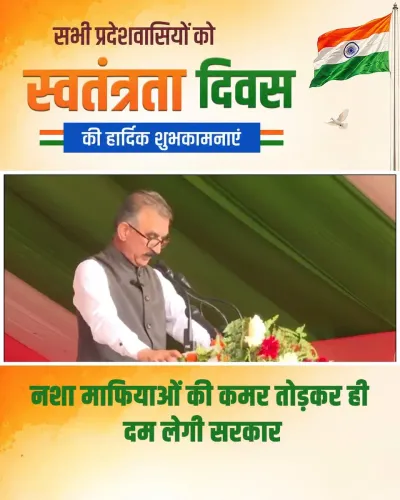
The official post, in Hindi, declared: 'Nasha mafiyon ki kamar todkar hi dam lenge' — 'We will not rest until the drug mafias are broken.' The message tied two urgent priorities together: giving youth employment and shielding them from chitta — the local name for heroin that has become Himachal Pradesh's most dangerous street drug. The government announced the second phase of the Chitta-Mukt Abhiyan (Chitta-Free Campaign) will begin in Una district, framing the effort as a societal partnership across all sections of the community.
Why Una — and why it matters
Una sits on Himachal Pradesh's southwestern edge, sharing a border with Punjab — a state that has long struggled with drug trafficking along routes that feed narcotics into the hills. Choosing Una as the launch site for the second phase is a deliberate geographic signal: the campaign is targeting the supply corridor, not just the symptoms downstream. Northern Indian states have increasingly recognised that enforcement alone cannot hold — demand-side drivers, chiefly unemployment among young men, must be addressed in parallel.
The dual strategy: lock up the supply, open up opportunity
The Himachal Pradesh government's approach pairs police action against trafficking networks with livelihood and employment schemes for youth. This twin-track model — crack down on the mafia while creating alternatives for young people vulnerable to addiction — has become the template for anti-narcotics campaigns across northern India. The Chitta-Mukt Abhiyan's multi-phase design, drawing in civil society, local communities, and government departments, reflects that broader pattern of sustained, society-wide pressure rather than one-off raids.
The Independence Day timing of the announcement was not incidental. Framing an anti-drug vow on a national holiday amplifies its symbolic weight and signals that the government intends the campaign to be seen as a civic — not merely administrative — mission.
All eyes now turn to 7 September 2026 and Una: whether the second phase delivers measurable disruption to trafficking networks, and whether the employment-linked outreach reaches the young people most at risk.
Point of View
Geography-driven interdiction. Pairing enforcement with youth employment is a politically astute move: it addresses the criticism that anti-drug drives punish victims rather than root causes. Announced on Independence Day, the campaign carries clear symbolic intent — positioning the ruling dispensation as protectors of youth and social order ahead of any future electoral cycle. The multi-phase, civil-society model also distributes accountability broadly, making the campaign harder to dismiss as a government PR exercise.
NationPress
30 Sept 2026
Frequently Asked Questions
What is the Chitta-Mukt Abhiyan in Himachal Pradesh?
The Chitta-Mukt Abhiyan is a state-level anti-drug campaign launched by the Himachal Pradesh government to combat chitta (heroin) abuse and dismantle trafficking networks, while also linking enforcement efforts to youth employment programmes.
When and where will Phase 2 of the Chitta-Mukt Abhiyan begin?
Phase 2 of the Chitta-Mukt Abhiyan is scheduled to begin on 7 September 2026 from Una district in Himachal Pradesh.
Why was Una chosen for the launch of Chitta-Mukt Phase 2?
Una was selected because of its location on Himachal Pradesh's border with Punjab, which lies along known drug supply and trafficking routes, making it a strategic entry point for narcotics entering the state.
What does 'chitta' mean in the context of Himachal Pradesh's drug crisis?
'Chitta' is the local term for heroin or synthetic drug compounds that have become a major substance abuse problem among youth in Himachal Pradesh and other northern Indian states.
How does the HP government plan to fight drug abuse beyond police action?
The Himachal Pradesh government is combining narcotics enforcement against drug mafias with youth employment initiatives, recognising that economic opportunity reduces the vulnerability of young people to addiction.