CM Sukhu Administers Anti-Drug Oath to New Panchayat Heads
Synopsis
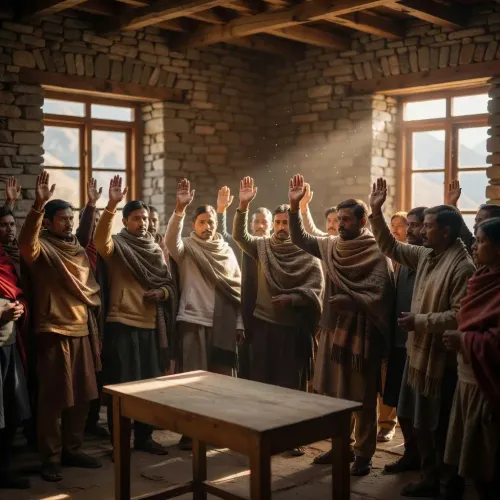
Himachal Pradesh CM Sukhvinder Singh Sukhu administered an oath against chitta to newly elected panchayat pradhan and up-pradhan representatives at Shimla's Peterhoff Hotel on 15 June 2026, deepening the state's grassroots anti-drug campaign by formally enlisting elected local leaders.
Key Takeaways
CM Sukhvinder Singh Sukhu administered an anti-chitta oath to newly elected panchayat pradhan and up-pradhan representatives at Peterhoff Hotel, Shimla on 15 June 2026 .
Chitta , a synthetic white-powder drug, has been spreading rapidly across rural Himachal Pradesh , particularly among youth.
The state government described its anti-narcotics drive as a 'jan andolan' (people's movement) now reaching the panchayat level.
The initiative aligns with the national Nasha Mukt Bharat Abhiyan launched in August 2020 , which tasks local bodies with substance-abuse prevention.
Elected panchayat leaders are now formally committed to supporting the campaign alongside their regular development functions.
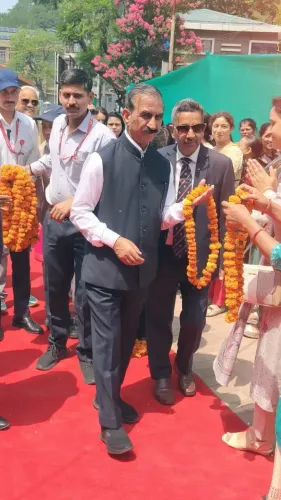
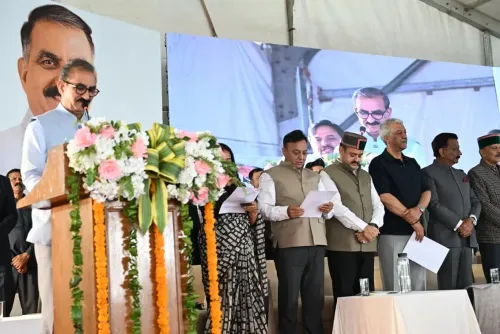
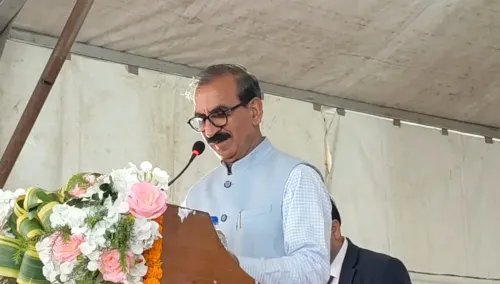
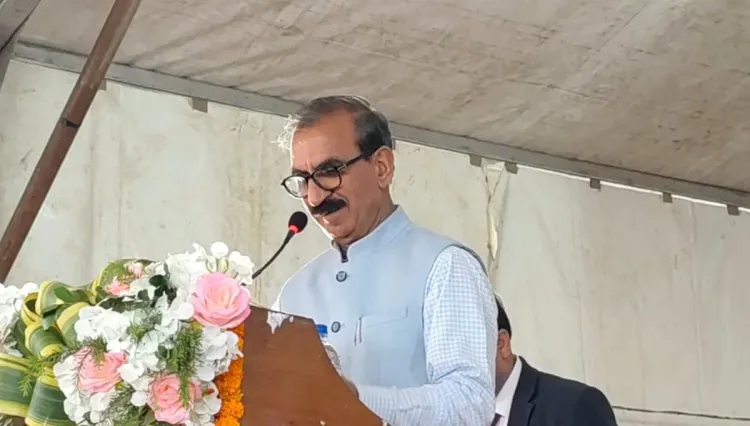
Himachal Pradesh Chief Minister Sukhvinder Singh Sukhu administered an oath against chitta (a locally prevalent synthetic drug) to newly elected panchayat pradhan and up-pradhan representatives at the historic Peterhoff Hotel in Shimla on 15 June 2026, formally enlisting grassroots leaders in the state's anti-narcotics drive.
Context
Posting in Hindi, CM Sukhu stated: 'शिमला के पीटरहॉफ होटल में नव-निर्वाचित पंचायत प्रधानों एवं उप-प्रधानों को चिट्टे के विरुद्ध शपथ दिलाई' — 'At Peterhoff Hotel in Shimla, newly elected panchayat pradhan and up-pradhan representatives were administered an oath against chitta.' Chitta is a white-powder synthetic drug, typically heroin mixed with other substances, that has spread rapidly across Himachal Pradesh in recent years, particularly affecting youth in rural areas.
The Chief Minister added that the state government is running a 'comprehensive and powerful campaign against addiction,' and that the campaign is 'moving forward rapidly and effectively down to the panchayat level.' He expressed confidence that newly elected panchayat representatives would stand 'with full resolve and commitment' against chitta alongside their development responsibilities.
Policy Backdrop
The oath ceremony aligns with the Nasha Mukt Bharat Abhiyan, the national anti-substance-abuse campaign launched by the Government of India in August 2020, which mandates state governments to implement awareness and prevention measures through local bodies. Himachal Pradesh has been among the states in northern India most affected by cross-border drug flows, prompting successive administrations to seek community-level interventions.
Under the 73rd Constitutional Amendment, Panchayati Raj Institutions are empowered to address local social welfare concerns, making elected panchayat heads a natural fit for grassroots anti-drug mobilisation. The Sukhu government, which assumed office in December 2022, has framed the campaign as a 'jan andolan' — a people's movement — seeking voluntary community participation rather than purely enforcement-led action.
Stakeholders and Impact
Newly elected panchayat pradhan and up-pradhan representatives are now formally committed, through oath, to actively participate in identifying, reporting, and creating awareness about chitta use in their villages. Rural communities across Himachal Pradesh stand to be directly affected, as panchayat leaders serve as the most accessible point of contact between the state administration and citizens at the village level.
The move signals an intent to decentralise anti-drug accountability, distributing responsibility beyond police and excise departments to elected representatives who carry local social credibility. Families of individuals affected by drug dependency, as well as youth groups, are among the stakeholders most likely to interact with these newly oath-bound local leaders.
What's Next
Attention will now turn to whether the state government formalises village-level monitoring committees under the campaign, and how panchayat participation will be tracked and evaluated. Any upcoming Himachal Pradesh legislative assembly session is likely to see questions on the campaign's reach, resource allocation, and measurable outcomes at the panchayat tier.
Point of View
CM Sukhu is making elected local leaders politically accountable for anti-drug outcomes — a calculated escalation beyond awareness drives. This move fits a broader pattern across northern Indian states of decentralising social-welfare mandates to panchayats, leveraging their ground-level reach where police and health departments have limited penetration. The 'jan andolan' framing also serves a dual purpose: it builds community ownership while insulating the government from sole accountability if results are slow. The real test will be whether village-level monitoring structures and resources follow the symbolism of the oath.
NationPress
26 Sept 2026
Frequently Asked Questions
What is chitta and why is it a problem in Himachal Pradesh?
Chitta is a white-powder synthetic drug, typically a mixture of heroin and other substances, that has spread rapidly across Himachal Pradesh in recent years, particularly affecting rural youth. Its low cost and easy availability, partly linked to cross-border drug flows through northern India, have made it a major public health concern in the state.
What oath did CM Sukhu administer to panchayat heads in Shimla?
CM Sukhu administered an oath against chitta — formally committing newly elected panchayat pradhan and up-pradhan representatives to actively support the state government's anti-drug campaign at the village level, alongside their regular development duties.
What is the Nasha Mukt Bharat Abhiyan?
Nasha Mukt Bharat Abhiyan is a national campaign launched by the Government of India in August 2020 to combat substance abuse through community awareness, treatment, and local-body participation. States including Himachal Pradesh implement it through grassroots institutions such as panchayats.
Where was the oath ceremony held?
The ceremony was held at Peterhoff Hotel in Shimla, a historic government venue used for official state events and ceremonies in Himachal Pradesh.
How does involving panchayat leaders help the anti-drug campaign?
Panchayat pradhan and up-pradhan are the most accessible elected representatives for villagers. Their involvement allows the anti-drug campaign to reach communities where state agencies have limited presence, and their local social credibility can make awareness and reporting efforts more effective than top-down enforcement alone.