CM Himanta Flags Assam Flood Relief With 211 MT Rice Distributed
Synopsis
Assam Chief Minister Himanta Biswa Sarma on 27 July 2026 announced that over 211 MT of rice, drinking water, tarpaulins and other essentials have been distributed to flood-affected families as relief operations intensify across the state during the 2026 monsoon season.
Key Takeaways
CM Himanta Biswa Sarma confirmed on 27 July 2026 that flood relief is 'in full swing' across Assam .
Over 211 metric tonnes of rice have been dispatched to flood-affected families alongside drinking water and tarpaulins.
The Assam State Disaster Management Authority (ASDMA) is the nodal body coordinating relief under the Disaster Management Act, 2005 .
Assam faces recurrent annual flooding from the Brahmaputra and Barak river systems, displacing lakhs each monsoon season.
The next phase will focus on central government assistance, potential NDRF reinforcements, and medium-term rehabilitation of affected families.
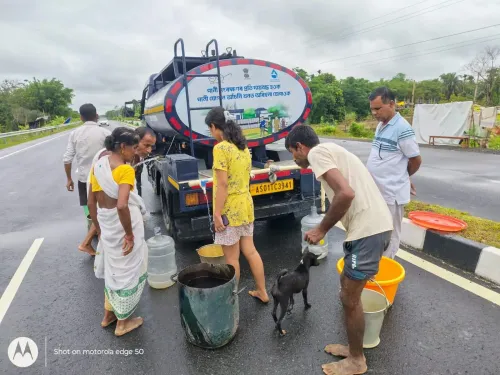
Assam Chief Minister Himanta Biswa Sarma on Monday, 27 July 2026, said relief operations are actively under way across flood-affected districts of the state, with over 211 metric tonnes (MT) of rice, along with drinking water, tarpaulins and other essentials, already reaching affected families.
Context
Assam faces annual monsoon flooding driven by the Brahmaputra and Barak river systems, which inundate large swathes of the state each year, displacing lakhs of people and damaging crops and infrastructure. The 2026 monsoon season has continued this grim pattern, prompting state authorities to activate emergency relief machinery across multiple districts.
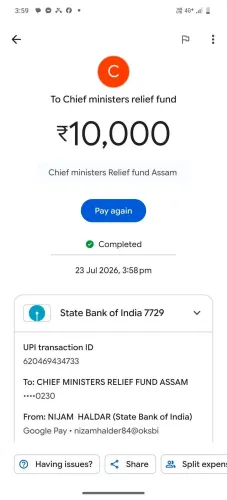
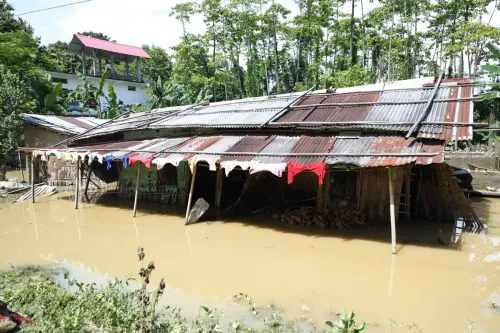
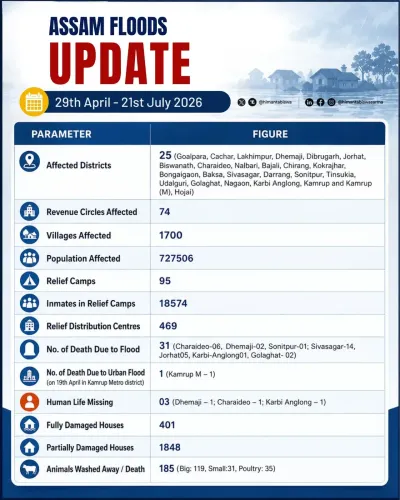
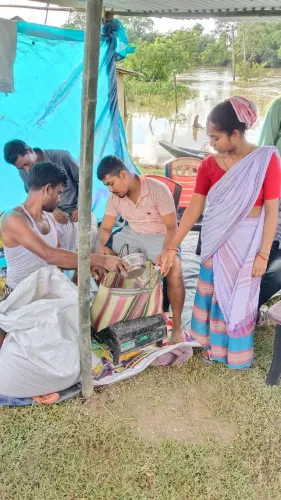
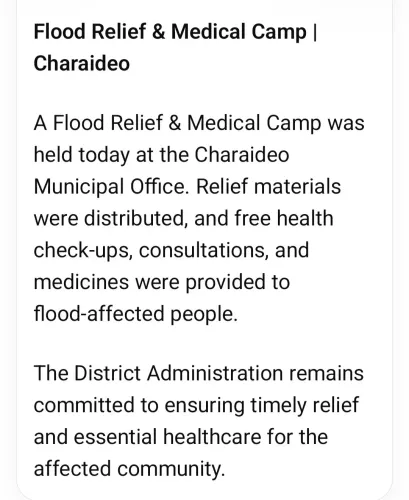
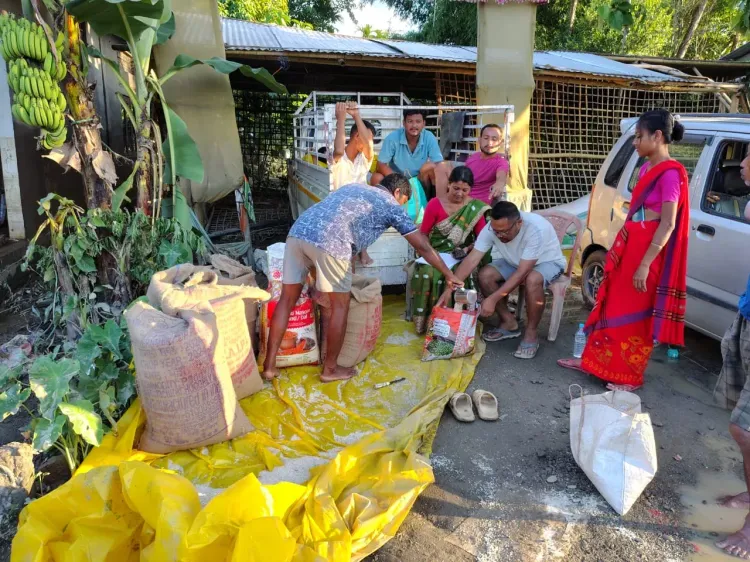
In his post on X, CM Sarma stated: 'Relief efforts are in full swing across flood affected areas of Assam. So far, over 211 MT of rice, along with drinking water, tarpaulins and other essentials, has reached affected families.' The post was accompanied by four images showing relief distribution on the ground.
Policy Backdrop
Relief operations of this nature are governed by the Disaster Management Act, 2005, which established state disaster management authorities and mandated annual flood preparedness and relief plans. In Assam, the Assam State Disaster Management Authority (ASDMA) is the nodal agency responsible for coordinating evacuation, emergency supplies and the distribution of essentials such as rice, tarpaulins and drinking water.
Successive state governments have followed a broadly similar relief template — distributing food grain, shelter material and safe drinking water as the first line of response. The current operation continues that established pattern of state-led disaster management in India's Northeast.
Stakeholders and Impact
The primary beneficiaries are flood-affected families across Assam's vulnerable districts, many of whom lose access to food, clean water and shelter within hours of rivers breaching embankments. The distribution of over 211 MT of rice signals a large-scale mobilisation, though the total number of beneficiaries and districts covered has not been specified in the Chief Minister's post.
CM Sarma, who also serves as convenor of the North-East Democratic Alliance (NEDA), has been an active communicator on disaster response, regularly using social media to update the public on relief progress. Such public accountability messaging also serves to coordinate expectations between district administrations and relief agencies.
What's Next
Attention will now turn to the scale of central government assistance and whether additional deployments from the National Disaster Response Force (NDRF) are ordered as the 2026 monsoon progresses. Relief operations typically intensify through August before receding with the monsoon, though late-season flooding along the Brahmaputra can extend the humanitarian footprint well into September.
With rice and essentials already in transit, the next critical phase will involve assessing crop damage, restoring road connectivity to cut-off villages, and planning medium-term rehabilitation for families whose homes and livelihoods have been lost to floodwaters.
Point of View
While specific, leaves open questions about total beneficiary coverage and district-wise reach, which will matter for assessing operational adequacy as the monsoon peaks. Assam's chronic flood vulnerability means each season's relief effort is also a political performance, testing the state's administrative machinery and the Chief Minister's crisis-management credentials. How swiftly the state transitions from emergency relief to rehabilitation and embankment repair will define the longer-term policy verdict on this year's response.
NationPress
27 Jul 2026
Frequently Asked Questions
How much rice has been distributed in Assam flood relief 2026?
According to CM Himanta Biswa Sarma , over 211 metric tonnes of rice have been distributed to flood-affected families in Assam as of 27 July 2026 , along with drinking water, tarpaulins and other essentials.
Which agency manages flood relief in Assam?
The Assam State Disaster Management Authority (ASDMA) is the nodal state agency responsible for coordinating flood relief, evacuation and distribution of essentials, operating under the framework of the Disaster Management Act, 2005 .
Why does Assam flood every year?
Assam experiences annual monsoon flooding primarily due to the Brahmaputra and Barak river systems, which swell significantly during the June-September monsoon season, breaching embankments and inundating low-lying districts across the state.
What relief materials are being provided to Assam flood victims?
The state government has confirmed distribution of rice (over 211 MT) , drinking water , tarpaulins and other essential supplies to flood-affected families across Assam as of late July 2026.
Will NDRF be deployed in Assam floods 2026?
As of 27 July 2026 , CM Sarma's update focused on relief supplies already distributed. Analysts are watching whether additional National Disaster Response Force (NDRF) deployments will be ordered as the monsoon progresses through August.