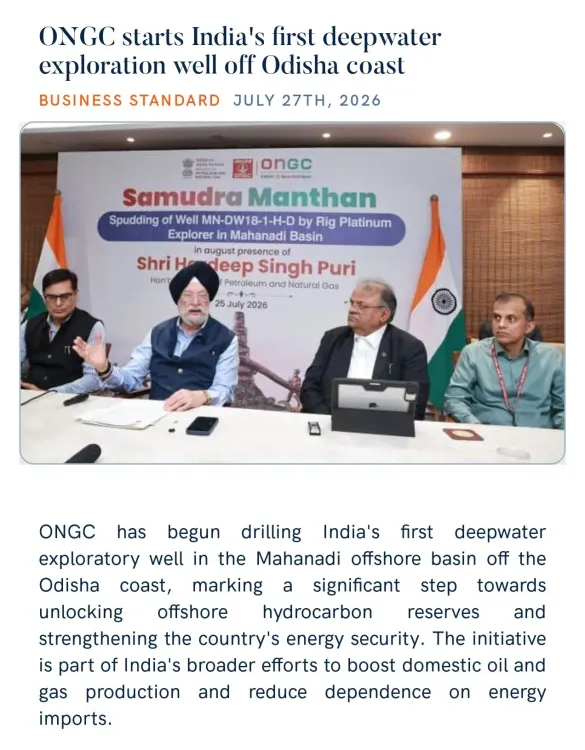
CM Majhi Hails ONGC Deepwater Drilling in Mahanadi Basin
Synopsis
Odisha Chief Minister Mohan Charan Majhi has welcomed ONGC's first deepwater exploratory drilling in the Mahanadi offshore basin, describing it as a milestone under PM Modi's energy self-reliance push and crediting Union Minister Hardeep Singh Puri and ONGC for advancing the SamudraManthan campaign.
Key Takeaways
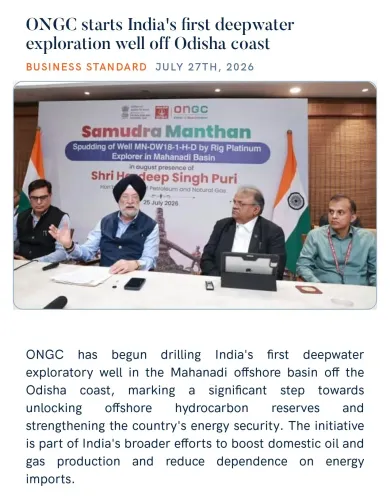
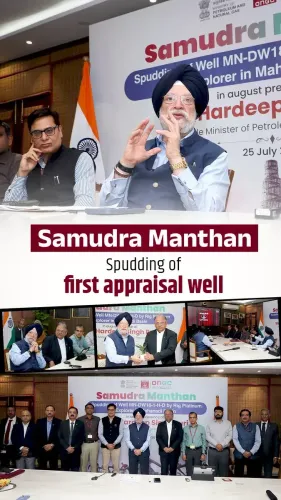
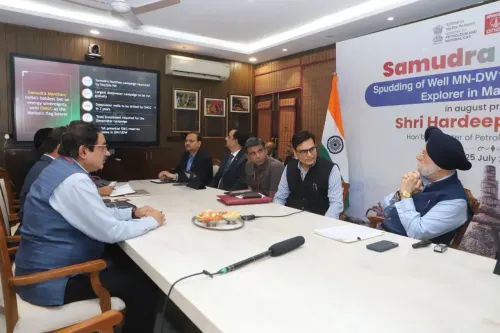
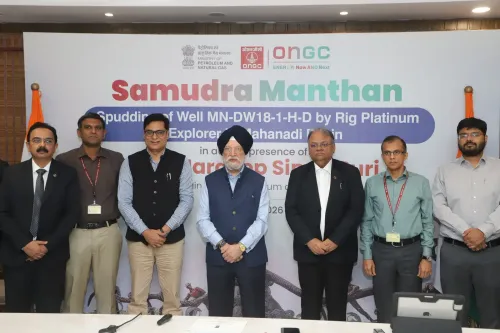
ONGC has commenced its first deepwater exploratory drilling in the Mahanadi offshore basin off the Odisha coast.
CM Mohan Charan Majhi described the development as a significant milestone in India's pursuit of energy security and reduced import dependence.
The drilling campaign, branded SamudraManthan , builds on earlier geological finds referred to as the Utkal and Konark discoveries.
The move aligns with the Hydrocarbon Exploration and Licensing Policy (HELP) framework introduced in 2016 and the Open Acreage Licensing Policy (OALP) of 2017 .
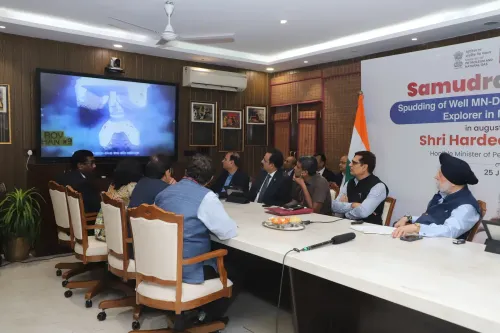
Union Minister Hardeep Singh Puri and the ONGC team were specifically credited by CM Majhi for advancing the campaign.
Successful finds could reduce India's crude oil import dependence, currently estimated at over 85 per cent of national requirements.
Odisha Chief Minister Mohan Charan Majhi on Monday, 27 July 2026, welcomed the commencement of ONGC's first deepwater exploratory drilling in the Mahanadi offshore basin, calling it a significant milestone in India's pursuit of energy security and self-reliance.
Context
CM Majhi described Odisha as 'a strategic frontier in India's journey towards energy security,' pointing to the new drilling campaign as evidence of the state's growing centrality to the country's hydrocarbon ambitions. He credited the development to the 'visionary leadership' of Prime Minister Narendra Modi and expressed appreciation to Union Minister Hardeep Singh Puri and the ONGC team for advancing the #SamudraManthan mission. The post signals a concerted effort by the BJP-led state and central governments to frame Odisha's offshore acreage as a cornerstone of national energy policy.
Policy Backdrop
India's push into deepwater basins accelerated after the Hydrocarbon Exploration and Licensing Policy (HELP) was introduced in 2016, replacing the earlier New Exploration Licensing Policy regime and shifting to revenue-sharing contracts designed to lower barriers for explorers. The Open Acreage Licensing Policy (OALP), launched in 2017, further allowed companies to bid for blocks throughout the year, opening up sedimentary basins including the Mahanadi to sustained interest. The Mahanadi offshore basin sits alongside the Krishna-Godavari and Cauvery basins as part of India's eastern margin plays, all of which have been progressively brought under exploration contracts to reduce the country's heavy dependence on crude oil imports.
ONGC, India's largest public-sector oil and gas exploration company, has been the primary vehicle for state-directed exploration in frontier and deepwater acreage. The SamudraManthan campaign represents a focused deepwater push in India's eastern offshore basins, building on earlier geological finds referenced as the Utkal and Konark discoveries in the Mahanadi region. CM Majhi noted that the new campaign 'will strengthen geological exploration, enhance domestic energy production and open new possibilities for future commercial development.'
Stakeholders and Impact
For Odisha, successful deepwater hydrocarbon production could transform the state's coastal economy, generating royalties, employment, and downstream industrial activity in a region that has historically depended on agriculture, mining, and steel manufacturing. The broader hydrocarbon exploration sector stands to benefit from demonstrated commercial viability in the Mahanadi basin, which could attract private and international co-investors under existing licensing frameworks. At the national level, any material discovery would contribute to Prime Minister Modi's Atmanirbhar Bharat agenda of reducing import dependence — India currently imports over 85 per cent of its crude oil requirements.
Coastal communities and fishing interests along the Odisha shoreline are among the stakeholders who will watch the drilling campaign closely, as deepwater operations carry environmental and livelihood implications for the maritime zone. Regulatory oversight from the Directorate General of Hydrocarbons and environmental clearance processes will govern the pace of activity.
What's Next
The immediate focus will be on results from the initial deepwater exploratory wells, which will determine whether the Mahanadi basin holds commercially viable hydrocarbon reserves. Positive findings could trigger appraisal drilling, block auctions, and eventually production-sharing or revenue-sharing development contracts that bring private capital into the basin. Union Minister Hardeep Singh Puri's ministry is expected to remain closely involved in shaping the regulatory and commercial framework as exploration data accumulates. Odisha's positioning as 'India's next major energy frontier,' as articulated by CM Majhi, will be tested by the geological outcomes of this first deepwater campaign.
Point of View
Majhi reinforces the BJP's coordinated messaging that energy self-reliance is a whole-of-government achievement. The timing also reflects a broader pattern in which state governments in the BJP fold amplify central infrastructure milestones to consolidate their own political identity. Whether the Mahanadi basin delivers commercially viable reserves will ultimately determine how durable this frontier narrative proves to be.
NationPress
27 Jul 2026
Frequently Asked Questions
What is ONGC's SamudraManthan campaign?
SamudraManthan is ONGC's deepwater exploration campaign focused on India's eastern offshore basins, including the Mahanadi basin off the Odisha coast, aimed at unlocking hydrocarbon potential to reduce India's crude oil import dependence.
What is the Mahanadi offshore basin?
The Mahanadi offshore basin is a sedimentary basin located off the coast of Odisha in the Bay of Bengal. It is considered part of India's eastern margin plays and has been targeted for deepwater hydrocarbon exploration alongside the Krishna-Godavari and Cauvery basins.
What did Odisha CM Mohan Charan Majhi say about ONGC's deepwater drilling?
CM Majhi welcomed the commencement of ONGC's first deepwater exploratory drilling in the Mahanadi basin, calling it a milestone for India's energy security and praising PM Modi's leadership as well as Union Minister Hardeep Singh Puri and ONGC for advancing the SamudraManthan mission.
What is India's Hydrocarbon Exploration and Licensing Policy?
The Hydrocarbon Exploration and Licensing Policy (HELP), introduced in 2016, replaced the earlier NELP regime and shifted to revenue-sharing contracts to attract greater investment in domestic oil and gas exploration, including in frontier deepwater basins.
How dependent is India on crude oil imports?
India imports over 85 per cent of its crude oil requirements, making domestic hydrocarbon exploration in basins like the Mahanadi offshore a strategic priority under the government's Atmanirbhar Bharat energy self-reliance agenda.