VP Lauds Odisha Deep Sea Fishing Mission as Blue Economy Leap

Synopsis
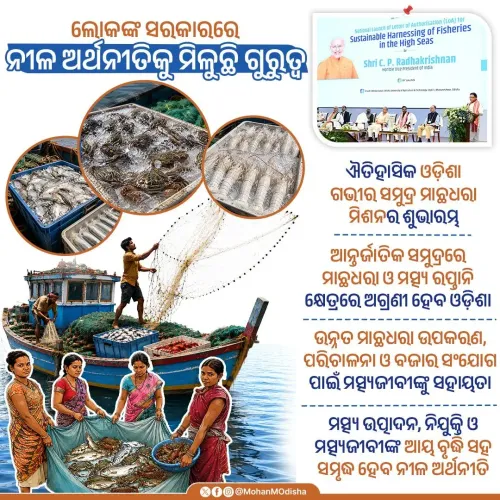
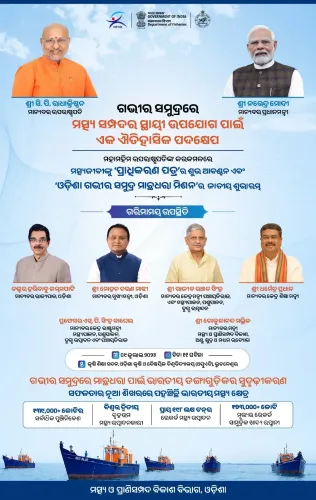
The Vice President of India has publicly praised the Odisha government's launch of the Odisha Deep Sea Fishing Mission, calling it a historic step for coastal livelihoods and the blue economy. Chief Minister Mohan Charan Majhi received personal congratulations for the initiative, which aims to make Odisha a leading maritime hub aligned with Viksit Bharat goals.
Key Takeaways
The Chief Minister's Office of Odisha shared a statement from the Vice President of India on 9 July 2026 endorsing the Odisha Deep Sea Fishing Mission .
The Vice President called the mission 'historic' and 'visionary,' directly congratulating CM Mohan Charan Majhi for the initiative.
Odisha has a 480-kilometre coastline along the Bay of Bengal, providing a significant maritime resource base for deep-sea expansion.
The mission aligns with national frameworks including the Sagarmala Project (2015) , Pradhan Mantri Matsya Sampada Yojana (2020) and the National Policy on Marine Fisheries 2017 .
Fishing communities and the coastal maritime sector are the primary identified beneficiaries of the new mission.
Budgetary details, operational parameters and central-state funding arrangements for the mission are yet to be officially announced.
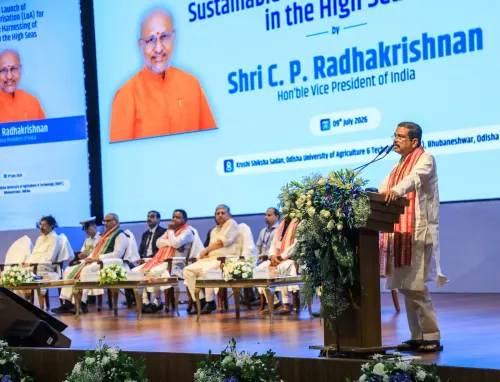
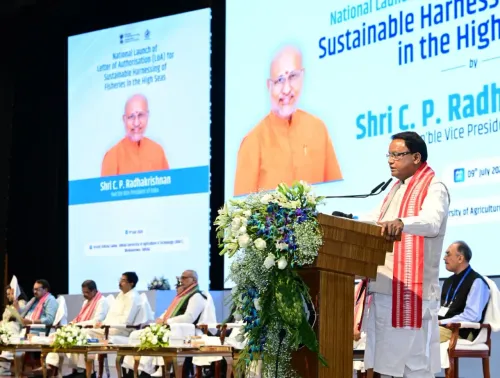
The Chief Minister's Office of Odisha on 9 July 2026 shared a statement from Vice President of India Shri Jagdeep Dhankhar congratulating the Government of Odisha on the launch of the Odisha Deep Sea Fishing Mission, calling it a 'historic' and 'visionary' initiative that positions Odisha as a leading maritime hub of the country.
Context
In his statement, the Vice President declared: 'Blue Economy is the foundation of a prosperous coastal future.' He expressed delight at the launch and said the mission would 'strengthen the livelihoods of our fishing communities, unlock the immense potential of the ocean economy and establish Odisha as a leading maritime hub of the country.' He specifically congratulated Chief Minister Shri Mohan Charan Majhi for taking what he described as a 'landmark step towards building a stronger Blue Economy and a Viksit Bharat.'
The endorsement from the country's second-highest constitutional authority lends significant political and institutional weight to the state government's fisheries push. Odisha has a coastline of approximately 480 kilometres along the Bay of Bengal, giving it substantial maritime resources that have historically been underutilised beyond near-shore fishing.
Policy Backdrop
The Odisha Deep Sea Fishing Mission sits within a layered national policy architecture. The Sagarmala Project, announced in 2015, sought to drive port-led coastal development and formalise India's blue economy ambitions. The Pradhan Mantri Matsya Sampada Yojana, launched in 2020, further modernised fisheries infrastructure and set targets for increasing fish production across coastal states.
The National Policy on Marine Fisheries 2017 provided a sustainable deep-sea fishing framework that state governments were encouraged to adopt. Odisha's new mission appears to operationalise several of these national directives at the state level, reflecting a convergence of central intent and state execution. The broader policy direction, encapsulated in the phrase 'Viksit Bharat', links ocean-resource development to India's self-reliance and employment goals.
Stakeholders and Impact
The primary beneficiaries identified in the Vice President's statement are fishing communities along Odisha's coast. Deep-sea fishing, as distinct from near-shore or artisanal fishing, requires larger vessels, advanced navigation equipment and cold-chain logistics — areas where state-backed missions can reduce the capital barrier for small and medium fishers.
The coastal maritime sector more broadly stands to gain from infrastructure upgrades and potential export opportunities that a structured deep-sea programme can catalyse. Other coastal states have pursued similar diversification strategies, and Odisha's move signals competitive intent within India's maritime economy landscape. Fishing cooperatives, vessel manufacturers and port-side processing units are among the stakeholder groups likely to see direct policy attention under the mission.
What's Next
Specific details — including the budgetary outlay, operational parameters and central-state funding arrangements for the Odisha Deep Sea Fishing Mission — are expected to emerge through subsequent state budget notifications or announcements by the Odisha Fisheries Department. Regulatory clearances for deep-sea operations, vessel licensing norms and environmental compliance frameworks will be closely watched by industry stakeholders.
With the Vice President's public endorsement now on record, the mission is likely to attract attention at the national level, potentially accelerating central support under existing fisheries schemes. How CM Mohan Charan Majhi's government translates this political momentum into implementation milestones will determine whether Odisha can credibly claim the mantle of India's foremost maritime hub.
Point of View
Which can accelerate central funding and regulatory support. For CM Mohan Charan Majhi, who took office in 2024, the mission represents an early opportunity to stamp a distinct economic identity on his tenure by leveraging Odisha's underutilised 480-kilometre coastline. The framing around 'Viksit Bharat' is deliberate, tying a state-level fisheries push to the ruling dispensation's national development narrative and broadening its political appeal. The real test will come at implementation — whether vessel support, cold-chain infrastructure and licensing frameworks materialise quickly enough to translate political momentum into measurable livelihood gains for coastal communities.
NationPress
8 Oct 2026
Frequently Asked Questions
What is the Odisha Deep Sea Fishing Mission?
The Odisha Deep Sea Fishing Mission is a state government initiative launched to expand deep-sea fishing capacity, support the livelihoods of coastal fishing communities and position Odisha as a leading maritime hub in India.
Why did the Vice President congratulate Odisha on the fishing mission?
The Vice President praised the mission as a 'historic' and 'visionary' step that advances India's blue economy goals and strengthens livelihoods for Odisha's coastal fishing communities, aligning with the broader Viksit Bharat development vision.
Who is the Chief Minister of Odisha in 2026?
Mohan Charan Majhi is the Chief Minister of Odisha, having assumed office in 2024. He was personally congratulated by the Vice President for launching the Deep Sea Fishing Mission.
How does the Odisha Deep Sea Fishing Mission relate to national fisheries policy?
The mission builds on national frameworks including the Sagarmala Project (2015), the Pradhan Mantri Matsya Sampada Yojana (2020) and the National Policy on Marine Fisheries 2017, which collectively established India's blue economy and deep-sea fishing development agenda.
What is India's blue economy and why does it matter for Odisha?
India's blue economy refers to the sustainable use of ocean resources for economic growth, including fisheries, shipping and coastal tourism. Odisha, with a 480-kilometre Bay of Bengal coastline, is well-placed to benefit from deep-sea fishing expansion, export growth and maritime infrastructure development.