CM Samrat Choudhary Backs India-Australia Uranium Deal
Synopsis
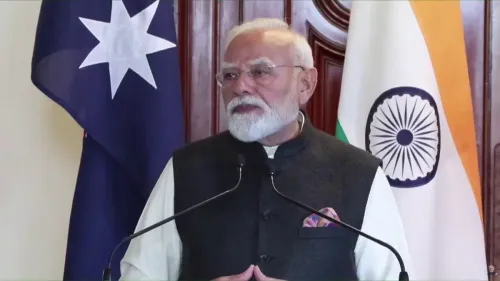
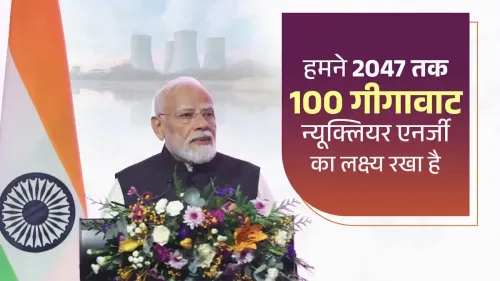
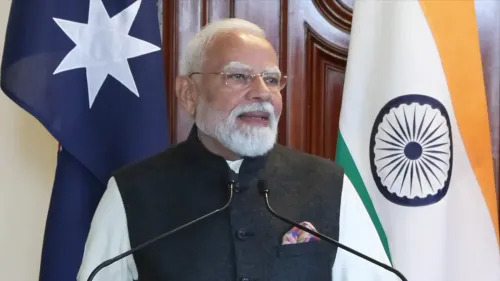
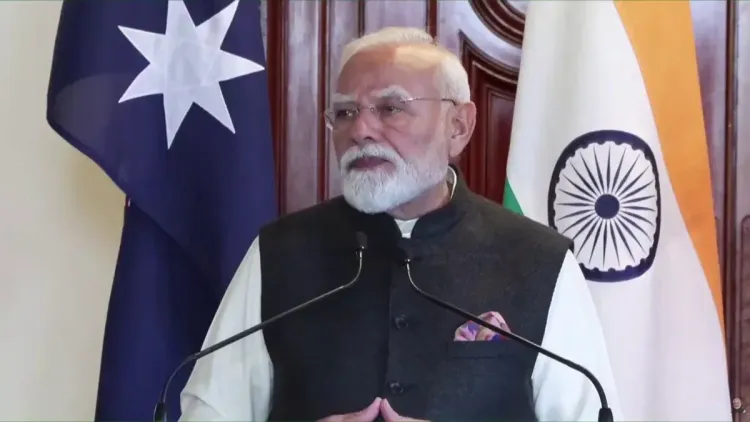
Bihar Chief Minister Samrat Choudhary on 9 July 2026 welcomed the India-Australia uranium supply agreement, saying it will bolster India's energy security and give new momentum to the Viksit Bharat 2047 vision under PM Modi's leadership.
Key Takeaways
Bihar CM Samrat Choudhary publicly endorsed the India-Australia uranium supply agreement on 9 July 2026 .
The agreement builds on the India-Australia Civil Nuclear Cooperation Agreement first signed in 2014 , enabling uranium exports under IAEA safeguards .
India is targeting 500 GW of non-fossil fuel capacity by 2030 and net-zero emissions by 2070 , with nuclear power as a key pillar.
The deal supports fuel supply diversification beyond traditional partners Russia and Kazakhstan .
The development is framed within the Viksit Bharat 2047 vision of a fully developed, energy self-reliant India.
Implementation milestones, shipment volumes, and reactor integration timelines remain to be confirmed in forthcoming parliamentary updates.
Bihar Chief Minister Samrat Choudhary on Thursday, 9 July 2026 welcomed a significant uranium supply agreement between India and Australia, stating that the deal would strengthen the country's energy security and accelerate the vision of a developed India by 2047. Posting on X, the senior BJP leader credited the leadership of Prime Minister Narendra Modi for setting new benchmarks in energy self-reliance and clean energy.
In his post, Choudhary wrote: 'Bharat-Australia ke beech uranium aapoorti ko lekar hua yeh mahatvapurna samjhauta desh ki urja suraksha ko sashakt karega' — ('This important agreement on uranium supply between India and Australia will strengthen the country's energy security') — and added that it would give 'new momentum to the resolve of Viksit Bharat 2047.'
Context
The post comes in the backdrop of India's sustained push to diversify its nuclear fuel supply chain. India and Australia have maintained a civil nuclear cooperation framework since a landmark agreement signed in 2014, which opened the door for Australian uranium exports to India for peaceful power generation under IAEA safeguards. The latest development appears to mark a fresh milestone in operationalising that framework.
Australia is one of the world's largest uranium producers, and its partnership with India is seen as a strategic complement to India's existing supplier relationships with countries such as Russia and Kazakhstan.
Policy Backdrop
India's civil nuclear programme is overseen by the Nuclear Power Corporation of India (NPCIL), which is expanding domestic reactor capacity to meet ambitious clean energy targets. The government has set a goal of 500 GW of non-fossil fuel capacity by 2030 and net-zero emissions by 2070, with nuclear power earmarked as a key pillar alongside solar and wind.
Uranium supply agreements with reliable partners directly feed into this roadmap, reducing dependence on any single source and providing fuel security for both existing and planned reactors. The Viksit Bharat 2047 vision — a government framework targeting a fully developed India by the centenary of independence — explicitly includes energy self-reliance as a foundational pillar.
Stakeholders and Impact
The primary beneficiaries of expanded uranium supply are India's nuclear power sector and, by extension, the country's energy consumers, particularly in states with high industrial power demand. Greater fuel security enables more predictable long-term capacity planning for NPCIL and reduces import risk.
For Bihar, a state that has historically faced energy deficits, stable national-level energy policy has direct implications for industrial growth and rural electrification targets. CM Choudhary's endorsement signals state-level political alignment with the Centre's energy diplomacy.
What's Next
Attention will now turn to implementation milestones: the timelines for uranium shipments, the volumes contracted, and how new fuel supplies are integrated into NPCIL's reactor expansion schedule. Parliamentary updates during the 2026-27 budget session are expected to shed further light on India's nuclear capacity addition roadmap.
As India continues to negotiate and deepen bilateral energy partnerships, the Australia uranium deal may serve as a template for similar agreements with other supplier nations, reinforcing India's strategy of multi-source fuel diversification on the path to 2047.
Point of View
Reinforcing BJP's unified messaging on Atmanirbhar Bharat ahead of potential electoral cycles. The framing around Viksit Bharat 2047 is deliberate — it ties a foreign policy win to a domestic development narrative that resonates with voters across energy-deficit states like Bihar. Uranium supply diversification is not merely a technical energy decision; it is part of a broader strategic pivot to reduce geopolitical risk in India's fuel supply chain. If implementation proceeds on schedule, this deal could become a reference point in India's evolving posture as a responsible civil nuclear state seeking partnerships across the Indo-Pacific.
NationPress
9 Jul 2026
Frequently Asked Questions
What is the India-Australia uranium supply agreement?
It is a bilateral arrangement under which Australia supplies uranium to India for peaceful nuclear power generation, governed by the civil nuclear cooperation agreement first signed in 2014 and subject to IAEA safeguards.
Why did Bihar CM Samrat Choudhary comment on this uranium deal?
As a senior BJP leader, CM Choudhary expressed support for PM Modi's energy diplomacy, framing the agreement as a step toward energy self-reliance and the Viksit Bharat 2047 vision.
What is Viksit Bharat 2047?
Viksit Bharat 2047 is the Indian government's framework to make India a fully developed nation by 2047, the centenary of independence, with energy self-reliance as a core pillar.
How does the Australia uranium deal help India's energy security?
It diversifies India's nuclear fuel supply beyond existing partners like Russia and Kazakhstan, providing greater fuel security for the Nuclear Power Corporation of India's reactor expansion programme.
What are India's clean energy targets linked to nuclear power?
India aims to achieve 500 GW of non-fossil fuel capacity by 2030 and net-zero emissions by 2070, with nuclear power — supported by secure uranium supplies — forming a key part of that strategy.