CM Samrat Choudhary Backs Modi's Tech & Steel Vision
Synopsis
Bihar CM Samrat Choudhary amplified PM Modi's remarks citing India as the world's second-largest crude steel producer and more than $10 billion in government support for AI, quantum, and semiconductor missions, calling for global collaboration in clean manufacturing and digital infrastructure.
Key Takeaways
Bihar CM Samrat Choudhary shared PM Narendra Modi's remarks on India's technology and manufacturing ambitions on July 9, 2026 .
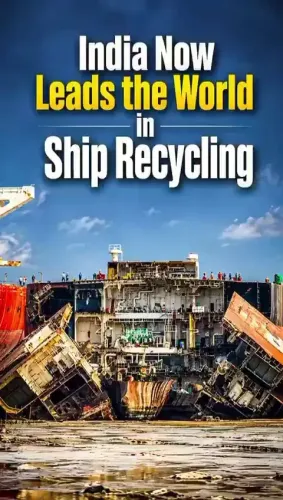
India is the world's second-largest crude steel producer , a position held since overtaking Japan in 2018-19 .
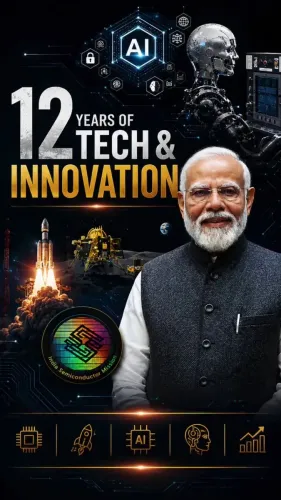
The government has committed more than $10 billion in support across the AI Mission , National Quantum Mission , and India Semiconductor Mission .
The National Quantum Mission was approved in April 2023 with Rs 6,003 crore ; the India Semiconductor Mission carries an outlay exceeding Rs 76,000 crore .
PM Modi called for global collaboration on low-carbon aluminium , green iron , data centres , and Digital Public Infrastructure .
The post reflects the BJP's strategy of linking state leaders to the Prime Minister's economic sovereignty agenda.
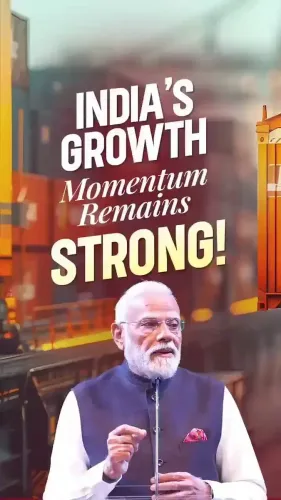
Bihar Chief Minister Samrat Choudhary on Thursday, July 9, 2026, shared remarks attributed to Prime Minister Narendra Modi highlighting India's rise as the world's second-largest crude steel producer and the government's push for collaboration in low-carbon manufacturing, artificial intelligence, quantum computing, and semiconductors.
Context
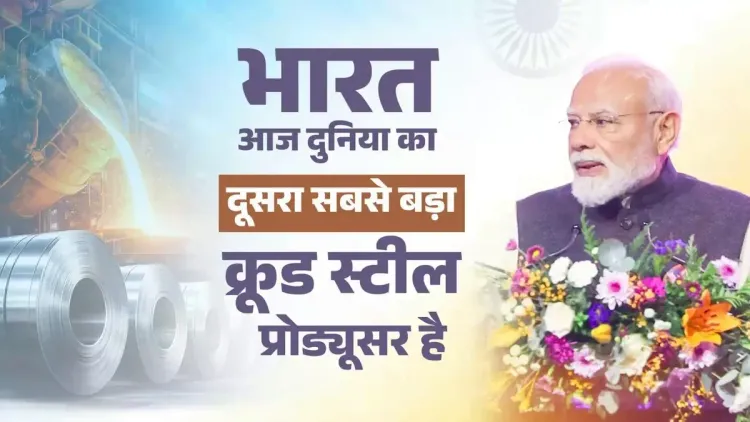
The post, shared from Choudhary's official X account, quotes PM Modi directly: 'Bharat aaj duniya ka doosra sabse bada crude steel producer hai' ('India is today the world's second-largest crude steel producer'). The statement also underscores India's readiness to co-develop solutions in low-carbon aluminium, green iron, and clean manufacturing with global partners. The Bihar CM's amplification of these remarks reflects the BJP's broader communication strategy of linking state leadership to the Prime Minister's economic and technology agenda.
Policy Backdrop
India overtook Japan to become the world's second-largest crude steel producer in 2018-19, a position maintained through capacity expansion under the National Steel Policy 2017. On the technology front, the government has backed three flagship programmes: the India Semiconductor Mission, approved in December 2021 with an outlay exceeding Rs 76,000 crore; the National Quantum Mission, approved in April 2023 with Rs 6,003 crore over five years; and the AI Mission, aimed at building domestic compute infrastructure and research capacity.
PM Modi's quoted remarks state that the government has provided 'more than 10 billion dollars in support' across the AI Mission, Quantum Mission, and semiconductor initiatives — a figure cited directly from the post. These schemes sit within the broader Atmanirbhar Bharat framework, which seeks to combine traditional heavy-industry strength with frontier technology self-reliance.
Stakeholders and Impact
The sectors named — data centres, AI, quantum computing, semiconductors, and Digital Public Infrastructure — touch a wide range of stakeholders including technology startups, semiconductor design firms, and steel and aluminium manufacturers seeking to transition toward greener production methods. The explicit mention of 'global solutions' signals that India is positioning itself as a partner rather than merely a recipient in frontier technology development.
The green manufacturing push — covering low-carbon aluminium and green iron — also connects to India's stated 2070 net-zero target, giving the industrial agenda an environmental dimension that is increasingly relevant to foreign investment decisions.
What's Next
Parliamentary discussions on supplementary grants for the three technology missions will be a key indicator of whether the funding commitments translate into accelerated disbursements. Observers will also watch for any Bihar-specific MoUs on data-centre or semiconductor-related investments, which would give CM Choudhary's amplification of these national themes a direct state-level policy dimension. India's ability to attract global partners in green steel and advanced manufacturing will depend on the pace of regulatory and infrastructure readiness on the ground.
Point of View
Where state leaders reinforce the Prime Minister's economic narrative to broaden its reach. The simultaneous invocation of heavy industry credentials — second-largest steel producer — alongside frontier technology missions signals a deliberate effort to present India as competitive across the full manufacturing spectrum, not just in services. Linking green iron and low-carbon aluminium to AI and quantum funding also allows the government to frame industrial policy as climate-compatible, a framing that carries weight with multilateral partners and foreign investors. Whether Bihar itself becomes a node in this technology ecosystem will be the real test of whether such amplification translates into state-level economic outcomes.
NationPress
9 Jul 2026
Frequently Asked Questions
Is India really the second-largest crude steel producer in the world?
Yes. India overtook Japan to become the world's second-largest crude steel producer in 2018-19 and has maintained that position through continued capacity expansion under the National Steel Policy 2017.
How much has the Indian government invested in AI, quantum, and semiconductor missions?
PM Modi's quoted remarks state that the government has provided more than $10 billion in support across the AI Mission, National Quantum Mission, and India Semiconductor Mission. The Semiconductor Mission alone carries an outlay exceeding Rs 76,000 crore, while the Quantum Mission was approved with Rs 6,003 crore.
What is the India Semiconductor Mission?
The India Semiconductor Mission is a government programme approved in December 2021 with an outlay exceeding Rs 76,000 crore to develop semiconductor fabrication, assembly, and design capabilities within India as part of the Atmanirbhar Bharat initiative.
Why is Bihar CM Samrat Choudhary posting about national technology policy?
Choudhary is a senior BJP leader, and sharing PM Modi's statements on economic and technology achievements is a common BJP communication practice that links state-level leaders to the party's national governance narrative.
What is green iron and why is India focusing on it?
Green iron refers to iron produced using low-carbon or hydrogen-based processes instead of traditional coal-fired blast furnaces. India is exploring it as part of its broader clean manufacturing push tied to the country's 2070 net-zero emissions target.