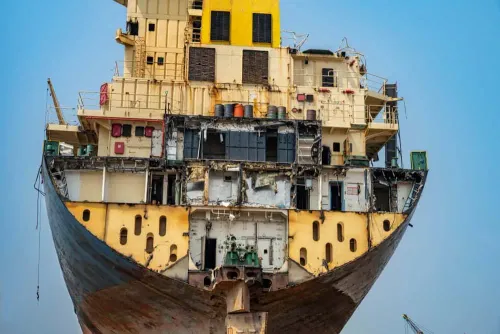
CM Samrat Choudhary Hails India's 35.4% Global Ship Recycling Share
Synopsis
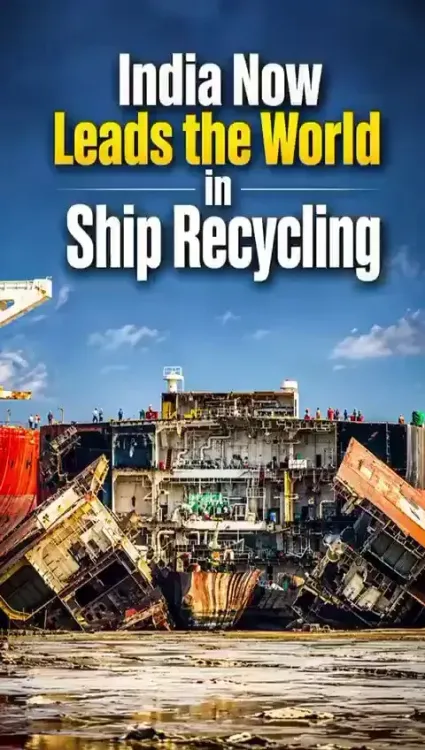
Bihar Chief Minister Samrat Choudhary has highlighted India's 35.4% share in global ship recycling and the early achievement of the Maritime India Vision 2030 target, crediting Prime Minister Modi's leadership for the milestone in India's blue economy push.
Key Takeaways
Bihar CM Samrat Choudhary posted on 24 June 2026 praising India's position as the world's leading ship recycling nation.
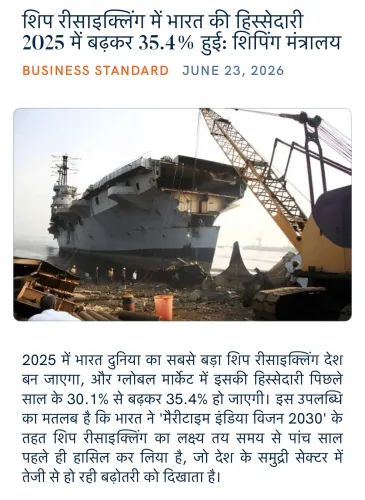
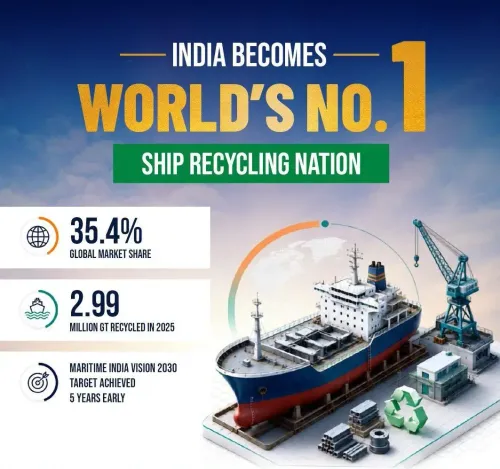
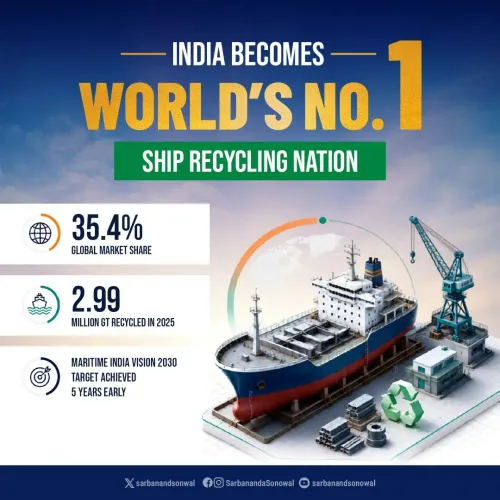
India has claimed a 35.4% share in global ship recycling, according to the post.
The Maritime India Vision 2030 target has reportedly been surpassed five years ahead of schedule .
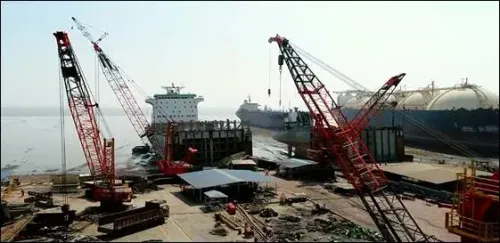
The ship recycling sector, centred at Alang, Gujarat , supports domestic steel supply chains and large-scale coastal employment.
The milestone is framed within India's broader Atmanirbhar Bharat and blue economy policy agenda.
Future focus includes expanding recycling capacity and advancing compliance with the Hong Kong International Convention .
Bihar Chief Minister Samrat Choudhary on Wednesday, 24 June 2026, praised India's rise as the world's leading ship recycling nation, citing a 35.4% share in global ship recycling and what he described as the country surpassing its Maritime India Vision 2030 target five years ahead of schedule.
Context
In his post on X, Choudhary credited Prime Minister Narendra Modi's leadership for the milestone, calling it 'a matter of immense pride' and a reflection of 'India's growing maritime strength.' He linked the achievement to India's broader commitment to sustainable development and economic progress.
The post comes as India's maritime sector continues to draw political attention from leaders across the ruling Bharatiya Janata Party (BJP), with ship recycling increasingly framed as a pillar of the blue economy and the Atmanirbhar Bharat manufacturing agenda.
Policy Backdrop
The Maritime India Vision 2030, released by the Ministry of Ports, Shipping and Waterways in 2021, set out a strategic roadmap to position India as a leading maritime nation, with specific targets for port modernisation, coastal shipping, and ship recycling volumes.
India's ship recycling industry is concentrated primarily at Alang in Gujarat, the world's largest single ship recycling location, which supplies significant volumes of scrap steel to domestic mills and supports tens of thousands of coastal workers. The sector sits at the intersection of circular economy policy, steel production, and employment generation.
Under the blue economy push, the government has pursued port infrastructure upgrades, coastal shipping incentives, and compliance frameworks aligned with international environmental standards, including steps toward meeting obligations under the Hong Kong International Convention for the safe and environmentally sound recycling of ships.
Stakeholders and Impact
The ship recycling industry directly employs a large workforce of coastal and industrial workers, particularly in Gujarat, and feeds scrap steel into domestic manufacturing supply chains, reducing import dependence. For the broader Atmanirbhar Bharat programme, a dominant global recycling share reinforces self-reliance in raw material sourcing.
Environmental groups and international bodies have also watched India's sector closely, given the labour safety and pollution challenges historically associated with shipbreaking yards. Compliance with global environmental norms is increasingly tied to India's ability to attract more vessels for recycling and to maintain its competitive position.
What's Next
Attention will now turn to whether India can expand recycling capacity at Alang and other emerging clusters while meeting tightening international environmental and safety standards. Policymakers are expected to push forward additional capacity investments and regulatory upgrades to consolidate India's position as the dominant global player in the sector.
The government's ability to sustain this trajectory will also depend on the pace of India's formal steps toward full compliance with the Hong Kong Convention, which sets binding standards for ship recycling facilities worldwide.
Point of View
India's dominance in ship recycling is a genuine structural shift, but its long-term credibility rests on environmental and safety compliance at yards like Alang, an area where international scrutiny remains high. The milestone, if verified, would mark a significant moment in India's industrial and circular economy story, one that the ruling party is clearly intent on owning politically.
NationPress
22 Sept 2026
Frequently Asked Questions
What is India's current share in global ship recycling?
According to Bihar Chief Minister Samrat Choudhary's post on 24 June 2026, India holds a 35.4% share in global ship recycling, making it the world's leading ship recycling nation.
What is Maritime India Vision 2030?
Maritime India Vision 2030 is a strategic roadmap released by India's Ministry of Ports, Shipping and Waterways in 2021, setting targets for port modernisation, coastal shipping, and ship recycling capacity to position India as a leading maritime nation.
Where is India's ship recycling industry located?
India's ship recycling industry is primarily concentrated at Alang in Gujarat, which is the world's largest single ship recycling location and a major supplier of scrap steel to domestic manufacturers.
Why did Bihar CM Samrat Choudhary comment on ship recycling?
As a senior BJP leader, Choudhary used the occasion to credit Prime Minister Narendra Modi's leadership for India's maritime achievements, aligning with the party's broader communication around governance milestones.
What is the Hong Kong Convention and how does it affect India?
The Hong Kong International Convention sets binding international standards for the safe and environmentally sound recycling of ships. India's compliance with this convention is key to maintaining its competitive position in global ship recycling and attracting more vessels to its yards.