Sonowal: India tops global ship recycling in 2025
Synopsis
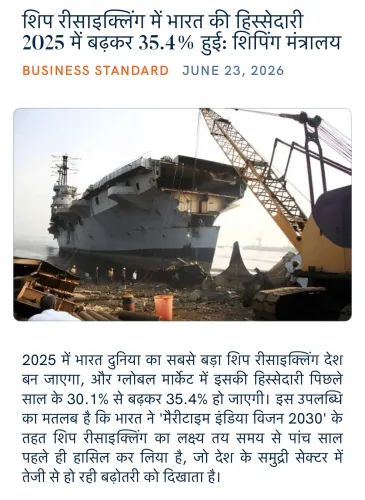
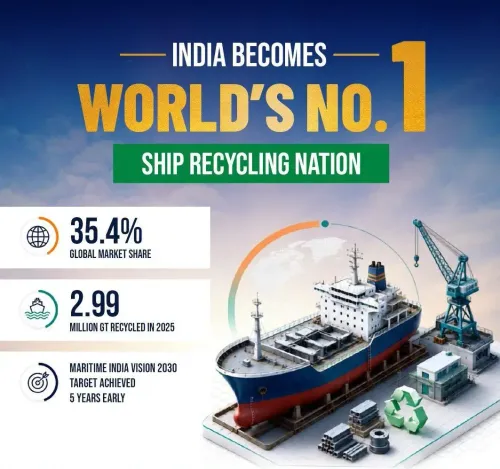
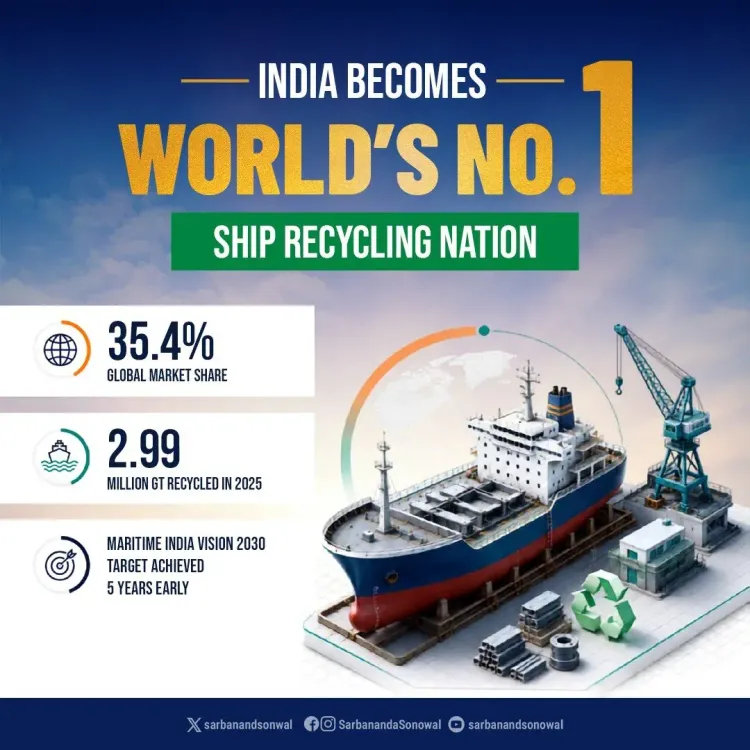
India has claimed the top spot in global ship recycling for 2025, with a 35.4% market share and 2.99 million GT dismantled. Minister Sarbananda Sonowal says the Maritime India Vision 2030 recycling target has been met five full years ahead of schedule, marking a landmark for the country's circular maritime economy.
Key Takeaways
1 globally in ship recycling for 2025 , according to Union Minister Sarbananda Sonowal .
India's global share stands at 35.4 per cent , with 2.99 million gross tonnes of ships recycled.
The Maritime India Vision 2030 ship recycling target has been achieved five years ahead of schedule .
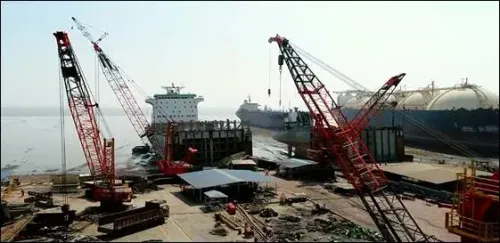
Alang, Gujarat — the world's largest ship-breaking yard — is the primary driver of this ranking.
India's rise is partly attributed to its compliance with the Hong Kong Convention on safe and environmentally sound ship recycling, which entered into force in 2025 .
The government has framed the milestone within a broader push toward a sustainable and circular maritime economy .
Union Minister of Ports, Shipping and Waterways Sarbananda Sonowal announced on Monday, 22 June 2026 that India has become the world's number one ship recycling nation for 2025, capturing a global market share of 35.4 per cent with 2.99 million gross tonnes (GT) recycled — and achieving a key Maritime India Vision 2030 target five years ahead of schedule.
Context
Sonowal's post credits the milestone to the maritime policy direction set by Prime Minister Narendra Modi over the past 12 years, describing it as the outcome of a systematic 'transformation of India's maritime ecosystem.' The minister stated that the country is now 'moving swiftly towards a prosperous, sustainable and circular maritime economy.'
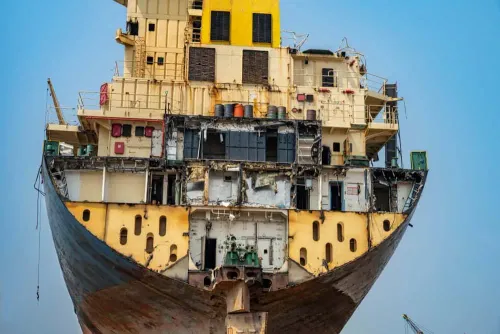
Ship recycling — the process of dismantling end-of-life vessels to recover steel and other materials — is a significant industrial activity. Alang in Gujarat is the world's largest ship-breaking yard by volume and has been the primary driver of India's dominance in this sector. The yard processes vessels from across the globe, generating raw material for the domestic steel industry and supporting hundreds of thousands of direct and indirect jobs.
Policy Backdrop
Maritime India Vision 2030 (MIV 2030), launched in 2021 under the Ministry of Ports, Shipping and Waterways, set out an ambitious roadmap to modernise India's ports, waterways, and maritime services. One of its headline targets was to consolidate India's position as the global leader in ship recycling — a goal the ministry now says has been met in 2025, five years before the original deadline.
India ratified the Hong Kong International Convention for the Safe and Environmentally Sound Recycling of Ships, which came into force globally in June 2025. Compliance with this convention raised safety and environmental standards at yards like Alang, making Indian facilities more attractive to international shipowners who need certified, regulation-compliant recycling destinations. The Ship Recycling Regulation framework has progressively pushed European-flagged vessels toward compliant yards, benefiting India's certified facilities.
The government has also invested in infrastructure upgrades at major recycling clusters, worker safety improvements, and digital monitoring systems to ensure environmental compliance — all of which have contributed to raising India's share of the global recycling market from a lower base a decade ago to the current 35.4 per cent.
Stakeholders and Impact
The Alang-Sosiya ship recycling cluster in Bhavnagar district, Gujarat, directly employs an estimated 15,000 to 20,000 workers and supports a wider ecosystem of steel traders, logistics providers, and component re-sellers. Achieving the number-one global rank is expected to attract more international vessel owners to route their end-of-life ships to Indian yards, sustaining employment and raw-material supply for domestic steel re-rollers.
For the broader maritime sector, the milestone signals that India's regulatory and infrastructure investments are yielding measurable results. Competing recycling nations — including Bangladesh and Turkey — have faced stricter scrutiny over environmental and labour standards, which has incrementally shifted global volume toward India's increasingly compliant yards.
What's Next
With the Maritime India Vision 2030 recycling target already met, the ministry is expected to revise its benchmarks upward and focus on the next phase: deepening value recovery from recycled vessels, expanding certified yard capacity, and positioning India as a hub for green ship recycling under emerging global decarbonisation frameworks. The government's stated goal of a 'circular maritime economy' suggests future policy will emphasise material traceability, zero-discharge standards, and integration with the domestic green-steel supply chain.
The achievement also lends momentum to India's broader pitch for a larger role in global maritime governance, including its engagement with the International Maritime Organisation (IMO) on shipping's decarbonisation agenda.
Point of View
Measurable policy win that the BJP government will deploy as evidence that long-horizon maritime reform — begun over a decade ago — is delivering tangible results. The fact that a MIV 2030 target has been met in 2025 gives the ministry a strong narrative ahead of any electoral or budgetary cycle, reinforcing the 'ahead of schedule' governance branding that has become a signature of the Modi administration. Strategically, the milestone also strengthens India's hand in international maritime forums: a nation that is both the largest recycler and a Hong Kong Convention-compliant one carries more credibility in shaping global green-shipping standards. The next test will be whether the government can translate volume leadership into value leadership — moving up the recycling value chain toward certified green-steel outputs and attracting premium, high-specification vessels.
NationPress
21 Sept 2026
Frequently Asked Questions
Is India the number one ship recycling country in the world in 2025?
Yes. Union Minister Sarbananda Sonowal confirmed on 22 June 2026 that India is the world's top ship recycling nation for 2025, holding a global market share of 35.4 per cent with 2.99 million gross tonnes recycled.
Where is ship recycling done in India?
The primary hub is the Alang-Sosiya ship recycling yard in Bhavnagar district, Gujarat , which is the world's largest ship-breaking facility by volume and handles the vast majority of India's ship recycling activity.
What is Maritime India Vision 2030?
Maritime India Vision 2030 is a government roadmap launched in 2021 to modernise India's ports, shipping, and waterways sector. One of its targets was to make India the global leader in ship recycling — a goal now achieved five years ahead of the 2030 deadline.
What is the Hong Kong Convention and how does it affect India's ship recycling industry?
The Hong Kong International Convention for the Safe and Environmentally Sound Recycling of Ships sets global standards for worker safety and environmental protection at ship recycling yards. It came into force in June 2025, and India's compliance has made its yards — especially Alang — more attractive to international shipowners seeking certified recycling destinations.
How many jobs does the ship recycling industry support in India?
The Alang-Sosiya cluster alone is estimated to directly employ between 15,000 and 20,000 workers, with a significantly larger number supported indirectly through steel trading, logistics, and component re-selling activities.