India's Ship Recycling Share Rises to 35.4% in 2025
Synopsis
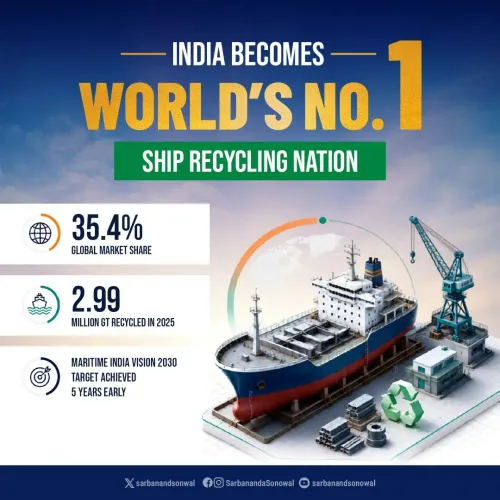
India's share in global ship recycling climbed to 35.4 per cent in 2025, the Shipping Ministry reported. Union Textiles Minister Giriraj Singh shared the data, spotlighting the growth of Alang-led capacity under the Recycling of Ships Act, 2019, and India's blue economy push.
Key Takeaways
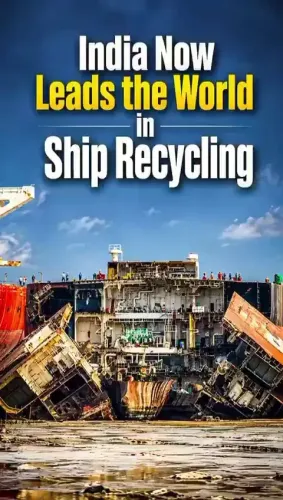
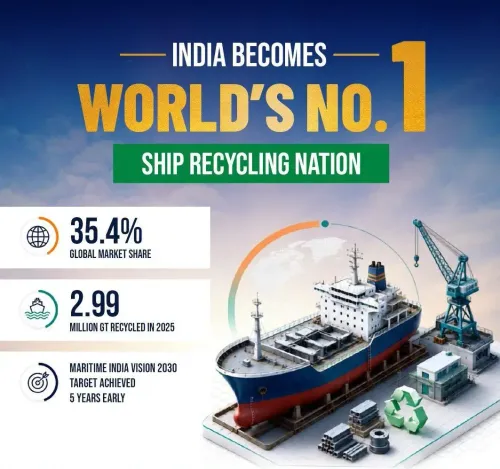
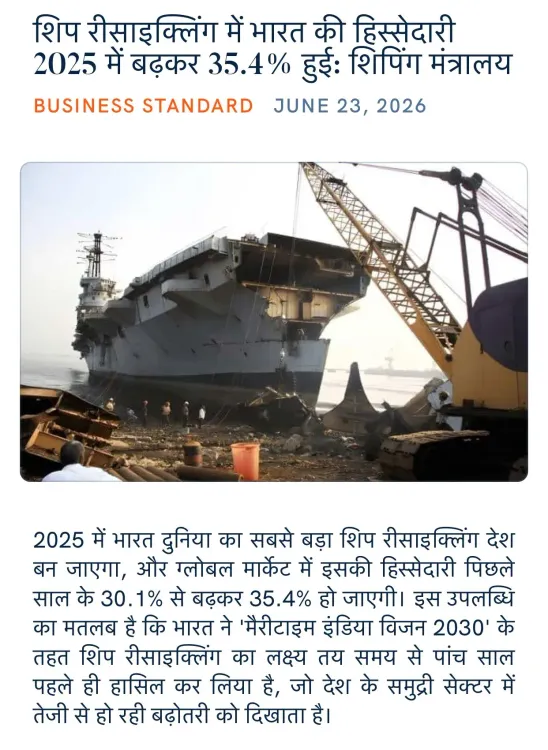
India's global ship recycling market share rose to 35.4 per cent in 2025 , according to the Ministry of Ports, Shipping and Waterways .
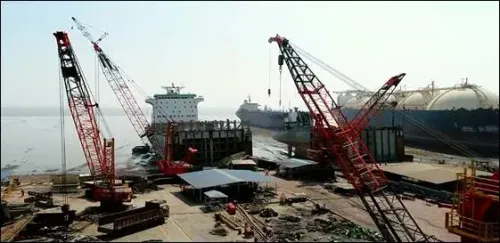
Alang, Gujarat remains the primary hub driving India's ship-breaking and recycling capacity.
The Recycling of Ships Act, 2019 aligned India's regulatory framework with the Hong Kong Convention for safe and environmentally sound recycling.
India competes closely with Bangladesh and Pakistan for global ship recycling volumes.
The sector supports large numbers of maritime workers and feeds steel scrap into downstream industries.
The data was shared by Union Textiles Minister Giriraj Singh via the NaMo App on June 23, 2026 .
Union Textiles Minister Giriraj Singh on Tuesday, June 23, 2026 shared data from the Ministry of Ports, Shipping and Waterways showing that India's share in global ship recycling rose to 35.4 per cent in 2025, citing the Shipping Ministry's official figures. The post, shared via the NaMo App, highlights a continued upward trajectory for one of India's most strategically important maritime industries.
Context
India has historically been among the world's leading destinations for ship recycling, with Alang in Gujarat serving as the nerve centre of the country's ship-breaking capacity. The latest figure of 35.4 per cent global market share, as reported by the Shipping Ministry, underscores India's dominant position in an industry that competes closely with Bangladesh and Pakistan. The data was shared by Minister Singh as a marker of sectoral progress under the current government.
Policy Backdrop
India enacted the Recycling of Ships Act in 2019 to establish a robust legal and regulatory framework aligned with the Hong Kong International Convention for the Safe and Environmentally Sound Recycling of Ships. The legislation was a significant step toward formalising the sector, improving environmental compliance standards at yards like Alang, and strengthening India's competitiveness on the global stage. Successive governments have also promoted ship recycling under the broader blue economy and Make in India frameworks, seeking to attract more tonnage while raising safety standards for maritime workers.
Stakeholders and Impact
The ship recycling sector directly supports tens of thousands of maritime workers, steel recyclers, and ancillary industries concentrated in Gujarat. A rising global market share translates into greater volumes of steel scrap recovery, supporting downstream industries and reducing import dependence. For the ship recycling industry, the 35.4 per cent figure signals that regulatory upgrades under the 2019 Act have not eroded India's cost and capacity advantages over regional competitors.
What's Next
Attention will now turn to the Shipping Ministry's subsequent annual statistics and any parliamentary updates on the implementation of the Recycling of Ships Act. Analysts and industry bodies will watch whether India can consolidate and expand its share further, particularly as global shipping fleets age and the volume of vessels entering the recycling pipeline is expected to increase through the late 2020s. Regulatory harmonisation with international environmental norms will remain a key variable in sustaining India's competitive edge.
Point of View
Suggesting a broader government-wide effort to broadcast economic milestones across social media channels. The 2019 Recycling of Ships Act was a genuine regulatory milestone, and sustained market leadership over Bangladesh and Pakistan would be a credible policy outcome if the figures are borne out. The key question is whether environmental compliance at Alang has kept pace with the volume growth — a variable that will define international scrutiny of India's ship recycling credentials.
NationPress
22 Sept 2026
Frequently Asked Questions
What is India's share in global ship recycling in 2025?
According to the Ministry of Ports, Shipping and Waterways , India's share in global ship recycling rose to 35.4 per cent in 2025 , making it one of the leading ship recycling nations in the world.
Where is India's main ship recycling facility located?
Alang in Gujarat is India's primary ship recycling hub and accounts for the bulk of the country's global ship-breaking capacity.
What is the Recycling of Ships Act 2019?
The Recycling of Ships Act, 2019 is an Indian law that established a legal framework for safe and environmentally sound ship recycling, aligned with the international Hong Kong Convention .
Who are India's main competitors in ship recycling?
India's primary competitors in the global ship recycling market are Bangladesh and Pakistan , both of which operate large ship-breaking yards and compete for the same international tonnage.
Why did Giriraj Singh post about ship recycling?
Union Textiles Minister Giriraj Singh shared the Shipping Ministry's data on India's 35.4 per cent global ship recycling share via the NaMo App on June 23, 2026 , highlighting the sector's growth as part of the government's broader economic outreach.