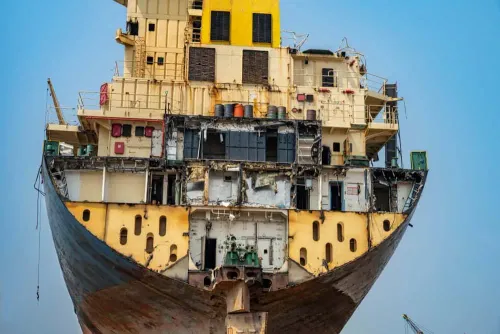
India-EU ship recycling talks: Indian yards eye EUSRR recognition as share hits 35.4%
Synopsis
India's global ship recycling share jumped from 30.1% to 35.4% in a single year — and now three Indian yards are cleared to formally apply for EU regulatory recognition. The India-EU meeting on 1 July signals that Alang's ambition to crack the European-flagged ship market is closer to reality than ever.
Key Takeaways
India and the EU reaffirmed cooperation on sustainable ship recycling at a bilateral meeting on 1 July 2025 in New Delhi .
More than 30 Indian yards have applied for EUSRR recognition; three have completed compliance and are eligible to formally apply.
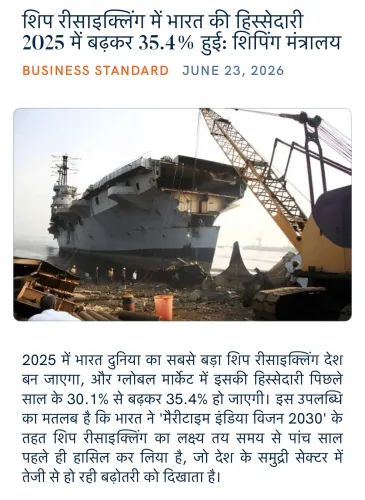
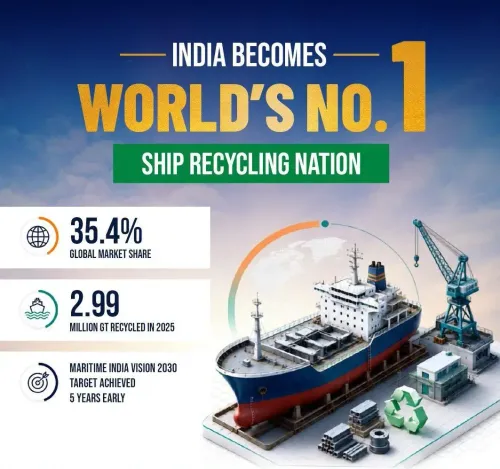
India's global ship recycling share rose from 30.1% in 2024 to 35.4% in 2025, according to UNCTAD .
India recycled 2.99 million GT of ships in 2025 — nearly 60% growth over the 1.86 million GT recycled in 2024.
Indian facilities feature effluent treatment plants , Red Cross Society -supported healthcare, and are subject to surprise government inspections.
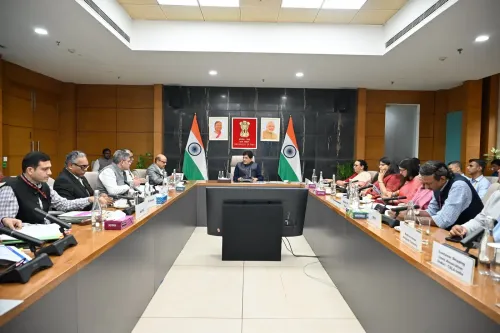
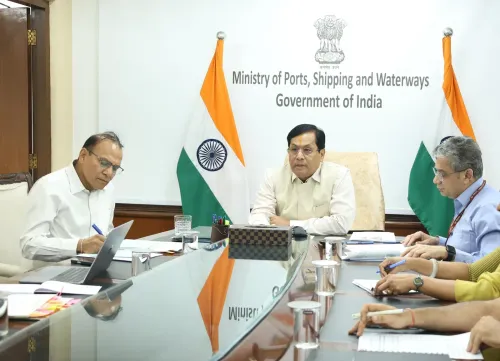
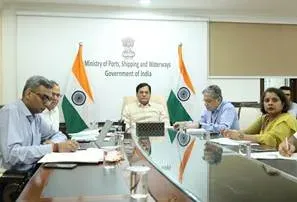
India and the European Union on Wednesday, 1 July reaffirmed their commitment to deepening cooperation in sustainable ship recycling, with both sides reviewing the ongoing audit and compliance process for Indian ship recycling yards seeking recognition under the European Union Ship Recycling Regulation (EUSRR). The Ministry of Ports, Shipping and Waterways confirmed the development following a bilateral meeting in New Delhi.
The Bilateral Meeting
The discussions took place between Union Minister for Ports, Shipping and Waterways Sarbananda Sonowal and European Commissioner for Environment, Water Resilience and a Competitive Circular Economy Jessika Roswall. The two sides assessed the compliance pipeline for Indian facilities seeking entry into the EU-approved list of ship recycling yards.
Sonowal said more than 30 Indian ship recycling yards have applied for recognition under the EU framework. Of these, six facilities are currently undergoing the compliance and approval process, while three have successfully completed all required compliance procedures and are now eligible to formally apply for inclusion under the EUSRR.
India's Growing Share in Global Ship Recycling
Citing the latest estimates from the UN Conference on Trade and Development (UNCTAD), Sonowal noted that India's share in global ship recycling rose from 30.1% in 2024 to 35.4% in 2025. During 2025, India recycled 2.99 million gross tons (GT) of ships — a growth of nearly 60% over the 1.86 million GT recycled in 2024.
This comes amid a broader push by the Centre to position India as the world's foremost hub for safe and environmentally responsible ship recycling. Notably, the rapid rise in India's global share in a single year underscores the scale of investment and regulatory effort being deployed across yards, particularly in Alang, Gujarat, which handles the bulk of India's recycling capacity.
Infrastructure and Compliance Measures
The minister highlighted that Indian ship recycling facilities are backed by robust environmental and worker welfare infrastructure, including effluent treatment plants, scientific waste management systems, multi-speciality healthcare facilities supported by the Red Cross Society, and dedicated housing for workers.
The government, Sonowal added, conducts both periodic and surprise inspections to ensure strict compliance with environmental norms, worker safety standards, and operational transparency. Facilities have invested significantly in upgrading infrastructure and operational practices to meet international standards, he said.
What the EUSRR Recognition Means
Inclusion on the EUSRR-approved list allows European-flagged ships to be legally recycled at a listed facility — a commercially significant designation given Europe's large fleet. Currently, the list is dominated by yards in Turkey and a handful of other countries. Indian yards gaining recognition would open a major new revenue stream and validate India's regulatory standards on the global stage.
The compliance process involves independent audits and inspections aligned with the Hong Kong International Convention standards. With three Indian yards now eligible to formally apply and six more in the pipeline, the pace of recognition is expected to accelerate through 2025–26.
What Comes Next
Both sides are expected to continue engagement through established India-EU maritime channels. The progression of the remaining six yards through the compliance process will be a key indicator of how quickly India can expand its EUSRR-listed footprint. Industry observers will watch whether the EU accelerates its review timelines, given India's rapidly growing share of global recycling volume.
Point of View
Yet with over 30 applicants, the conversion rate remains low, pointing to a demanding EU audit process that India has not fully cracked. EUSRR recognition is not just a regulatory badge; it is a commercial gateway to European-flagged tonnage, and the yards that secure it first will have a durable competitive edge. The Centre's push is directionally right, but the pace of EU approvals — not India's recycling volumes — will determine whether this translates into a structural shift or remains a headline number.
NationPress
30 Sept 2026
Frequently Asked Questions
What is the EUSRR and why does it matter for Indian ship recycling yards?
The European Union Ship Recycling Regulation (EUSRR) is an EU law that requires European-flagged ships to be recycled only at facilities on an EU-approved list. Recognition under the EUSRR allows Indian yards to legally recycle EU-flagged vessels, opening a major commercial market currently dominated by Turkish and other non-Indian facilities.
How many Indian yards are currently in the EUSRR recognition process?
More than 30 Indian yards have applied for EUSRR recognition. Of these, six are currently undergoing the compliance and approval process, while three have completed all required procedures and are now eligible to formally apply for inclusion on the EU list, according to Minister Sarbananda Sonowal.
What is India's current share in global ship recycling?
According to UNCTAD estimates cited by Minister Sonowal, India's share in global ship recycling rose from 30.1% in 2024 to 35.4% in 2025. India recycled 2.99 million gross tons of ships in 2025, representing nearly 60% growth over the 1.86 million GT recycled in 2024.
What environmental and worker welfare measures do Indian ship recycling yards have in place?
Indian ship recycling facilities reportedly feature effluent treatment plants, scientific waste management systems, multi-speciality healthcare supported by the Red Cross Society, and dedicated worker housing. The government also conducts periodic and surprise inspections to verify compliance with environmental norms and worker safety standards.
Who represented India and the EU at the 1 July meeting on ship recycling?
India was represented by Union Minister for Ports, Shipping and Waterways Sarbananda Sonowal, while the EU side was represented by European Commissioner for Environment, Water Resilience and a Competitive Circular Economy Jessika Roswall. The meeting took place in New Delhi on 1 July.