CM Himanta Thanks Pawan Kalyan as Assam Battles Severe Floods
Synopsis
Assam CM Himanta Biswa Sarma acknowledged Andhra Pradesh DCM Pawan Kalyan's solidarity as the state battles a historic flood crisis caused by over 400% excess rainfall, with the Union Government actively supporting relief efforts across previously unaffected areas.
Key Takeaways
Assam CM Himanta Biswa Sarma publicly thanked Andhra Pradesh DCM Pawan Kalyan for words of support on 25 July 2026 .
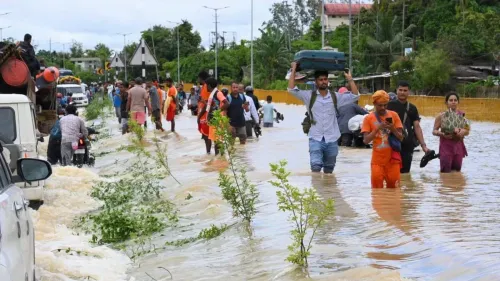
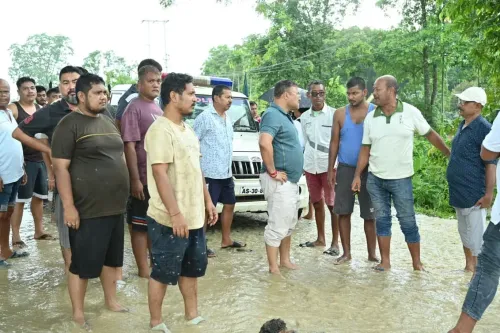
The state is experiencing over 400% excess rainfall , inundating areas with no prior history of flooding.
The Union Government is actively supporting relief operations in the state.
Assam's flood crisis is described by the Chief Minister as 'unprecedented' in scale and geographic spread.
The outreach from Pawan Kalyan reflects cross-regional solidarity within the BJP -led political alliance network.
Longer-term focus is expected to shift to NDRF deployments, central relief funds, and flood-mitigation infrastructure.
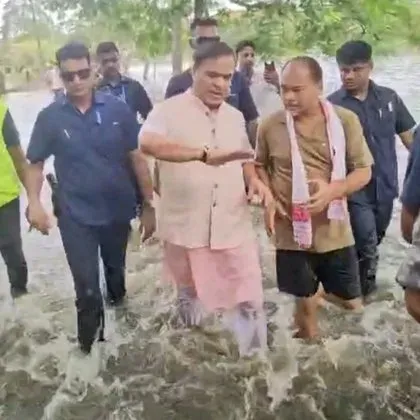
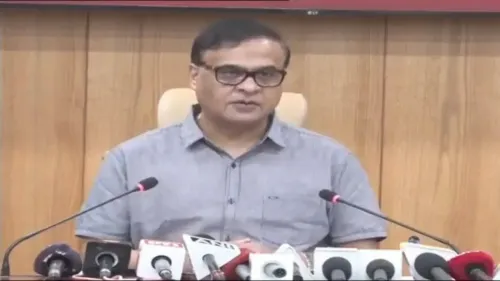
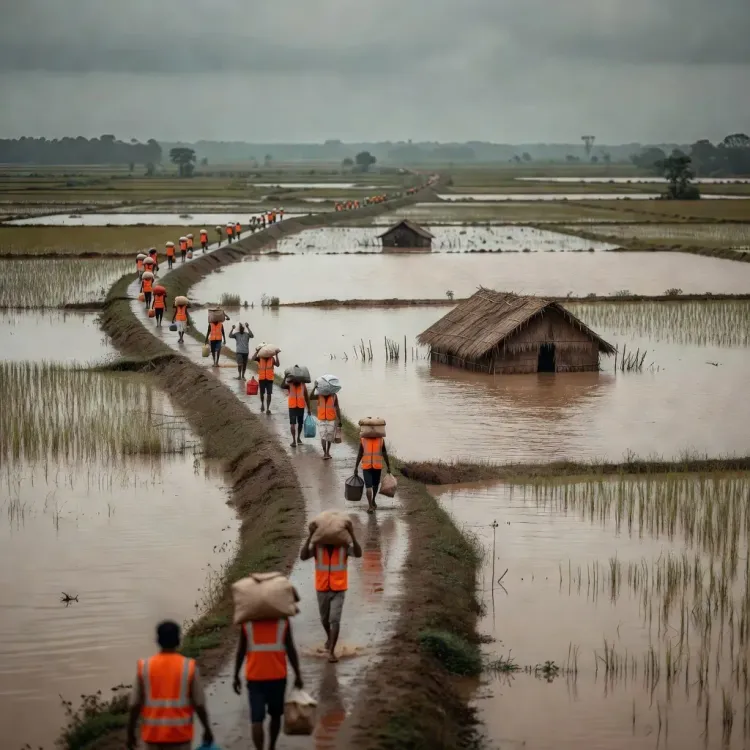
Assam Chief Minister Himanta Biswa Sarma on Saturday, 25 July 2026, publicly acknowledged words of support from Andhra Pradesh Deputy Chief Minister Pawan Kalyan as the northeastern state grapples with what he described as an unprecedented flood crisis driven by over 400% excess rainfall, inundating areas that have historically never experienced flooding.
Context
CM Sarma stated on X that Assam is 'facing an unprecedented crisis with areas never seeing floods being inundated due to over 400% excess rainfall.' He added that relief operations are being carried out with the support of the Union Government. The acknowledgement of Pawan Kalyan — a prominent leader from a non-northeastern state — signals the breadth of political solidarity mobilised around the crisis.
Pawan Kalyan, who serves as Deputy Chief Minister of Andhra Pradesh, had extended words of support to the Assam government prior to this post. His outreach underscores the cross-regional political networks that have become active during large-scale natural disasters in India.
Policy Backdrop
Assam is one of India's most flood-prone states, with the Brahmaputra river and its tributaries historically submerging large swathes of the state every monsoon season. The state government has repeatedly sought central assistance under the National Disaster Response Fund (NDRF) framework, a mechanism expanded significantly in the 2000s to accelerate relief disbursement to flood-hit states.
What distinguishes the 2026 episode, according to CM Sarma, is the geographic spread — localities with no prior flood history are now under water, pointing to an extreme rainfall anomaly. NDRF teams have been deployed in previous high-rainfall years under existing central coordination protocols, without requiring fresh legislative action.
Stakeholders and Impact
The most immediate stakeholders are the flood-affected residents of Assam, particularly those in localities experiencing inundation for the first time. Such communities are typically less prepared — with fewer elevated structures, weaker early-warning familiarity, and limited access to pre-positioned relief stocks.
CM Sarma, who also serves as convenor of the North-East Democratic Alliance (NEDA), has built a regional political network that facilitates coordination with BJP-aligned governments across the northeast and beyond. Support from leaders such as Pawan Kalyan — whose Jana Sena Party is allied with the BJP in Andhra Pradesh — reflects how that network extends to coalition partners in other parts of the country.
What's Next
Attention will now turn to the scale and speed of the Union Government's relief package, including potential additional NDRF team deployments and emergency fund releases. State budget allocations for longer-term flood-mitigation infrastructure — embankment reinforcement, dredging of Brahmaputra tributaries, and early-warning systems — are likely to come under scrutiny once the immediate crisis recedes.
If the rainfall anomaly persists, Assam may formally request a central team assessment under disaster management norms, which could trigger a larger inter-ministerial response and fast-tracked infrastructure approvals for flood-prone districts.
Point of View
CM Sarma amplifies the crisis's visibility beyond the northeast and signals that allied governments are watching, which can accelerate central relief decisions. The emphasis on '400% excess rainfall' and 'areas never seeing floods' serves to frame this as a qualitatively different emergency, not merely an annual monsoon event — a framing that strengthens the state's case for enhanced central funding. This fits a broader pattern in which NEDA states leverage their alliance networks for faster disaster response. The political subtext is clear: solidarity messaging from coalition partners in distant states adds pressure on the Union Government to respond visibly and swiftly.
NationPress
24 Oct 2026
Frequently Asked Questions
Why is the Assam flood in 2026 considered unprecedented?
Assam CM Himanta Biswa Sarma has stated that over 400% excess rainfall has caused flooding in areas that have historically never experienced inundation, making the 2026 event qualitatively different from the state's recurring annual floods.
What is Pawan Kalyan's connection to the Assam flood crisis?
Andhra Pradesh Deputy Chief Minister Pawan Kalyan extended words of support to the Assam government, which CM Sarma publicly acknowledged on X on 25 July 2026. There is no administrative role; the gesture reflects political solidarity within the BJP-led alliance network.
How is the Union Government helping Assam with flood relief?
CM Sarma stated that relief operations are being carried out with Union Government support. Central assistance in such situations typically involves NDRF team deployments and emergency fund releases under the National Disaster Response Fund framework.
What is NEDA and how is it relevant to the Assam floods?
The North-East Democratic Alliance (NEDA) is a BJP-led political grouping of northeast Indian parties, convened by CM Himanta Biswa Sarma. It facilitates political coordination across the region, and the broader alliance network helps mobilise support from partner leaders during crises like the 2026 floods.
Which areas of Assam are affected by the 2026 floods?
CM Sarma indicated that the flooding has spread to areas that have never previously experienced inundation, suggesting the crisis has moved beyond the Brahmaputra floodplains into historically dry localities, though specific district names were not mentioned in his post.