CM Himanta flags Chicken Neck as strategic asset, cites connectivity plans

Synopsis
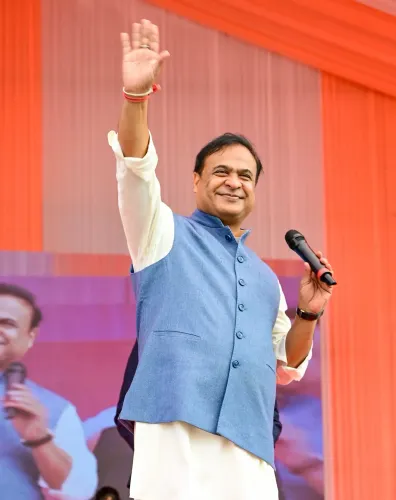
Assam CM Himanta Biswa Sarma has called the Siliguri Corridor — the narrow 'Chicken Neck' linking mainland India to the Northeast — a strategic national asset, saying multiple infrastructure and social plans are in motion to secure unhindered connectivity to the region.
Key Takeaways
Assam CM Himanta Biswa Sarma described the Siliguri Corridor (Chicken Neck) as a 'strategic asset' on June 14, 2026 .
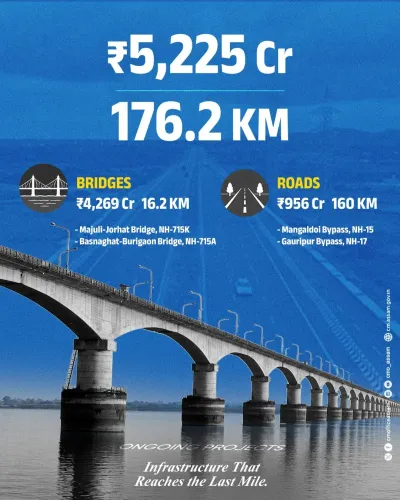
He stated that plans are underway to build secure connectivity routes to ensure unhindered communication to the Northeast .
The Siliguri Corridor is a 22-km-wide strip in West Bengal — the sole overland link between mainland India and its eight Northeastern states.
India's Act East Policy (2014) and the Kaladan Multi-Modal Transit Transport Project (2008) are earlier policy anchors aimed at reducing dependence on this single corridor.
Sarma is also the convenor of the North-East Democratic Alliance (NEDA) , giving his remarks regional political weight.
Specific projects cited as 'big ticket' plans have not yet been officially named or confirmed.
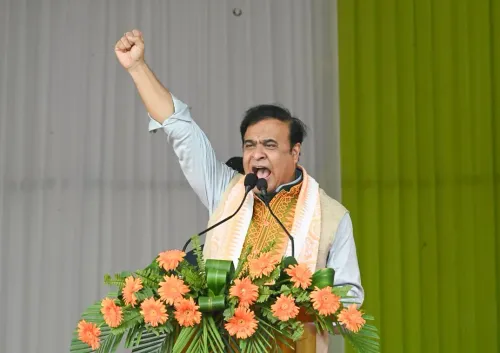
Assam Chief Minister Himanta Biswa Sarma on Sunday, June 14, 2026, declared the Siliguri Corridor — popularly known as the 'Chicken Neck' — a strategic national asset, stating that plans are underway to build secure connectivity routes ensuring unhindered communication to the Northeast at all times.
Context
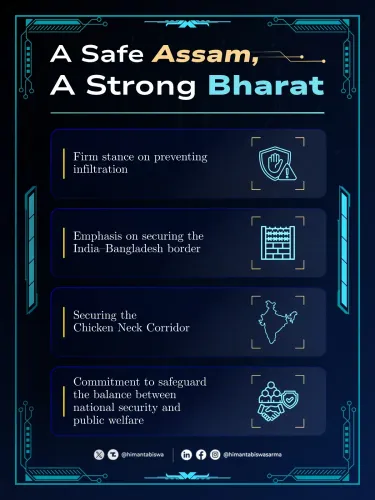
The Siliguri Corridor is a narrow strip of land, roughly 22 kilometres wide, in West Bengal that forms the sole overland link between mainland India and its eight Northeastern states. Flanked by Nepal to the north, Bhutan to the northeast, Bangladesh to the south, and in proximity to the China border, its geographic vulnerability has long been a concern for defence planners and policymakers alike.
Sarma, who also serves as convenor of the North-East Democratic Alliance (NEDA), posted on X that 'many big ticket infrastructure and social plans are at work to secure this lifeline,' signalling coordinated effort at both the state and central levels to address the corridor's fragility.
Policy Backdrop
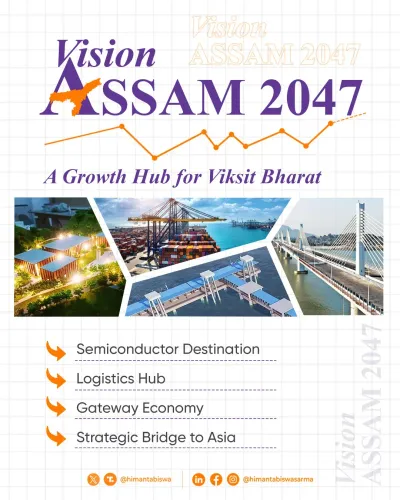
Concerns over the Chicken Neck's vulnerability are not new. India's Act East Policy, launched in 2014, placed the upgrading of road, rail, and multimodal links between the mainland and the Northeast at the centre of its agenda. The policy has since driven significant investment in highway expansion, rail connectivity, and inland waterway projects across the region.
An earlier initiative, the Kaladan Multi-Modal Transit Transport Project — approved in 2008 — sought to create an alternative sea-river-road route through Myanmar, bypassing the Siliguri Corridor entirely. Successive governments have treated the corridor's single-point dependency as an unacceptable strategic risk, accelerating parallel routes and cross-border linkages with Bhutan and Bangladesh as redundancy measures.
The broader push aligns with India's intent to reduce the Northeast's geographic isolation while reinforcing security along sensitive borders with China and Bangladesh.
Stakeholders and Impact
The stakes extend well beyond military logistics. Millions of residents across Assam, Meghalaya, Manipur, Mizoram, Nagaland, Tripura, Arunachal Pradesh, and Sikkim depend on the corridor for the movement of goods, fuel, medicines, and essential supplies. Any disruption — natural, geopolitical, or infrastructural — risks isolating the entire region.
Security forces stationed along the India-China Line of Actual Control (LAC) in Arunachal Pradesh also rely on the corridor for rapid reinforcement and supply chains. Border traders and the regional economy are equally exposed, making the corridor's resilience a matter of both national security and economic continuity.
What's Next
Sarma's post does not name specific projects, and the precise schemes referred to as 'big ticket' plans remain to be detailed in official announcements. Observers will watch closely for project disclosures in the next Union Budget and at forthcoming NEDA coordination meetings, where funding allocations and rollout timelines for new corridor routes are expected to be discussed.
As geopolitical pressures along India's northern and eastern borders persist, the political and strategic salience of securing an alternative to the Siliguri Corridor is only likely to grow — making Sarma's statement an early signal of a larger policy conversation ahead.
Point of View
He bridges the development narrative of the Act East Policy with harder strategic concerns that have sharpened since the India-China border standoff. As NEDA convenor, his remarks also serve a coalition-management function, reassuring Northeast states that their geographic vulnerability is being addressed at the highest levels. The absence of named projects, however, means the statement remains aspirational until concrete funding and timelines are announced.
NationPress
13 Sept 2026
Frequently Asked Questions
What is the Chicken Neck corridor in India?
The Chicken Neck refers to the Siliguri Corridor , a narrow strip of land roughly 22 kilometres wide in West Bengal that is the only overland connection between mainland India and the eight states of the Northeast. It is bordered by Nepal, Bhutan, Bangladesh and lies close to the Chinese border, making it a critical and vulnerable strategic chokepoint.
Why is the Siliguri Corridor considered a strategic risk?
Because it is the sole land route linking mainland India to the entire Northeast, any disruption — military, natural, or infrastructural — could effectively cut off eight states from the rest of the country. Security analysts have long flagged its narrow width and proximity to multiple international borders as a significant vulnerability.
What did Assam CM Himanta Biswa Sarma say about the Chicken Neck?
On June 14, 2026 , Sarma posted on X stating that the Chicken Neck is a 'strategic asset' and that plans are underway to build secure connectivity routes to ensure communication to the Northeast remains unhindered at all times, with 'many big ticket infrastructure and social plans' in motion.
What is India's Act East Policy and how does it relate to the Northeast?
India's Act East Policy , launched in 2014 , prioritises upgrading road, rail, and multimodal links between the mainland and the Northeast as part of a broader strategy to deepen economic and strategic ties with Southeast Asia. Reducing dependence on the Siliguri Corridor is a key component of this policy.
What is the Kaladan Multi-Modal Transit Transport Project?
The Kaladan Multi-Modal Transit Transport Project , approved in 2008 , aims to create an alternative sea-river-road route through Myanmar to connect mainland India to the Northeast, bypassing the Siliguri Corridor. It is one of India's flagship efforts to build redundancy into Northeast connectivity.