CM Himanta flags OECD's 7.1% GDP forecast for India

Synopsis
The OECD has raised India's GDP growth forecast to 7.1%, attributing the upgrade to resilient domestic demand. Assam CM Himanta Biswa Sarma shared the development on September 24, 2026, underlining a broader pattern of upward multilateral revisions to India's growth outlook.
Key Takeaways
The OECD raised India's GDP growth forecast to 7.1% , citing resilient domestic demand.
The revision continues a pattern of successive upward upgrades by multilateral bodies including the IMF and World Bank .
Internal consumption, not export-led growth, is identified as the primary driver of India's expansion.
India's own Economic Survey has consistently flagged domestic demand as the key growth engine in recent years.
The next OECD Economic Outlook and India's quarterly GDP figures from the Ministry of Statistics are the key data points to watch.
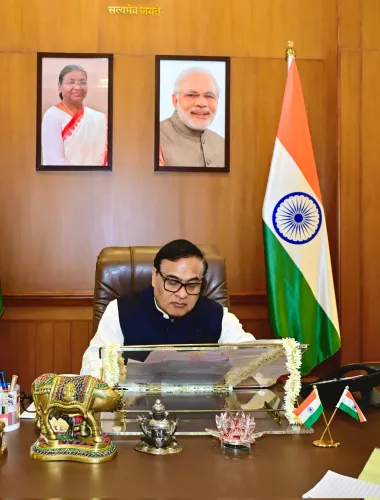
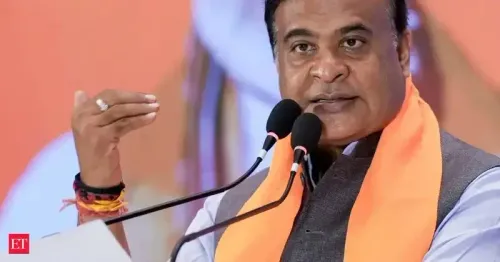
A global economic watchdog has just handed India a confidence boost — and Assam Chief Minister Himanta Biswa Sarma was quick to amplify it. On Thursday, September 24, 2026, the BJP leader and North-East Democratic Alliance (NEDA) convenor shared news of the Organisation for Economic Co-operation and Development (OECD) raising India's GDP growth forecast to 7.1%, citing resilient domestic demand as the key driver.
What the OECD revision signals
The OECD — one of the world's most closely watched multilateral economic institutions — has revised India's growth estimate upward to 7.1%, pointing to the strength of internal consumption rather than reliance on global trade. That distinction matters. When growth is demand-driven from within, it tends to be more durable, less exposed to the volatility of export cycles or foreign capital flows.
India's own annual Economic Survey has flagged resilient domestic demand as the primary engine of expansion in recent years. The OECD's latest revision aligns with that domestic assessment — a rare moment of multilateral and national consensus on economic momentum.
A pattern of upward revisions
This is not a one-off. Multilateral bodies including the OECD, the IMF, and the World Bank have issued successive upward revisions to India's growth outlook since the post-pandemic recovery took hold. The throughline across each revision is the same: internal demand, not external tailwinds, is doing the heavy lifting. For policymakers and investors alike, a 7.1% projection from an institution of the OECD's standing carries significant credibility weight.
Regional political leaders across the spectrum have increasingly used digital platforms to spotlight such forecasts — a sign of how macroeconomic data has entered mainstream political communication in India.
What investors and policymakers are watching next
Two data points will test whether the optimism holds: the next OECD Economic Outlook publication and India's official quarterly GDP figures from the Ministry of Statistics. If domestic consumption numbers continue tracking above expectations, the 7.1% forecast could yet prove conservative.
For now, the OECD's endorsement of India's growth trajectory adds another layer of institutional confidence to an economy that has become one of the defining economic stories of this decade.
Point of View
And multilateral validation of that narrative strengthens India's standing with global investors. For BJP-aligned leaders like CM Himanta Biswa Sarma, amplifying such forecasts is a deliberate part of the party's broader economic messaging strategy ahead of state and national electoral cycles. The successive nature of these upgrades — from the OECD, IMF, and World Bank — suggests a convergence of institutional confidence that is harder to dismiss as selective optimism. The real test, however, remains whether quarterly official GDP data continues to underpin what the models are projecting.
NationPress
24 Sept 2026
Frequently Asked Questions
What is the OECD's new GDP growth forecast for India?
The OECD has raised India's GDP growth forecast to 7.1% , attributing the revision to resilient domestic demand.
Why did the OECD revise India's growth forecast upward?
The OECD cited resilient domestic demand — strong internal consumption rather than export-driven activity — as the primary reason for the upward revision.
Has the OECD revised India's growth forecast before?
Yes. Multilateral bodies including the OECD, IMF, and World Bank have issued successive upward revisions to India's growth outlook since the post-pandemic recovery period.
Who is Himanta Biswa Sarma and why did he share this forecast?
Himanta Biswa Sarma is the Chief Minister of Assam and a senior BJP leader. He shared the OECD forecast on September 24, 2026 , consistent with a broader pattern of regional leaders amplifying positive macroeconomic data on digital platforms.
What data points should investors watch after this OECD revision?
Investors and analysts are watching the next OECD Economic Outlook publication and India's official quarterly GDP figures from the Ministry of Statistics to see if the 7.1% projection holds or is revised further.