CM Himanta Questions Congress on Delimitation's Political Gains

Synopsis
Assam Chief Minister Himanta Biswa Sarma has questioned who benefited politically from three delimitation exercises conducted under Congress-led governments, raising the debate as India prepares for a fresh constituency redraw after the 2026 census.
Key Takeaways
Himanta Biswa Sarma posted on X on 20 November 2026 questioning who gained political advantage from delimitation under Congress rule.
India conducted delimitation exercises after the 1951 , 1961 , and 1971 censuses — all during Congress-led central governments.
The Delimitation Commission of India is a statutory independent body, but boundary decisions have long drawn political scrutiny.
BJP leaders have repeatedly cited past delimitation exercises when debating electoral representation and structural advantage.
A fresh delimitation exercise is anticipated after the 2026 census , making the historical debate directly relevant to current politics.
Sarma is convenor of the North-East Democratic Alliance (NEDA) , giving his remarks regional weight across multiple states.
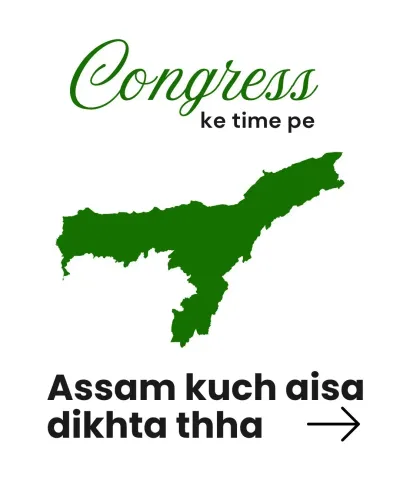
Who really benefited when India's constituency map was redrawn? Assam Chief Minister Himanta Biswa Sarma put that pointed question to the nation on Friday, 20 November 2026, posting on X that delimitation was carried out three times under Congress rule — and asking bluntly who pocketed the political dividends.
Sarma's post, in Hindi, reads: 'Congress ke shasankal mein teen baar Delimitation hua. Aakhir in faisle se kise rajnitik faayda mila?' — 'Delimitation happened three times during Congress's rule. Who ultimately gained a political advantage from these decisions?' The question is rhetorical in tone but deliberately calibrated: it frames the Delimitation Commission of India's past exercises not as neutral administrative acts but as politically consequential choices made under a single party's watch.
Three Exercises, One Government in Power
India has historically conducted delimitation — the redrawing of parliamentary and assembly constituency boundaries — after each major census. The exercises that followed the 1951, 1961, and 1971 censuses all took place when Congress-led governments held power at the Centre. The Delimitation Commission is a statutory, independent body, but BJP leaders have long argued that the timing, priorities, and boundary decisions of those exercises were shaped by the political environment in which they occurred.
Constituency boundaries determine which communities anchor a seat, which towns fall together, and — ultimately — whose votes count where. A party that understands those levers while in government, the argument goes, can embed structural advantages that outlast its own tenure.
Why This Question Lands Now
The post arrives as India watches the horizon for the next delimitation exercise, expected after the 2026 census. With a fresh constituency redraw potentially on the agenda, the debate over who benefits from boundary changes is no longer historical — it is live. Sarma, as convenor of the North-East Democratic Alliance (NEDA), commands attention across a region where constituency geometry directly shapes the balance between tribal, linguistic, and demographic communities.
BJP figures have returned to this theme repeatedly in recent years, using Congress-era delimitation as a prism through which to scrutinise questions of representation and electoral fairness. Sarma's post sharpens that argument into a single, durable question mark — one that is likely to echo through upcoming parliamentary and state-level discussions on the next delimitation round.
Point of View
BJP is positioning itself as the aggrieved party even before the next exercise begins. The rhetorical question technique — asking 'who benefited?' without naming a specific answer — is designed to let audiences reach their own conclusions while keeping the attack deniably neutral. With the 2026 census triggering expectations of a fresh redraw, this narrative about historical bias could become a recurring BJP talking point to contest any outcome that disadvantages the party in key states.
NationPress
20 Nov 2026
Frequently Asked Questions
How many times has delimitation happened in India?
India has carried out delimitation exercises multiple times since independence, notably after the 1951, 1961, and 1971 censuses. A fresh exercise is widely expected following the 2026 census.
What is the Delimitation Commission of India?
The Delimitation Commission of India is a statutory body constituted by the government to redraw the boundaries of parliamentary and state legislative assembly constituencies based on updated census data, ensuring roughly equal voter populations across seats.
Why is Himanta Biswa Sarma raising the delimitation issue now?
With India's 2026 census expected to trigger the next delimitation exercise, questions about who gains or loses from boundary changes have become politically live. Sarma's post frames the historical record under Congress as context for evaluating any future redraw.
Did Congress benefit from past delimitation exercises in India?
This is a contested political question. The three delimitation exercises after the 1951, 1961, and 1971 censuses occurred when Congress governed at the Centre. Whether the boundary decisions structurally favoured Congress has been debated, but no definitive independent finding is available.
What is NEDA and what is Himanta Biswa Sarma's role in it?
The North-East Democratic Alliance (NEDA) is a BJP-led coalition of regional parties across India's northeastern states. Himanta Biswa Sarma, also serving as Assam Chief Minister, is its convenor and a key strategist for the BJP in the Northeast.