CM Rekha Gupta Greets Delhi on Devotthan Ekadashi and Tulsi Vivah
Synopsis
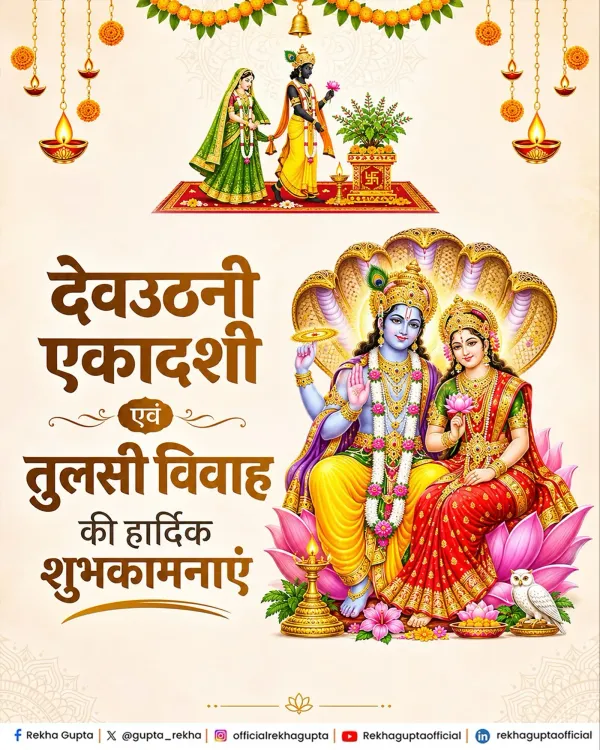
Delhi Chief Minister Rekha Gupta marked Devotthan Ekadashi and Tulsi Vivah on 20 November 2026 with a devotional Hindi message on X, invoking Vishnu's blessings and Mata Tulsi's grace for peace, health and prosperity in every Indian household.
Key Takeaways
Delhi CM Rekha Gupta posted Devotthan Ekadashi and Tulsi Vivah greetings on 20 November 2026 .
Devotthan Ekadashi marks the awakening of Lord Vishnu from his four-month Chaturmas rest in the Kartik month.
Tulsi Vivah enacts the symbolic marriage of the sacred Tulsi plant (as goddess) with the Shaligram form of Vishnu.
CM Gupta described the occasion as 'an unparalleled confluence of devotion, dedication and divine grace' in Sanatan tradition.
The post closed with the Sanskrit invocation Om Namo Bhagavate Vasudevaya , a classic Vishnu mantra.
No policy announcement or official government event was linked to the message; it was a personal public expression of faith.
On the auspicious morning of Devotthan Ekadashi and Tulsi Vivah — two of the most sacred observances in the Hindu calendar — Delhi Chief Minister Rekha Gupta extended her greetings to devotees across the country, invoking the blessings of Bhagwan Shri Hari Vishnu and Mata Tulsi on Friday, 20 November 2026.
Posting in Hindi on X, CM Gupta described the occasion as 'bhakti, samarpan aur Ishwariya kripa ka anupam sangam' — 'an unparalleled confluence of devotion, dedication and divine grace' — within the living tradition of Sanatan Dharma. She expressed a prayer that every household be touched by happiness, peace, good health and prosperity through the compassion of Shri Hari and the blessings of Mata Tulsi, closing with the Sanskrit invocation 'Om Namo Bhagavate Vasudevaya.'
What Devotthan Ekadashi marks in the Sanatan calendar
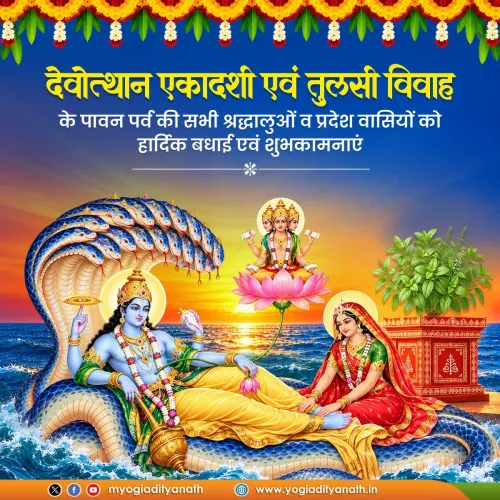
Devotthan Ekadashi, observed on the eleventh lunar day of the bright fortnight in the month of Kartik, is the moment in the Hindu calendar when Lord Vishnu is believed to awaken from his four-month cosmic rest — a period called Chaturmas. His awakening is traditionally understood as a signal that the universe returns to full divine attention, making it one of the most auspicious days for spiritual practice and new beginnings.
The day is marked by pre-dawn prayers, ritual bathing, fasting and the lighting of lamps in Vishnu temples across India. Devotees hold vigils — the jagran (awakening) referenced in CM Gupta's post — to welcome the deity back into active cosmic stewardship.
Tulsi Vivah: the symbolic union at the heart of the festival
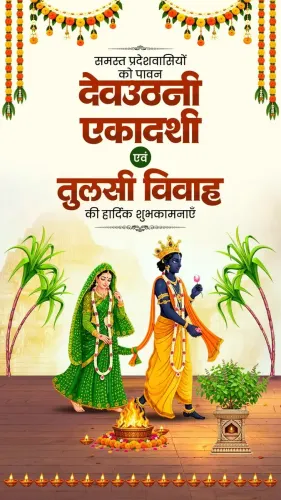
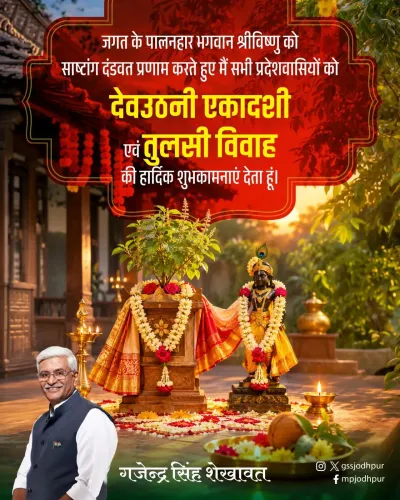
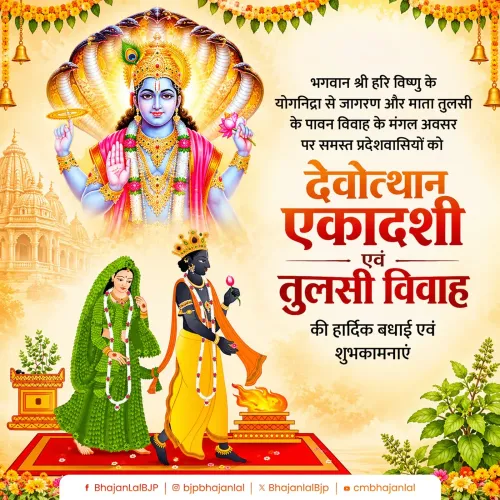
Celebrated on the same or the following day, Tulsi Vivah enacts the ritual marriage of the sacred Tulsi plant — the basil revered as a goddess — with the Shaligram, a stone form of Vishnu. The ceremony mirrors a full Hindu wedding in miniature: the Tulsi plant is decorated as a bride, the Shaligram placed as the groom, and mantras are chanted as family members circumambulate the altar.
In Sanatan tradition, Tulsi is both ecologically sacred and spiritually potent — her presence in a home courtyard is considered a marker of piety and an emblem of the household's connection to Vishnu. CM Gupta's message called the union 'a symbol of sacred love, unbreakable faith and divine dedication.'
A routine of public faith that crosses party lines
Greetings on major Hindu observances have become a standard form of public cultural engagement for elected officials across India's political spectrum. For BJP leaders in particular, articulating alignment with Sanatan traditions is an established mode of political communication — and CM Gupta's message follows the form precisely: personal, devotional in register, and rooted in classical Sanskrit vocabulary rather than policy language.
No official government event or state-sponsored programme was referenced in the post. The message stands as a personal expression of faith extended publicly — a genre Indian politics has normalised across festivals from Diwali to Eid to Christmas.
As Vishnu's awakening is said to open the most auspicious window in the Hindu year for weddings, pilgrimages and new ventures, millions of families across India begin preparations the moment the eleventh day arrives. The Chief Minister's benediction lands squarely in that spirit — a prayer for every household, offered from the seat of the capital.
Point of View
Public devotional messaging on Hindu observances is not incidental — it is structural to the party's cultural politics. CM Rekha Gupta's carefully worded Devotthan Ekadashi post signals continued alignment with the Hindutva cultural calendar that the BJP has mainstreamed across its leadership. The classical Sanskrit register and theological precision of her language — invoking Vishnu's cosmic role as preserver, naming the Shaligram specifically — suggests messaging calibrated for a literate, tradition-conscious base rather than a casual audience. As Delhi prepares for its next electoral cycle, such visible acts of public faith serve as soft markers of ideological continuity.
NationPress
20 Nov 2026
Frequently Asked Questions
What is Devotthan Ekadashi and why is it celebrated?
Devotthan Ekadashi is the Hindu observance on the eleventh lunar day of the bright fortnight in Kartik month, marking the moment Lord Vishnu is believed to awaken from his four-month cosmic rest called Chaturmas. Devotees fast, light lamps and hold vigils to welcome his awakening, which is considered one of the most auspicious days of the Hindu year.
What is Tulsi Vivah and when does it happen?
Tulsi Vivah is a ritual ceremony enacting the symbolic marriage of the sacred Tulsi plant — revered as a goddess — with the Shaligram, a stone embodiment of Lord Vishnu. It is celebrated on Devotthan Ekadashi or the following day, with the Tulsi plant decorated as a bride and wedding mantras chanted by families.
What did Delhi CM Rekha Gupta say on Devotthan Ekadashi 2026?
CM Rekha Gupta posted a devotional Hindi message on X on 20 November 2026, calling the occasion 'an unparalleled confluence of devotion, dedication and divine grace' in Sanatan tradition and praying for happiness, peace, health and prosperity in every family. She closed with the mantra 'Om Namo Bhagavate Vasudevaya.'
Who is Rekha Gupta and what is her political position?
Rekha Gupta is the Chief Minister of Delhi and a leader of the Bharatiya Janata Party (BJP). She heads the Delhi state government.
Why do Indian politicians post greetings on Hindu festivals?
Public greetings on major religious observances are a standard part of political communication in India across party lines. For BJP leaders in particular, visible engagement with Hindu festivals like Devotthan Ekadashi and Tulsi Vivah reinforces cultural alignment with the party's Sanatan-tradition constituency.