CM Himanta Hails India's Clean Sweep at Chemistry Olympiad
Synopsis
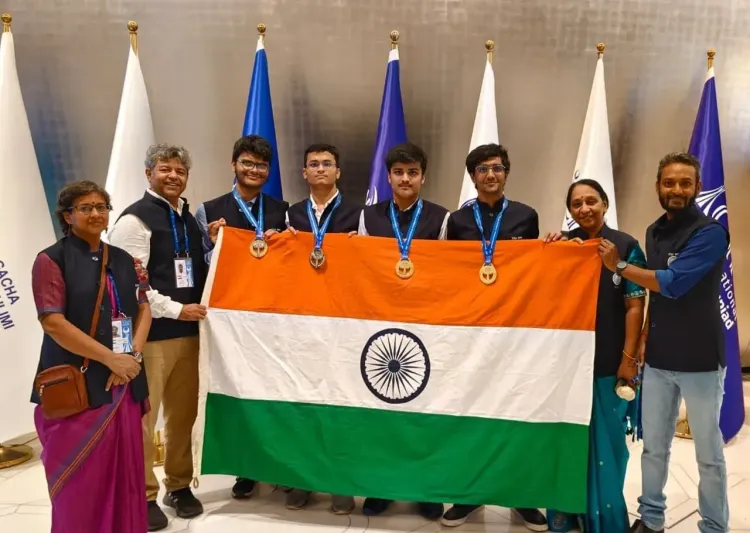
Indian students swept all four gold medals at the International Chemistry Olympiad in Uzbekistan and claimed one gold and three silvers at the International Biology Olympiad in Lithuania, prompting Assam Chief Minister Himanta Biswa Sarma to congratulate the young scientists on 19 July 2026.
Key Takeaways
India won all 4 gold medals at the International Chemistry Olympiad 2026 held in Uzbekistan .
India also secured 1 gold and 3 silver medals at the International Biology Olympiad 2026 in Lithuania .
Assam Chief Minister Himanta Biswa Sarma publicly congratulated the student medallists on 19 July 2026 .
Both olympiads are annual global contests for secondary-school students, with India's teams selected through the Homi Bhabha Centre for Science Education .
The results align with the goals of the National Education Policy 2020 and the INSPIRE scholarship programme in nurturing top science talent.
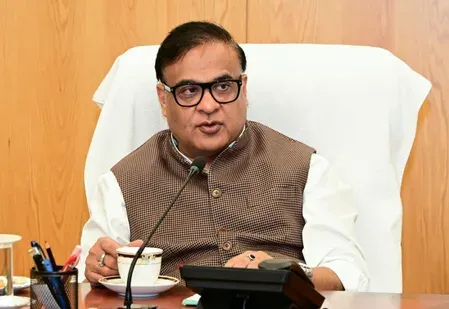
Assam Chief Minister Himanta Biswa Sarma on Sunday, 19 July 2026, congratulated Indian students for a stellar double performance at two prestigious international science competitions — a clean sweep of all four gold medals at the International Chemistry Olympiad held in Uzbekistan, followed by one gold and three silver medals at the International Biology Olympiad in Lithuania.
Context
Sarma's post described India's young scientists as 'brightest young minds' who 'have once again made the nation proud.' The back-to-back medal hauls — a perfect four-gold tally in chemistry and a four-medal return in biology — represent one of India's stronger combined showings across the two olympiads in recent memory. Both the International Chemistry Olympiad (IChO) and the International Biology Olympiad (IBO) are annual competitions that draw the top secondary-school students from over a hundred countries, testing them on rigorous theoretical and practical problems.
The Chemistry Olympiad was hosted this year in Uzbekistan, while the Biology Olympiad was staged in Lithuania. India fields a team of four students in each competition, selected through a multi-stage national screening process conducted under the aegis of the Homi Bhabha Centre for Science Education (HBCSE), the nodal agency for olympiad training in the country.
Policy Backdrop
India's push for olympiad excellence sits within a broader human-capital strategy. The National Education Policy 2020 explicitly calls for fostering scientific temper and encouraging participation in national and international competitions as a pathway to nurturing exceptional talent. Complementing this, the INSPIRE programme — launched by the Department of Science and Technology in 2008 — provides scholarships and mentorship to top-performing school students in science, creating a pipeline that feeds directly into olympiad preparation.
State governments have increasingly aligned their own science-promotion schemes with these central frameworks. Assam, under Sarma's administration, has invested in expanding access to quality science education in government schools as part of a wider effort to integrate the state's students into national talent-identification streams.
Stakeholders and Impact
The immediate beneficiaries are the eight student medallists — four from the Chemistry Olympiad and four from the Biology Olympiad — whose achievements open doors to premier research institutions and scholarship programmes domestically and abroad. Science educators and olympiad coaches across the country also gain visibility for their training methods when India performs at this level on the global stage.
For policymakers, a result of this magnitude provides political and programmatic validation for sustained investment in STEM talent identification. Leaders across party lines routinely highlight such medal tallies as evidence of the country's growing capacity to produce globally competitive researchers and innovators, making these results a point of bipartisan pride.
What's Next
Attention will now turn to the remaining international science olympiads in the current annual cycle — covering mathematics, physics, astronomy, and informatics — where India's student teams are also expected to compete. Any announcement of expanded central or state-level infrastructure for olympiad coaching, particularly in the wake of these results, will be closely watched by the science-education community.
At the policy level, the twin victories are likely to reinforce calls for dedicated olympiad training centres in states that have historically been underrepresented in national selection, as India looks to broaden its talent base beyond a handful of metropolitan hubs.
Point of View
Unambiguous good-news moment on the education front. It also subtly reinforces the NEP 2020 narrative that India's school-level science ecosystem is maturing. Whether the spotlight translates into sustained investment in olympiad infrastructure beyond the top metros will be the real test of political commitment.
NationPress
20 Jul 2026
Frequently Asked Questions
How many medals did India win at the International Chemistry Olympiad 2026?
India won all 4 gold medals on offer at the International Chemistry Olympiad 2026 , which was held in Uzbekistan , achieving a perfect sweep.
Where was the International Biology Olympiad 2026 held?
The International Biology Olympiad 2026 was held in Lithuania , where India's team claimed 1 gold and 3 silver medals .
Who selects India's team for international science olympiads?
India's olympiad teams are selected through a rigorous multi-stage national screening process conducted by the Homi Bhabha Centre for Science Education (HBCSE) , the country's nodal agency for olympiad training.
What government schemes support India's science olympiad students?
The INSPIRE programme , run by the Department of Science and Technology since 2008 , provides scholarships and mentorship to high-performing school students in science, feeding the olympiad talent pipeline. The National Education Policy 2020 also emphasises fostering scientific temper through such competitions.
Why did Himanta Biswa Sarma comment on the olympiad results?
As Assam Chief Minister and a senior BJP leader, Sarma regularly uses social media to highlight national achievements in education and science. His post on 19 July 2026 reflected the broader political practice of amplifying India's international academic successes.