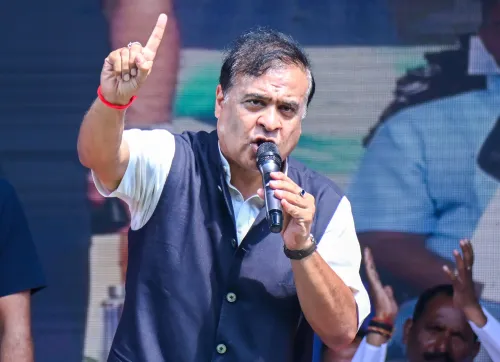
CM Himanta: Infiltrators Must Not Enter Voter Lists

Synopsis
Assam Chief Minister Himanta Biswa Sarma declared on 1 November 2026 that infiltrators cannot enter the voter list, renewing his hardline stance on illegal immigration and electoral roll integrity — a flashpoint rooted in the 1985 Assam Accord and the 2019 NRC exercise.
Key Takeaways
Assam CM Himanta Biswa Sarma posted on X on 1 November 2026 asserting that infiltrators cannot be allowed onto electoral rolls.
He used a combative Hindi phrase — 'उसे पागलखाने में जाना चाहिए' — directed at an unnamed individual who apparently questioned this position.
The Assam Accord of 1985 set 24 March 1971 as the legal cut-off date for identifying foreigners in the state.
The National Register of Citizens (NRC) final list published in 2019 excluded approximately 1.9 million applicants , but voter roll revisions linked to it remain contested.
Sarma is the convenor of the North-East Democratic Alliance (NEDA) and has made anti-infiltration enforcement central to his political identity.
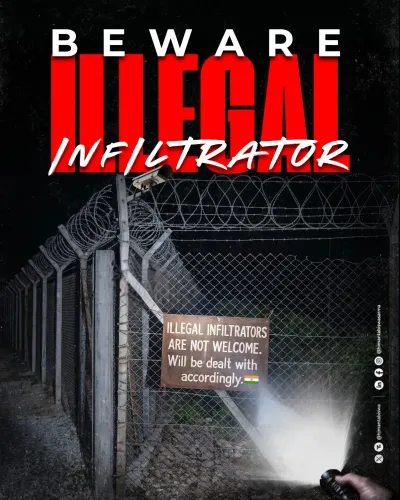
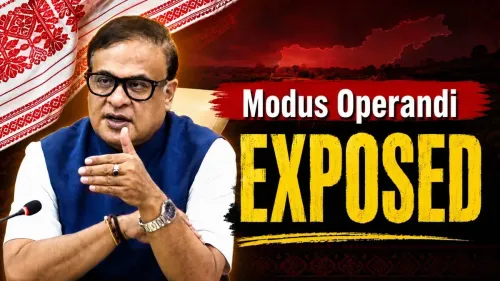
Assam Chief Minister Himanta Biswa Sarma fired a sharp warning on Sunday, 1 November 2026, declaring that infiltrators cannot be allowed onto electoral rolls — and targeting an unnamed individual with a blunt, combative remark that instantly drew attention across political circles.
In a post on X, the Chief Minister mixed Hindi and English to deliver his message without ambiguity: 'उसे पागलखाने में जाना चाहिए' ('He should be sent to a mental asylum'), before pivoting to a hard policy line — 'Ghuspaithhiyon cannot enter the voter list, OK?' The unnamed target of the first barb remains unclear, but the core assertion is unmistakable: illegal immigrants have no place in Assam's voter rolls.
Decades of contested rolls — why this fight never ends
The issue Sarma is poking at is not new — it is, in fact, the defining political fault line of Assam. The Assam Accord of 1985, signed after six years of the Assam Movement, set 24 March 1971 as the legal cut-off date for detecting foreigners. Anyone who arrived after that date is, in law, a deportable alien — and certainly not entitled to vote.
Yet keeping those names off the rolls has proved relentlessly difficult. The Supreme Court-directed National Register of Citizens (NRC) — Assam's most ambitious attempt to resolve the question — published its final list in 2019, excluding approximately 1.9 million applicants. The list satisfied almost no one: indigenous groups called it too permissive, while others challenged exclusions as arbitrary. Voter list revisions tied to that NRC exercise have remained in legal and administrative limbo since.
Sarma's hardline playbook — and what it signals now
As both Chief Minister and convenor of the North-East Democratic Alliance (NEDA), Sarma has consistently made anti-infiltration enforcement a centrepiece of his political identity. His language today — blunt, bilingual, unapologetically aggressive — is consistent with that posture. The post appears to be a direct response to someone who publicly questioned the state's approach to electoral roll purification, though the specific trigger has not been independently verified.
What matters politically is the timing and the forcefulness. With electoral roll revision cycles a recurring flashpoint in Assam, any signal from the Chief Minister's office about tightening citizenship-based voter eligibility checks can accelerate petitions before the Gauhati High Court or the Election Commission of India. Sarma is, in effect, putting pressure on the machinery — loudly and in public.
The battle over who gets to vote in Assam has outlasted governments, court orders, and accords. Sarma's post is a reminder that it is far from over.
Point of View
He reasserts ownership of the anti-infiltration issue ahead of any potential electoral roll revision cycle in Assam. The combative register is deliberate: it energises a base that views NRC implementation as unfinished business. At a broader level, the post reflects the BJP's sustained national strategy of tying citizenship enforcement to electoral credibility, with Assam as its most visible laboratory. The unresolved status of the 2019 NRC and ongoing court oversight means this is a pressure point that any statement from the Chief Minister can quickly escalate into formal legal or administrative action.
NationPress
1 Nov 2026
Frequently Asked Questions
What did Himanta Biswa Sarma say about infiltrators and voter lists?
On 1 November 2026, Assam CM Himanta Biswa Sarma posted on X that infiltrators cannot enter the voter list, using the phrase 'Ghuspaithhiyon cannot enter the voter list, OK?' alongside a combative remark directed at an unnamed individual.
What is the NRC and how does it relate to Assam's voter list?
The National Register of Citizens (NRC) was a Supreme Court-directed exercise to identify illegal immigrants in Assam; its 2019 final list excluded about 1.9 million applicants, and subsequent voter roll revisions based on it have remained in legal limbo.
What is the cut-off date for detecting foreigners in Assam?
Under the Assam Accord of 1985, 24 March 1971 is the legal cut-off date — anyone who entered Assam after that date is treated as a foreigner under the law.
Who is Himanta Biswa Sarma?
Himanta Biswa Sarma is the Chief Minister of Assam, a senior BJP leader, and the convenor of the North-East Democratic Alliance (NEDA), known for hardline positions on immigration and citizenship.
Can the Gauhati High Court intervene on Assam voter list issues?
Yes — the Gauhati High Court and the Supreme Court have previously overseen NRC proceedings and related electoral roll matters in Assam, and statements by the Chief Minister on this issue can prompt fresh petitions before these courts.