CM Himanta invokes 1946 Patel-Nehru contest to counter 'Vote Chori' charge

Synopsis
Assam CM Himanta Biswa Sarma has cited the 1946 Congress presidential election — where 12 of 15 PCCs backed Patel but Nehru prevailed under pressure — to challenge Rahul Gandhi's 'Vote Chori' narrative, calling it a deep historical irony.
Key Takeaways
In 1946 , 12 out of 15 Provincial Congress Committees backed Sardar Patel for Congress president; Nehru received no PCC nominations.
Patel withdrew under pressure, allowing Nehru to become Congress president and later India's first Prime Minister.
Assam CM Himanta Biswa Sarma posted on 1 November 2026 using this history to counter opposition 'Vote Chori' allegations.
Rahul Gandhi , Nehru's great-grandson, has publicly raised concerns about electoral irregularities, which Sarma labels deeply ironic given this history.
BJP has repeatedly used the 1946 Patel-Nehru episode to question the Congress dynasty's democratic credentials.
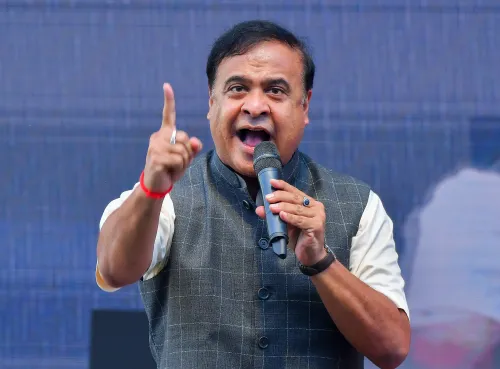
A historical episode buried in Congress's own internal records — the 1946 Congress presidential election — has been pulled back into the national spotlight, this time as a sharp counter-punch against the opposition's 'Vote Chori' narrative. Assam Chief Minister Himanta Biswa Sarma took to X on Sunday, 1 November 2026, to draw a pointed line from that 80-year-old moment directly to the present, calling out what he described as a deep irony at the heart of modern Congress politics.
The 1946 mandate Patel never got to use
The facts Sarma cites are drawn from well-documented Congress history. In 1946, 12 out of 15 Provincial Congress Committees formally backed Sardar Vallabhbhai Patel for the Congress presidency — the internal democratic mandate was, by any measure, overwhelming. Not one Provincial Congress Committee nominated Jawaharlal Nehru. Yet Patel withdrew his candidature under pressure, clearing the path for Nehru to take the presidency and, within months, the office of India's first Prime Minister.
Sarma's framing is unambiguous: a man who commanded a decisive grassroots majority within his own party was edged aside through backroom pressure, not a transparent democratic contest. That the beneficiary's great-grandson now publicly accuses the ruling establishment of stealing votes — 'Vote Chori', as Rahul Gandhi and the Congress opposition have repeatedly characterised electoral outcomes — is, in Sarma's telling, a historical irony too large to ignore. 'What an irony! Shame!' he wrote.
Why BJP returns to this chapter again and again
BJP leaders have made the 1946 Patel-Nehru contest a recurring motif in their political messaging for years. The argument serves a dual purpose: it questions the democratic credentials of the Nehru-Gandhi dynasty's foundational moment, and it reframes the Congress party not as a champion of popular mandates but as an organisation historically comfortable with suppressing them. Patel — whose integration of over 560 princely states as India's first Home Minister remains one of independent India's most consequential acts — is simultaneously positioned as the road not taken, the leader the nation 'lost' to dynastic manoeuvring.
Sarma, as a senior BJP leader and convenor of the North-East Democratic Alliance (NEDA), deploys this history with a specific contemporary target: the opposition's campaign around electoral integrity. By anchoring the accusation of democratic suppression in Congress's own past, he turns the 'Vote Chori' charge back on its source.
The irony argument and what Congress may say next
Congress has historically acknowledged the 1946 episode but argues that Mahatma Gandhi's intervention — it was Gandhi's strong preference for Nehru that decisively shaped the outcome — reflected a considered political judgement about leadership for a newly independent nation, not a theft of democracy. The party is likely to reiterate that framing in response.
What makes Sarma's post sting regardless of that defence is its structural logic: if Nehru's elevation itself bypassed an internal democratic verdict, the moral authority of his descendants to police democratic processes is at the very least complicated. It is a rhetorical trap that Congress has never found an entirely clean way out of — and Sarma knows it.
With state assembly cycles and the larger political calendar keeping electoral integrity firmly in the headlines, expect this exchange to sharpen further. History, in Indian politics, is rarely just history.
Point of View
Flip the frame to origin (Congress's own anti-democratic founding moment). The 1946 Patel episode is particularly potent because it lives in Congress's own historical record — no one can call it fabricated. By tying it to Rahul Gandhi specifically as Nehru's 'great-grandson', Sarma makes the dynastic critique personal and current, not merely archival. The broader pattern signals that as electoral-malpractice allegations intensify ahead of any upcoming polls, BJP will lean harder on the Congress-dynasty-as-hypocrisy narrative rather than engage the procedural substance of the 'Vote Chori' charge directly.
NationPress
1 Nov 2026
Frequently Asked Questions
What happened in the 1946 Congress presidential election?
In 1946, 12 out of 15 Provincial Congress Committees formally nominated Sardar Vallabhbhai Patel for Congress president, while Jawaharlal Nehru received no PCC nominations. Patel subsequently withdrew his candidature under pressure — widely attributed to Mahatma Gandhi's preference for Nehru — allowing Nehru to assume the presidency and later become India's first Prime Minister.
Why is Himanta Biswa Sarma bringing up Patel and Nehru now?
Assam CM Sarma invoked the 1946 episode to counter the Congress opposition's 'Vote Chori' (vote theft) narrative, arguing that Nehru's own elevation bypassed an internal democratic mandate, making his great-grandson Rahul Gandhi's electoral-integrity accusations deeply ironic.
What does 'Vote Chori' mean in Indian politics?
'Vote Chori' literally means 'vote theft' in Hindi. The phrase has been used by Congress and opposition leaders to allege irregularities or manipulation in electoral processes and outcomes.
Who is Rahul Gandhi in relation to Jawaharlal Nehru?
Rahul Gandhi is the great-grandson of Jawaharlal Nehru, India's first Prime Minister. He is a senior Congress leader and has been one of the party's most prominent voices on electoral integrity issues.
Why do BJP leaders repeatedly reference the 1946 Patel-Nehru contest?
BJP leaders use the 1946 episode to argue that the Congress party's democratic credentials are undermined by its own founding history, where a candidate with majority grassroots support (Patel) was sidelined in favour of a leader (Nehru) whose dynasty has dominated the party ever since.