CM Himanta invokes surgical strikes and Ram Mandir as New India's twin pillars
Synopsis
Assam CM Himanta Biswa Sarma posted a sharp Hinglish rallying cry on 7 October 2026, citing India's cross-border military strikes and the Ram Mandir construction as the two pillars of PM Modi's 'New India' — a signature BJP political formulation.
Key Takeaways
Assam Chief Minister Himanta Biswa Sarma posted on X on 7 October 2026 invoking 'Naya Bharat' (New India) under PM Modi.
The post references India's cross-border military strikes against Pakistan as a symbol of hard-power assertion.
The Ram Mandir in Ayodhya , consecrated in January 2024 , is cited as the second defining achievement.
Sarma is convenor of the North-East Democratic Alliance (NEDA) and a leading BJP voice in the region.
The 'New India' framing is a BJP political brand rooted in the post-2014 era and widely used in electoral mobilisation.
No new policy or administrative announcement is contained in the post; it is a political messaging exercise.
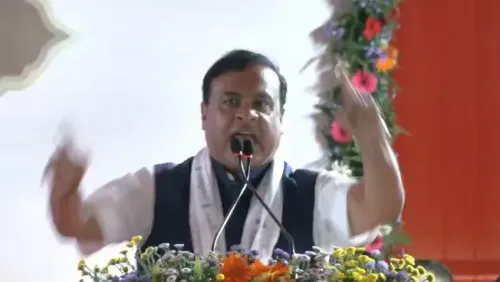
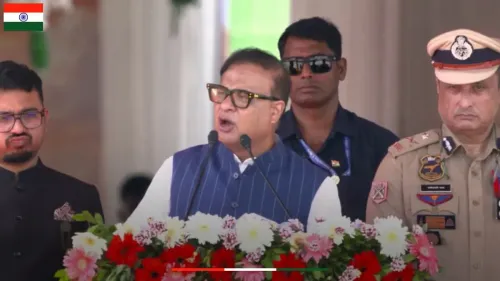
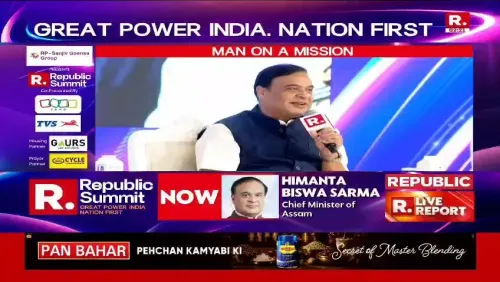
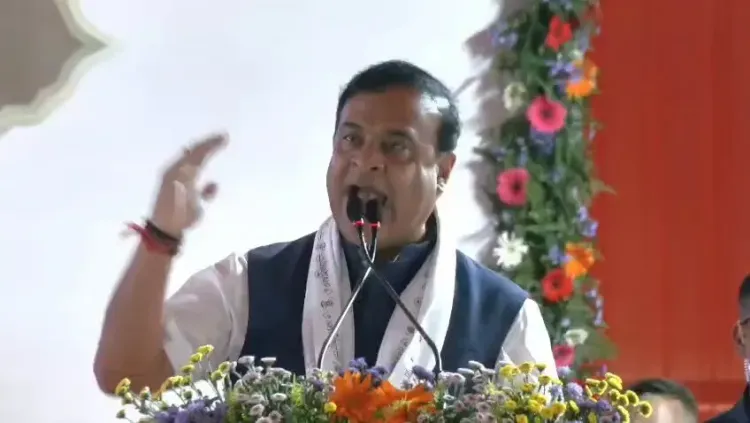
A nation that strikes back across borders and builds its holiest temple on its own terms — that, says Assam Chief Minister Himanta Biswa Sarma, is the defining character of Prime Minister Narendra Modi's India. In a charged post on X on Wednesday, 7 October 2026, Sarma distilled what he sees as the BJP's two crowning achievements into a single rallying cry, blending the language of military assertion with civilisational pride.
The two symbols Sarma chose — and why they resonate
The post, written in Hinglish, translates as: 'Ye Naya Bharat Hai. Ye Adarniya Modi ji ka Bharat hai' — 'This is New India. This is the India of respected Modi ji.' It then pivots to two specific markers: the cross-border military strike ('enters Pakistan and strikes it down') and the construction of the Ram Mandir in Ayodhya. The juxtaposition is deliberate — one symbol speaks to India's willingness to project hard power, the other to its assertion of a Hindu cultural identity long deferred.
The reference to striking 'inside Pakistan' evokes the surgical strikes of September 2016 and the Balakot air strike of February 2019, both of which became central to the BJP's political narrative of a muscular, unapologetic foreign policy under Modi. The Ram Mandir, consecrated in January 2024 after decades of legal and political contest, stands as the other bookend of the BJP's civilisational agenda.
Sarma's framing and the NEDA context
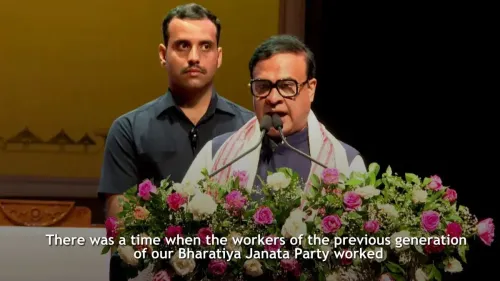
Himanta Biswa Sarma, who also serves as convenor of the North-East Democratic Alliance (NEDA), has been one of the BJP's most vocal regional voices. His posts on X frequently amplify national security and Hindutva themes alongside North-East governance. The timing of this post — with a video attached — suggests it is aimed at a broad party audience ahead of election cycles rather than a specific policy announcement.
The 'New India' formulation itself is a staple of BJP political communication, coined as a forward-looking brand for the post-2014 era, contrasting with what the party frames as the drift and appeasement of previous governments.
Political messaging, not a policy statement
There is no new policy or administrative order embedded in this post. What it does is consolidate an emotional-political argument: that strength abroad and heritage at home are the twin pillars of the Modi government's legacy. For BJP leaders across the country, repeating this framing ahead of electoral contests is a standard mobilisation tool — and Sarma, among the most high-profile regional faces of the party, is deploying it with characteristic directness.
Whether the message finds fresh traction will depend on the political moment — but the iconography Sarma has chosen remains among the most potent in the BJP's electoral vocabulary.
Point of View
The surgical/Balakot strikes and the Ram Mandir consecration, is not accidental: they represent the two promises — security and Hindu cultural assertion — that anchored the BJP's 2019 and 2024 electoral narratives. As a NEDA convenor overseeing North-East alliances, Sarma amplifying this framing signals the party is keeping its base primed well ahead of future electoral cycles. The post contains no policy substance, making it a sentiment-maintenance exercise rather than a governance signal.
NationPress
7 Oct 2026
Frequently Asked Questions
What did Himanta Biswa Sarma post on X on 7 October 2026?
Sarma posted a Hinglish message calling India under PM Modi a 'New India' that strikes inside Pakistan and has built the Ram Mandir — citing both as proof of a transformed, assertive nation.
What is 'Naya Bharat' or New India in BJP politics?
'Naya Bharat' (New India) is a BJP political slogan launched after 2014, positioning the Modi era as a break from earlier governments through stronger national security, economic ambition, and Hindu cultural assertion.
Which military strikes is Sarma referring to when he says India 'entered Pakistan'?
The reference evokes the cross-border surgical strikes of September 2016 and the Balakot air strike of February 2019, both of which became central to the BJP's national security narrative.
When was the Ram Mandir in Ayodhya consecrated?
The Ram Mandir in Ayodhya was consecrated in January 2024 after decades of legal dispute and political mobilisation, with PM Modi presiding over the ceremony.
What is Himanta Biswa Sarma's role beyond being Assam CM?
Himanta Biswa Sarma also serves as convenor of the North-East Democratic Alliance (NEDA), a BJP-led coalition that coordinates political alliances across the eight north-eastern states.