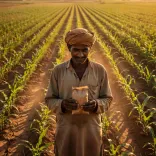
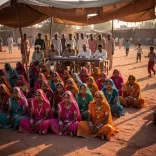
CM Himanta joins Chhath Puja prayers in Guwahati's Pandu-Maligaon
Synopsis
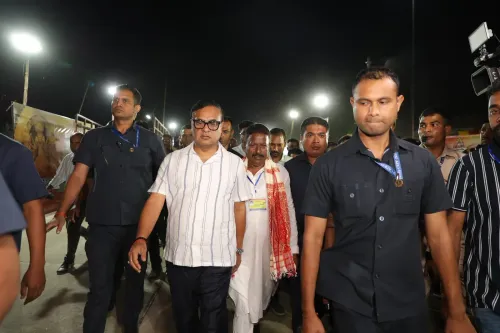
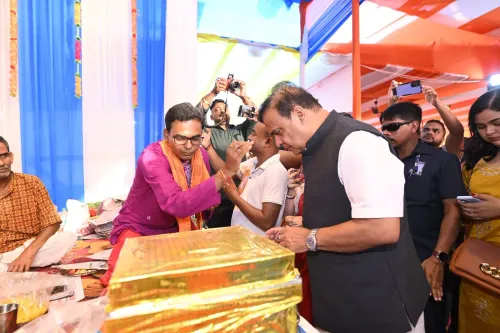
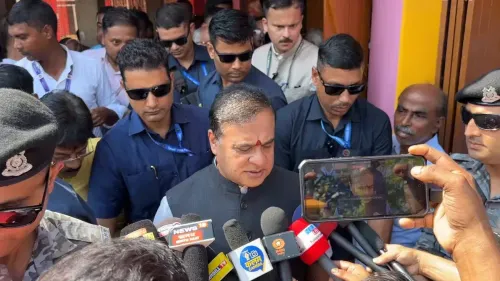
Assam CM Dr. Himanta Biswa Sarma attended two Chhath Puja events at Pandu-Maligaon in Guwahati on 16 November 2026, offering prayers for the people of Assam and interacting with devotees from the state's Bihari community along the Brahmaputra riverfront.
Key Takeaways
Himanta Biswa Sarma attended two Chhath Puja celebrations in Pandu-Maligaon, Guwahati on 16 November 2026 .
He offered prayers for the happiness, peace, and prosperity of the people of Assam at both events.
CM Sarma interacted directly with devotees gathered at the celebrations.
Pandu-Maligaon hosts a significant migrant population from Bihar, eastern UP, and Jharkhand who observe Chhath along the Brahmaputra riverbank.
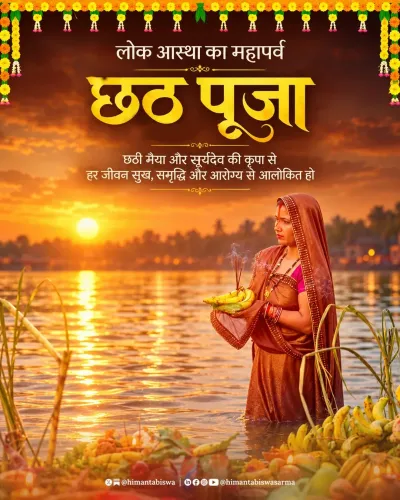
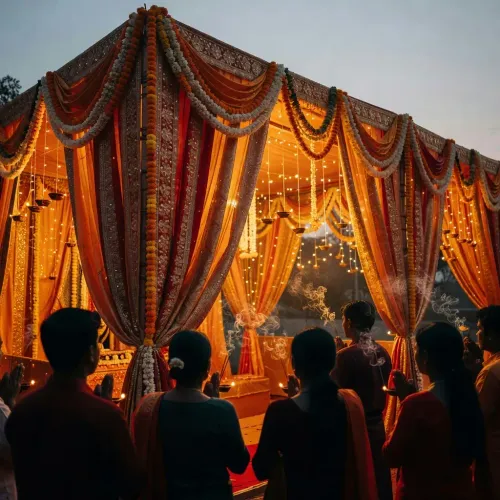
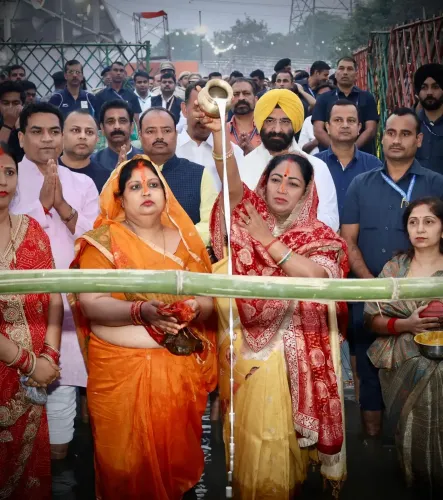
Chhath Puja is a four-day Hindu festival dedicated to the Sun God and Chhathi Maiya, observed without temple intermediaries in open-air settings.
The outreach continues a long-standing tradition of Assam's governments engaging migrant-origin communities through major festivals.
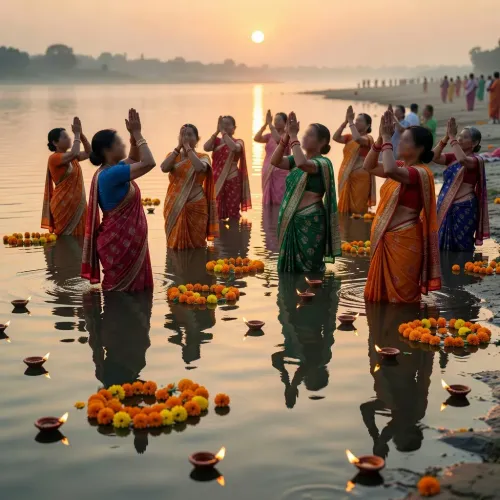
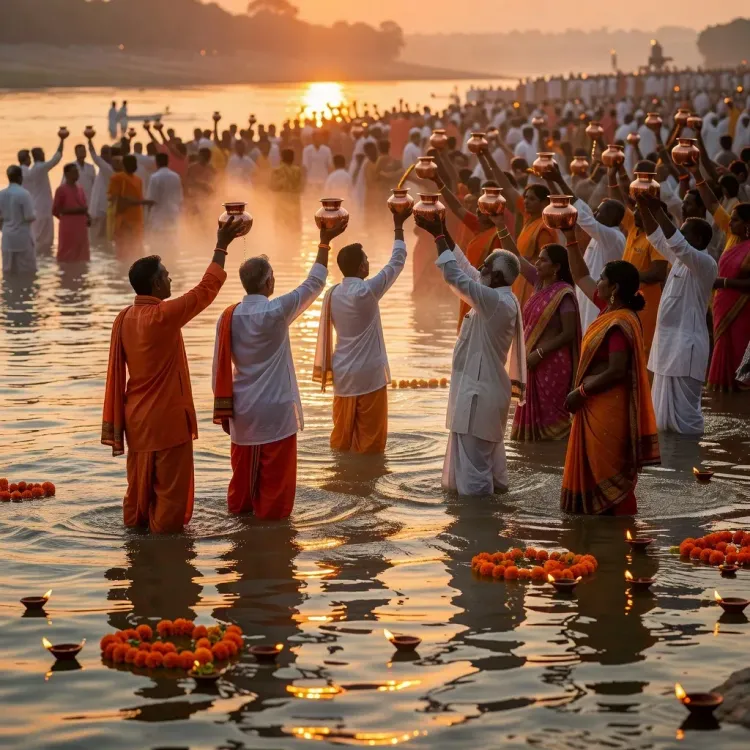
At the banks of the Brahmaputra, where thousands of devotees gathered before dawn to offer arghya to the rising sun, Assam Chief Minister Dr. Himanta Biswa Sarma stood among them — not as a dignitary on a dais, but as a participant in one of eastern India's most demanding festivals. On Monday, 16 November 2026, the Chief Minister's Office of Assam confirmed that he attended two Chhath Puja celebrations in the Pandu-Maligaon area of Guwahati, offered prayers, and interacted directly with devotees.
The CMO shared that Dr. Sarma 'offered prayers for the happiness, peace and prosperity of the people of Assam' and 'extended his heartfelt greetings on the occasion of Chhath Puja' to devotees present at both gatherings.
Why Pandu-Maligaon matters for Chhath
Pandu and Maligaon are adjacent localities along Guwahati's riverfront that have, over decades, become home to a substantial population of migrants from Bihar, eastern Uttar Pradesh, and Jharkhand. For this community, the Brahmaputra ghats serve as a natural stage for Chhath — a four-day festival of strict rituals, fasting, and sunrise-sunset vigils dedicated to the Sun God and Chhathi Maiya. The festival carries no temple intermediary; it is conducted entirely in the open, by rivers, ponds, or any body of water — making Guwahati's riverbank an ideal and emotionally resonant setting.Outreach with roots in Assam's demographic reality
Assam's urban centres, particularly Guwahati, host a mosaic of linguistic and cultural communities. Engagement with migrant-origin groups through festival participation has been a consistent practice of successive state governments — a soft but deliberate tool for social cohesion. Dr. Sarma, who has led the BJP government in Assam since May 2021, has continued and arguably deepened this tradition. Attending not one but two Chhath gatherings in a single morning signals active, ground-level presence rather than a token appearance. The Bihari and eastern-UP diaspora in Assam is not a small footnote — it is a culturally visible, economically active community whose festivals draw large public participation in Guwahati each year. A Chief Minister walking the ghats, speaking with devotees, and sharing in the occasion carries meaning that no press release can manufacture. As Assam moves toward more community events in the remaining weeks of 2026, all eyes will be on whether the state follows up cultural outreach with concrete welfare announcements for migrant communities — because prayers at the ghat are the opening note, not the whole song.Point of View
Visibly honouring a festival central to Bihari and eastern-UP identity reinforces the party's pan-Hindu cultural coalition-building beyond its traditional Assamese base. It also reflects a broader national pattern where state leaders use festival participation as low-cost, high-visibility social capital. The real policy test comes after the celebrations: whether cultural presence translates into substantive welfare measures for migrant communities will determine how much weight the symbolism carries.
NationPress
16 Nov 2026
Frequently Asked Questions
Why did CM Himanta Biswa Sarma attend Chhath Puja in Guwahati?
CM Dr. Himanta Biswa Sarma attended Chhath Puja celebrations in Guwahati's Pandu-Maligaon area on 16 November 2026 to offer prayers for the happiness, peace, and prosperity of the people of Assam and to interact with devotees from the state's Bihari community.
Where is Chhath Puja celebrated in Guwahati?
Chhath Puja in Guwahati is prominently celebrated in the Pandu and Maligaon localities along the Brahmaputra riverbank, which host a large population of migrants from Bihar, eastern Uttar Pradesh, and Jharkhand.
What is Chhath Puja and who observes it?
Chhath Puja is a four-day Hindu festival dedicated to the Sun God and Chhathi Maiya. It is observed with strict fasting and open-air rituals primarily by communities from Bihar, eastern Uttar Pradesh, and Jharkhand, including their diaspora across India.
How long has Himanta Biswa Sarma been Chief Minister of Assam?
Dr. Himanta Biswa Sarma has served as Chief Minister of Assam since May 2021 , leading the BJP-led government in the state.
Why is Chhath Puja significant for communities in Assam?
Chhath Puja holds deep cultural and religious significance for Assam's migrant communities from Bihar and eastern India. Its celebration along the Brahmaputra in Guwahati reflects the community's preservation of their cultural identity, and the festival draws large public participation each year.