CM Bhajanlal's Govt Claims Rs 3,200 Cr for Tribal Welfare in 3 Years
Synopsis
The Chief Minister's Office of Rajasthan says the BJP-led 'double engine' government has provisioned approximately Rs 3,200 crore for tribal development over three years, with CM Bhajan Lal Sharma cited as the driving force behind the outlay.
Key Takeaways
The Rajasthan CMO announced a cumulative provision of approximately Rs 3,200 crore for tribal community development over three years .
The allocation is attributed to the 'double engine' governance model linking the BJP state government with central schemes.
The post is tagged to Chief Minister Bhajan Lal Sharma , who has led Rajasthan since December 2023 .
Rajasthan's tribal populations are concentrated in southern and southeastern districts including Udaipur, Banswara, and Dungarpur .
The stated provision averages over Rs 1,000 crore annually , though disbursement and utilisation rates remain to be verified in legislative and audit records.
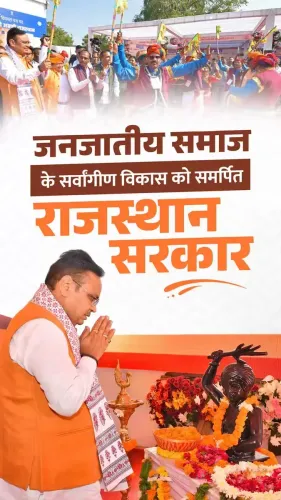
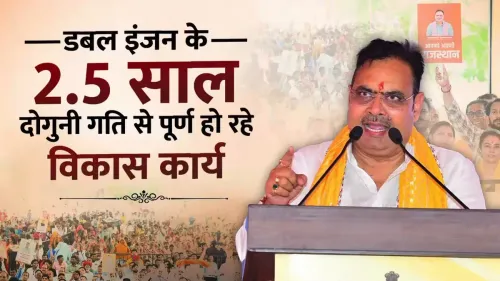
Three years, one governing philosophy, and a figure the Rajasthan government wants tribal communities to remember: nearly Rs 3,200 crore earmarked for their development. The Chief Minister's Office of Rajasthan posted on Monday, November 16, 2026, citing this cumulative provision as evidence of what the ruling BJP calls the 'double engine' model of governance — state and central resources pulling in the same direction.
The post, tagged to Chief Minister Bhajan Lal Sharma and carrying the hashtag #आपणो_अग्रणी_राजस्थान ('Our Leading Rajasthan'), frames the allocation as a defining achievement of the BJP government that took office in December 2023 under Sharma's leadership. Translated, the post reads: 'The double engine government has made a provision of approximately Rs 3,200 crore for the development of the tribal community in three years.'
What 'Double Engine' Means for Rajasthan's Tribal Belt
The 'double engine' rhetoric has been a consistent BJP framing across states it governs alongside the central government — the argument being that BJP-ruled states can unlock central tribal welfare schemes faster and at greater scale. Rajasthan has significant Scheduled Tribe populations concentrated in its southern and southeastern districts, regions that have historically lagged on development indicators.
Coordinated state-central spending on tribal welfare typically flows through schemes covering education, health, housing, livelihood, and forest rights. The Rajasthan government's claim of Rs 3,200 crore over three years positions this as a sustained commitment rather than a one-year budget line — an average of over Rs 1,000 crore annually directed at these communities.
Sharma's Government and the Tribal Welfare Scoreboard
Bhajan Lal Sharma, who assumed office in December 2023, has used tribal welfare spending as a marker of delivery for the BJP's first term in Rajasthan after the Congress interlude under Ashok Gehlot. Highlighting a cumulative three-year figure, rather than a single-year budget allocation, is a deliberate political communication choice — it aggregates small annual movements into a headline number ahead of potential review cycles.
The actual breakdown by scheme, district, and utilisation rate will be the real test. Announced provisions and funds actually disbursed to tribal households can diverge sharply — a gap that opposition parties and civil society watchdogs will scrutinise in upcoming Rajasthan legislative sessions and audit reports.
For now, the number is on the board. Whether it translates into measurable change in the tribal districts of Udaipur, Banswara, and Dungarpur is the question the next budget cycle will have to answer.
Point of View
200 crore figure is classic pre-review-cycle political signalling — aggregating three years of budgetary provisions into a single headline number to project sustained commitment to Rajasthan's tribal belt. For the BJP, tribal welfare spending is both a policy priority and an electoral hedge in districts where Congress has historically commanded loyalty. The 'double engine' framing is also an implicit argument that BJP governance at both state and centre produces faster, larger welfare delivery — a claim that becomes testable only when fund utilisation data enters the public domain. The real political temperature on this announcement will be set by what opposition parties and tribal rights groups say about the gap between provisioned and actually disbursed funds.
NationPress
16 Nov 2026
Frequently Asked Questions
How much has the Rajasthan government spent on tribal development in three years?
The Rajasthan CMO claims a provision of approximately Rs 3,200 crore for tribal community development over three years under the BJP government led by Chief Minister Bhajan Lal Sharma.
What is the 'double engine' government in Rajasthan?
'Double engine' government refers to the BJP's framing of having the same party in power at both the state and central level, which the party argues enables faster unlocking of central schemes and larger welfare allocations for states like Rajasthan.
Which tribal districts in Rajasthan benefit from this welfare spending?
Rajasthan's Scheduled Tribe populations are primarily concentrated in southern and southeastern districts including Udaipur, Banswara, and Dungarpur , which are the principal focus of state tribal welfare programmes.
Who is the Chief Minister of Rajasthan in 2026?
Bhajan Lal Sharma of the BJP has been the Chief Minister of Rajasthan since December 2023 , when the party returned to power after defeating the Congress government.
What does the hashtag Aapno Agrani Rajasthan mean?
आपणो अग्रणी राजस्थान translates to 'Our Leading Rajasthan' — a campaign phrase used by the Rajasthan BJP government to brand its development and governance narrative.