CM Himanta rallies 1.05 lakh SHGs in Kokrajhar's anti-drug drive
Synopsis
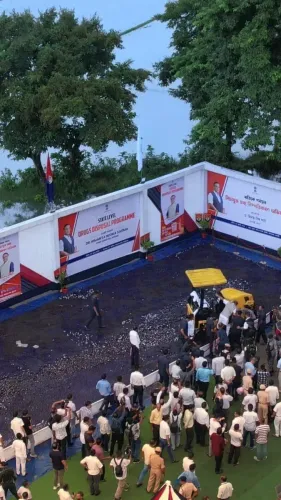
Assam CM Himanta Biswa Sarma on July 29 saluted a mass mobilisation in Kokrajhar where over 1.05 lakh Self Help Groups joined a community-led anti-drug drive, framing it as a people's movement and a template for all of Assam under #AssamAgainstDrugs.
Key Takeaways
CM Himanta Biswa Sarma on July 29, 2026 highlighted a major anti-drug mobilisation in Kokrajhar , Assam.
More than 1.05 lakh Self Help Groups and village organisations in Kokrajhar have joined the anti-narcotics campaign.
The Chief Minister framed the drive as a jan-jan ki ladai — a people's movement beyond government enforcement alone.
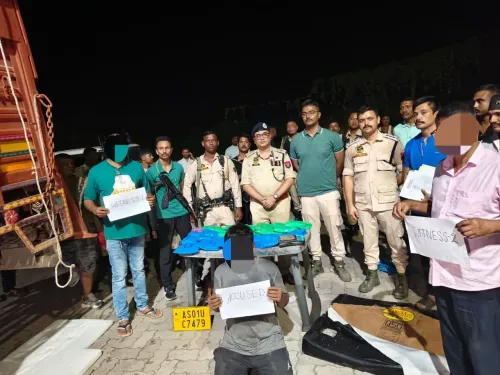
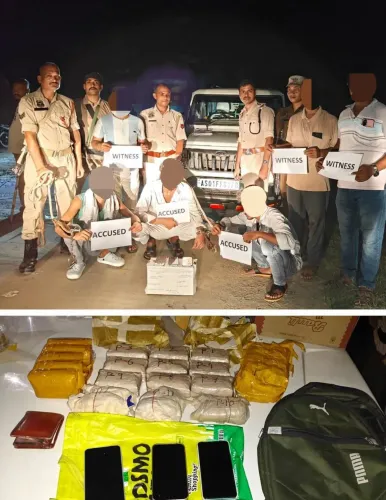
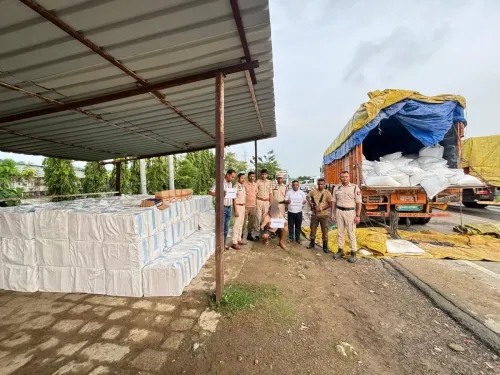
Assam has intensified NDPS Act enforcement since 2021 , and is now pairing it with community-led awareness through SHG networks.
Kokrajhar in the Bodoland Territorial Region is being positioned as a replicable model for other Assam districts.
A people's war against narcotics is underway in Assam's Bodoland Territorial Region — and its newest front-line soldiers are women. Assam Chief Minister Himanta Biswa Sarma on Wednesday, July 29, 2026, hailed a mass mobilisation in Kokrajhar where more than 1.05 lakh Self Help Groups and village organisations have sounded what he called a shankhnada — a conch-shell call to arms — against the drug menace.
Posting under the hashtag #AssamAgainstDrugs, the Chief Minister declared: 'The fight against DRUGS is no longer just the government's fight — it is the fight of every single person.' The framing was deliberate: this is not a police bulletin, it is a social uprising.
Kokrajhar as the flashpoint
Kokrajhar, the administrative heart of the Bodoland Territorial Region, has long sat at the crossroads of Assam's security challenges. Synthetic drugs and opiates have filtered into the Northeast through porous international borders, and districts like Kokrajhar — with young populations and a history of conflict — have been among the most exposed. The mobilisation of women's SHGs here is therefore not incidental. It is strategic: these networks already thread through villages that formal law enforcement struggles to reach.SHGs as the state's social nervous system
Since the BJP government took office in Assam in 2016 and accelerated under Chief Minister Sarma from 2021, Self Help Groups have been steadily repositioned — from purely economic units into vehicles for social campaigns. The anti-drug push is the sharpest expression of that shift yet. With over 1.05 lakh groups in a single district reportedly joining the movement, the state is essentially converting its rural women's network into a community surveillance and awareness grid. This sits alongside intensified enforcement: since 2021, the Assam government has ramped up operations against drug trafficking networks and poppy cultivation under the Narcotic Drugs and Psychotropic Substances (NDPS) Act, logging thousands of arrests and large seizures. But enforcement alone cannot win a border-state drug crisis. The Kokrajhar model signals a bet that community ownership — jan-jan ki ladai, a fight belonging to every person — is what converts short-term crackdowns into lasting change.The message beyond Kokrajhar
Sarma explicitly framed the Kokrajhar mobilisation as 'a powerful message for all of Assam.' The political implication is clear: the government intends to hold this moment up as a replicable template. Whether other districts with active SHG networks — Barpeta, Dhubri, Cachar — follow with similar mass gatherings, and whether the state formalises linkages with central de-addiction schemes or SHG capacity-building funds, will determine if Kokrajhar remains a headline or becomes a blueprint. When more than a lakh women's groups in one district collectively pledge to fight narcotics, the government's anti-drug campaign stops being a policy document and starts being a movement — and that is a very different kind of power.Point of View
CM Sarma is advancing a governance thesis that community ownership — especially women-led — is the missing layer in India's war on drugs. This fits a broader BJP Northeast strategy of converting rural self-help infrastructure into instruments of social policy. The real test is institutionalisation: if Kokrajhar's momentum is formalised through state funding or central scheme linkages, it becomes a durable model; if it remains a rally moment, it risks being optics. Either way, the political messaging — that the BJP government has moved the anti-drug fight from police stations into village squares — is unmistakable ahead of future electoral cycles in the region.
NationPress
28 Oct 2026
Frequently Asked Questions
What is the Assam anti-drug SHG campaign in Kokrajhar?
It is a mass community mobilisation in Kokrajhar where over 1.05 lakh Self Help Groups and village organisations have pledged to fight drug abuse, endorsed by CM Himanta Biswa Sarma as a model for all of Assam.
What did CM Himanta Biswa Sarma say about drugs in Assam?
CM Sarma declared that the fight against drugs is no longer only the government's responsibility but a people's movement, praising the Kokrajhar SHG mobilisation as a powerful message for the entire state.
What is #AssamAgainstDrugs?
#AssamAgainstDrugs is the campaign hashtag used by the Assam government and CM Sarma to promote community-led anti-narcotics awareness across the state.
Why is Kokrajhar significant in Assam's drug problem?
Kokrajhar is the administrative centre of the Bodoland Territorial Region, an area historically exposed to drug trafficking via Assam's porous borders, making its community mobilisation especially significant.
How are Self Help Groups involved in Assam's anti-drug drive?
SHGs — women's community organisations promoted under Assam's rural development programmes — are being mobilised as grassroots awareness and social-pressure networks to complement police enforcement under the NDPS Act.