CM Himanta: Kokrajhar Police Recover NSLA Arms in BTR Jungle Op
Synopsis
Kokrajhar Police recovered NSLA arms and ammunition from the jungles of Motihjora in BTR following an intelligence-based operation, Assam CM Himanta Biswa Sarma announced on 24 October 2026, calling it a major step toward eradicating residual militancy in Assam.
Key Takeaways
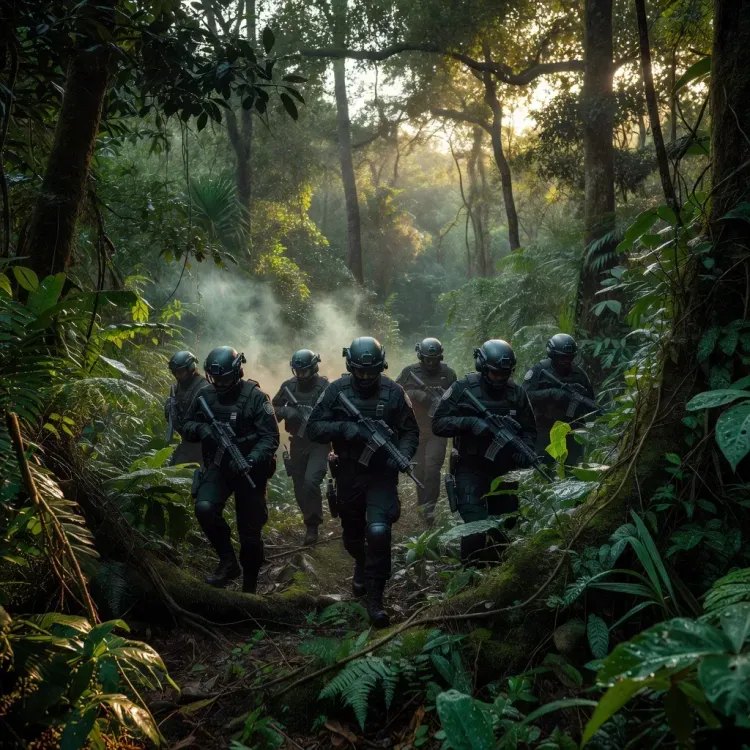
Kokrajhar Police launched an intelligence-based operation in the dense jungles of Motihjora , recovering arms and ammunition abandoned by the NSLA .
Assam CM Himanta Biswa Sarma called the recovery 'a major success' in the state's effort to destroy every remaining relic of militancy.
The operation took place in the Bodoland Territorial Region (BTR) , which CM Sarma identified as a top priority for peace maintenance.
The recovery is part of Assam's broader post-accord campaign to neutralise residual militant infrastructure following the 2020 Bodo Peace Accord .
Legacy weapons caches in remote jungle areas remain a key security challenge even after formal surrenders by insurgent factions.
Hidden in the dense undergrowth of Motihjora in Kokrajhar district, a cache of weapons sat quietly — the forgotten arsenal of a militant group the state of Assam has spent years dismantling. On Saturday, 24 October 2026, Assam Chief Minister Himanta Biswa Sarma announced that Kokrajhar Police, acting on specific intelligence, had launched an operation into those jungles and recovered arms and ammunition left behind by the NSLA.
CM Sarma described the recovery as 'a major success' for Assam Police in its mission to 'destroy every remaining relic of militancy in Assam,' adding that 'maintaining peace in BTR remains our top priority.'What the Motihjora jungle was hiding
The operation targeted thick forested terrain in Motihjora, part of the Bodoland Territorial Region (BTR) in western Assam — a geography that has long provided cover for militant activity. Intelligence-led operations of this kind are designed precisely for such terrain: ground forces move in with advance information rather than mounting broad sweeps, reducing risk and increasing precision. The recovered weapons represent what security officials call 'legacy infrastructure' — stockpiles left behind as outfits splintered or surrendered, but never destroyed, posing a latent threat to civilian life.
The long shadow of NSLA in BTR
The NSLA (National Santhal Liberation Army) is among the smaller armed outfits that operated in the northeastern frontier, distinct from the more prominent NDFB factions whose surrender was formalised under the landmark 2020 Bodo Peace Accord. That accord reorganised the Bodoland Territorial Region and prompted the disarmament of several insurgent factions — but residual weapons caches scattered across remote jungle areas remained a persistent security challenge. Saturday's recovery is a direct consequence of that unfinished disarmament geography.
Assam's sustained push against residual militancy
Assam Police has pursued a sustained counter-insurgency campaign across the post-accord period, combining targeted operations with rehabilitation programmes for surrendered cadres. The BTR and its adjoining districts have remained a focal zone, given their history of ethnic conflict and the density of armed groups that once operated there. Each arms recovery — however unglamorous compared to an encounter or a surrender — closes off a supply line that could otherwise fuel fresh violence. CM Sarma has consistently framed this effort as non-negotiable: peace in the Northeast is only as durable as the weapons still buried in its jungles.
With follow-up operations likely across BTR's remaining forest corridors, Saturday's find signals that Assam's intelligence network in the region is active — and that the hunt for militancy's last physical traces is far from over.
Point of View
Not just political settlements. For CM Sarma, publicising such operations serves a dual purpose: it signals capability to potential spoilers and reinforces his administration's narrative of a pacified, investment-ready Northeast. The NSLA cache also underscores a wider pattern — that even after headline surrenders, jungle stockpiles persist and require persistent intelligence-led pressure. How comprehensively BTR's residual arms infrastructure is cleared will ultimately test the durability of the 2020 Bodo Peace Accord's security dividend.
NationPress
25 Oct 2026
Frequently Asked Questions
What did Kokrajhar Police recover in the Motihjora jungle operation?
Kokrajhar Police recovered arms and ammunition left behind by the NSLA militant outfit during an intelligence-based operation in the dense jungles of Motihjora in Assam's Bodoland Territorial Region.
What is the NSLA in Assam?
The NSLA (National Santhal Liberation Army) is a militant outfit that operated in Assam's northeastern frontier region, with abandoned weapons linked to the group recovered in the Motihjora operation.
What is the BTR and why is it significant for Assam's security?
The Bodoland Territorial Region (BTR) is an autonomous council area in western Assam with a history of ethnic insurgency. It remains a priority zone for Assam Police following the 2020 Bodo Peace Accord, which led to the surrender of several NDFB factions but left residual arms caches in its jungles.
What is the 2020 Bodo Peace Accord?
The 2020 Bodo Peace Accord was a landmark agreement that led to the surrender and disarmament of multiple NDFB factions and reorganised the Bodoland Territorial Region, significantly reducing active insurgency in western Assam.
How has Assam been tackling residual militancy after peace accords?
Assam Police has combined targeted intelligence-led operations in remote jungle areas with rehabilitation programmes for surrendered cadres, aiming to neutralise physical militant infrastructure — including hidden weapons caches — that persists even after formal peace agreements.