CM Himanta Launches Assam's First Green Cess on Polluters
Synopsis
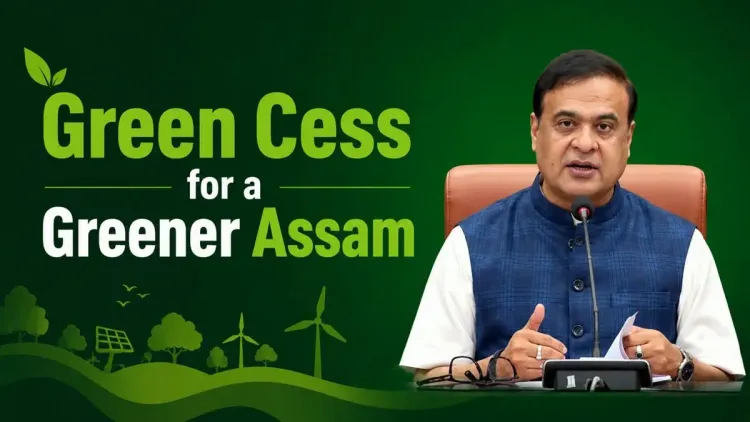
Assam Chief Minister Himanta Biswa Sarma has announced a first-of-its-kind Green Cess on polluting industries as part of Assam Budget 2026. All proceeds will be ring-fenced for afforestation, water conservation, and climate action, marking a significant shift in the state's environmental financing strategy.
Key Takeaways
Assam is introducing a Green Cess on polluting industries for the first time, announced by CM Himanta Biswa Sarma on 10 July 2026 .
The cess is built on the 'polluter pays' principle, making industries financially accountable for environmental degradation.
Every rupee collected will be exclusively directed toward afforestation, water conservation, and climate action .
The measure is part of the Assam Budget 2026 and will require legislative passage before it has statutory force.
The initiative aligns with India's net-zero 2070 target and the broader pattern of states deploying sub-national fiscal tools for conservation.
Detailed rules on levy rates, covered industries, and fund utilisation are expected after the budget is formally passed.
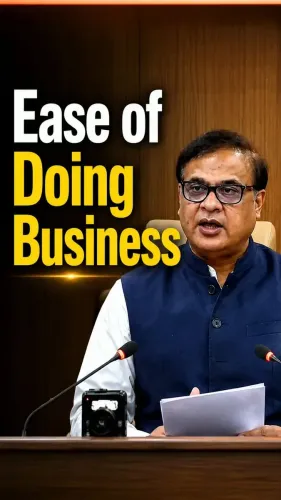
Assam Chief Minister Himanta Biswa Sarma announced on Friday, 10 July 2026, that the state will introduce a Green Cess on polluting industries for the first time — a flagship environmental measure embedded in the Assam Budget 2026. The levy is designed on a 'polluter pays' principle, with every rupee collected ring-fenced exclusively for afforestation, water conservation, and climate action.
Context
Announcing the measure on social media, CM Sarma wrote: 'Those who pollute must also pay to protect our environment. For the very first time Assam is introducing a Green Cess on polluting industries. Every rupee collected will go towards afforestation, water conservation and climate action.' The post, tagged #AssamBudget2026, signals that the cess is part of the state's formal budget proposals rather than a standalone executive order.
Assam hosts significant industrial activity across its tea, petroleum, and manufacturing sectors — all of which generate measurable environmental stress on the state's rivers, wetlands, and forest cover. The Green Cess is positioned as a corrective fiscal instrument targeting precisely those sectors.
Policy Backdrop
The move fits within a well-established national framework. India enacted the Compensatory Afforestation Fund Act in 2016, creating a dedicated mechanism to channel funds from forest land diversion into afforestation and ecological restoration. Several Indian states have since layered their own sector-specific environmental levies on top of central provisions to accelerate conservation spending.
At the macro level, India has committed to achieving net-zero emissions by 2070, and each state is expected to align its State Action Plan on Climate Change with that trajectory. A ring-fenced cess directly tied to afforestation and water conservation gives Assam a dedicated revenue stream to fund those commitments without competing with general budget allocations.
Stakeholders and Impact
The primary stakeholders on the cost side are Assam's polluting industries — spanning tea processing units, oil refineries, and manufacturing plants — which will bear the new levy. Industry bodies may seek clarity on the rate structure, exemption thresholds, and compliance timelines once the budget is tabled formally.
On the beneficiary side, the Assam Forest Department and allied water-conservation agencies stand to receive a fresh, predictable funding stream. Communities dependent on the Brahmaputra basin's ecological health — particularly those vulnerable to annual flooding and soil erosion — are the intended long-term beneficiaries of the afforestation and water-conservation programmes the cess will finance.
What's Next
The Assam legislature will need to pass the Budget 2026 proposals before the Green Cess has statutory force. Detailed rules governing the levy rate, the list of covered industries, the fund utilisation mechanism, and oversight arrangements are expected to follow the budget's passage.
Possible industry representations or legal challenges during the implementation phase cannot be ruled out, particularly if the cess rate is set at a level that materially affects operating margins in capital-intensive sectors. How CM Sarma's government structures the grievance-redressal and fund-audit framework will determine whether the initiative becomes a durable environmental financing model for other northeastern states to replicate.
Point of View
Allowing the BJP-led government in Assam to stake a credible environmental position ahead of a period when climate accountability is becoming an electoral consideration even in state politics. By ring-fencing the revenue, the government insulates the fund from general budget pressures and pre-empts criticism that the cess is merely a revenue grab. The 'polluter pays' framing also gives the administration a principled basis to resist industry lobbying for dilution. If the implementation architecture — rates, audit, utilisation — is robust, Assam could establish a replicable sub-national model for green fiscal policy across the northeast.
NationPress
10 Jul 2026
Frequently Asked Questions
What is the Assam Green Cess announced in Budget 2026?
The Assam Green Cess is a new levy on polluting industries announced by Chief Minister Himanta Biswa Sarma as part of Assam Budget 2026. It is the first such cess in the state's history, and all proceeds are earmarked exclusively for afforestation, water conservation, and climate action.
Which industries will be affected by the Assam Green Cess?
The cess targets polluting industries operating in Assam, which include sectors such as tea processing, petroleum, and manufacturing. Exact industry categories, levy rates, and exemption thresholds are expected to be specified once the Assam Budget 2026 is formally passed by the legislature.
Where will the money collected from the Green Cess go?
Every rupee collected through the Green Cess will go towards afforestation, water conservation, and climate action in Assam, as stated by CM Himanta Biswa Sarma. The ring-fencing of funds is intended to ensure the revenue is not diverted to general government expenditure.
Is a 'polluter pays' environmental cess a new concept in India?
No. Multiple Indian states have introduced sector-specific environmental levies, and India's Compensatory Afforestation Fund Act of 2016 established a national framework for channelling funds from forest land diversion into conservation. Assam's Green Cess is the first such instrument specifically for the state, fitting a broader national pattern.
When will the Assam Green Cess come into effect?
The Green Cess will come into effect only after the Assam legislature formally passes the Budget 2026 proposals. Detailed rules on rates, covered industries, and fund utilisation mechanisms are expected to be notified following the budget's passage.