CM Himanta Leads AIF Workshop to Boost Assam Agriculture

Synopsis
Assam Chief Minister Himanta Biswa Sarma attended an Agriculture Infrastructure Fund workshop at Jyoti Bishnu Antarjatik Kala Mandir in Guwahati on 25 July 2026, reinforcing the state's drive to utilise the Centre's Rs 1 lakh crore scheme for post-harvest infrastructure and farmer welfare in the northeast.
Key Takeaways
CM Himanta Biswa Sarma attended the Agriculture Infrastructure Fund workshop in Guwahati on 25 July 2026 .
The AIF , launched in May 2020 under the Atmanirbhar Bharat package, has a corpus of Rs 1 lakh crore for post-harvest and farm infrastructure.
The scheme targets storage, processing, and value-addition gaps — areas where northeastern states face significant structural challenges.
Key beneficiaries include Assam's smallholder farmers and Farmer Producer Organisations (FPOs) .
Assam's BJP-led government has aligned state agriculture policy with central schemes since 2016 .
Disbursement figures and new project approvals in the current financial year will be the next key indicators of progress.
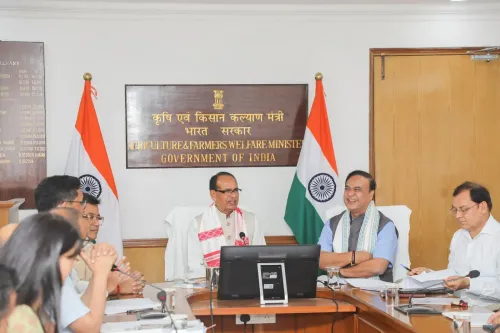
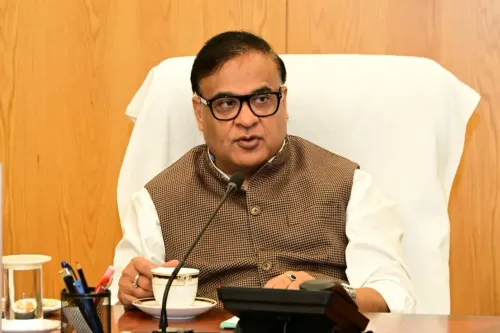
Assam Chief Minister Himanta Biswa Sarma on Saturday, 25 July 2026, participated in a workshop on the Agriculture Infrastructure Fund (AIF) held at Jyoti Bishnu Antarjatik Kala Mandir in Guwahati, underscoring the state government's push to channel central agricultural financing into on-ground infrastructure across Assam.
Context
The Chief Minister described the event as an opportunity for 'advancing Assam's agricultural growth,' signalling active state-level engagement with the centrally sponsored scheme. The workshop brought together stakeholders to deliberate on how the AIF's financing provisions can be leveraged for post-harvest infrastructure, storage, and value-addition facilities in the state. Guwahati, as the administrative and commercial hub of the northeast, served as the natural venue for such a policy convening.
Policy Backdrop
The Agriculture Infrastructure Fund was launched by the Union government in May 2020 as part of the Atmanirbhar Bharat package, with a corpus of Rs 1 lakh crore earmarked to provide medium- and long-term debt financing for community farming assets and post-harvest infrastructure. The scheme was designed specifically to address structural gaps in storage, processing, and market linkages — weaknesses that are particularly pronounced in northeastern states. Since its rollout, states have been encouraged to proactively identify and fund eligible projects through banks and financial institutions under the AIF framework.
Assam's economy remains heavily dependent on agriculture, with tea, rice, and horticulture forming its backbone. The BJP-led state government, in power since 2016, has consistently aligned its agriculture policy with national schemes that emphasise credit access, infrastructure creation, and market integration for farmers and Farmer Producer Organisations (FPOs).
Stakeholders and Impact
The primary beneficiaries of AIF-linked infrastructure are Assam's farming communities, including smallholders and FPO members who stand to gain from improved storage and processing facilities that reduce post-harvest losses and improve price realisation. Better infrastructure can reduce dependence on intermediaries and connect farmers more directly to regional and national markets. For a state where agriculture supports a significant share of the rural population, effective AIF utilisation could translate into tangible income improvements at the grassroots level.
The workshop format — bringing officials, financial institutions, and farmer representatives under one roof — is a mechanism the Union and state governments have used to accelerate project identification and loan disbursement under the scheme. CM Sarma's presence at the event signals political priority and is likely to push district-level administrators toward faster project approvals.
What's Next
Attention will now turn to disbursement figures and project completion rates under the AIF in Assam during the current financial year. Any state-level supplementary allocations or matching grants announced in the next budget cycle will be closely watched by agricultural stakeholders. As NEDA convenor, CM Sarma also has a broader mandate to align northeast states with central schemes, and Assam's AIF experience could serve as a template for other states in the region.
Point of View
And the AIF represents one of the more substantial financing tools available to bridge that gap. By convening stakeholders at the state's premier cultural venue in Guwahati, the administration is also signalling that agriculture modernisation is not a peripheral concern but a mainstream policy priority. The real test, however, lies in disbursement velocity and whether workshop intent translates into completed cold chains, warehouses, and processing units on the ground.
NationPress
25 Jul 2026
Frequently Asked Questions
What is the Agriculture Infrastructure Fund and how does it help farmers?
The Agriculture Infrastructure Fund is a central government scheme launched in May 2020 with a corpus of Rs 1 lakh crore to provide medium- and long-term loans for post-harvest infrastructure such as cold storage, warehouses, and processing units, helping farmers reduce losses and improve income.
Why did CM Himanta Biswa Sarma attend the AIF workshop in Guwahati?
CM Himanta Biswa Sarma attended the workshop at Jyoti Bishnu Antarjatik Kala Mandir on 25 July 2026 to advance Assam's agricultural growth by facilitating stakeholder engagement around the Agriculture Infrastructure Fund's financing provisions for the state.
How much money is available under the Agriculture Infrastructure Fund?
The Agriculture Infrastructure Fund has a total corpus of Rs 1 lakh crore, allocated by the Union government as part of the Atmanirbhar Bharat economic package announced in May 2020.
Who benefits from the AIF scheme in Assam?
The primary beneficiaries are Assam's smallholder farmers and Farmer Producer Organisation members, who gain access to improved storage, processing, and market-linkage infrastructure that reduces post-harvest losses and increases price realisation.
What is Assam's agriculture sector dependent on?
Assam's economy is heavily dependent on agriculture, with tea, rice, and horticulture forming the core of its agricultural base, making post-harvest infrastructure investment particularly impactful for the state's rural population.