CM Himanta Flags Expressway, Fertilizer Plant, Kamakhya Corridor as Viksit Bharat Pillars
Synopsis
Assam Chief Minister Himanta Biswa Sarma on June 14, 2026, described the Guwahati-Silchar Expressway, Namrup Fertilizer Plant, and Kamakhya Corridor as more than infrastructure — calling them investments in the aspirations of millions and a major step toward Viksit Bharat 2047.
Key Takeaways
CM Himanta Biswa Sarma on June 14, 2026 publicly framed three Assam projects as pillars of the Viksit Bharat national vision.
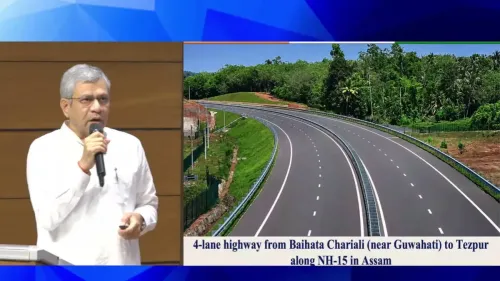
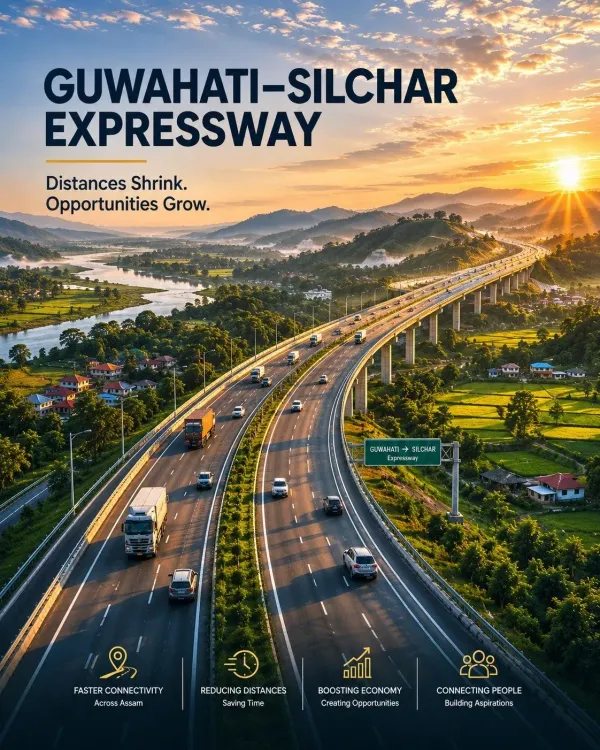
The Guwahati-Silchar Expressway aims to dramatically cut travel time between Assam's commercial capital and the Barak Valley .
The Namrup Fertilizer Plant revival is intended to reduce agricultural input costs for farmers across the Northeast.
The Kamakhya Corridor follows the Kashi Vishwanath Corridor model, upgrading pilgrim facilities at one of India's most visited Shakti Peethas.
All three projects align with Bharatmala Pariyojana and Atmanirbhar Bharat policy frameworks launched by the Centre.
Land acquisition progress and funding allocations remain key milestones to watch for all three initiatives.
Assam Chief Minister Himanta Biswa Sarma on Sunday, June 14, 2026, described three major infrastructure initiatives — the Guwahati-Silchar Expressway, the Namrup Fertilizer Plant, and the Kamakhya Corridor — as foundational investments in the aspirations of millions of people and a significant stride toward a Viksit Bharat.
Context
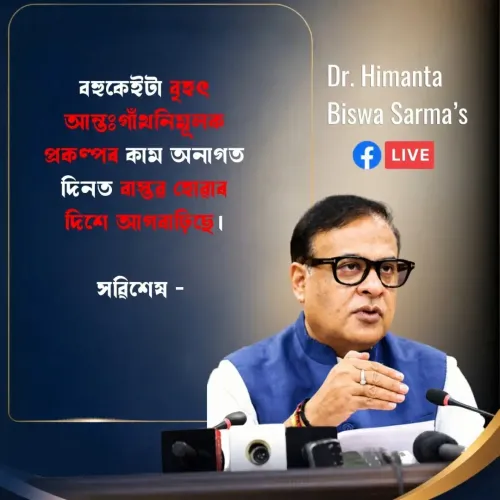
Posting on X, CM Sarma wrote: 'The Guwahati-Silchar Expressway, Namrup Fertilizer Plant and Kamakhya Corridor are not just infrastructure projects. They are investments in the aspirations of millions and a major step towards a #ViksitBharat.' The post was part of a thread — marked 3/4 — indicating a broader communication exercise on Assam's development agenda.
The framing is deliberate: by grouping connectivity, agriculture, and religious tourism under a single aspirational banner, the Chief Minister is aligning state-level projects with the Centre's Viksit Bharat 2047 vision, which targets developed-nation status for India by its centenary of independence.
Policy Backdrop
The Guwahati-Silchar Expressway is a proposed high-speed road corridor linking Guwahati, Assam's commercial capital, with Silchar in the Barak Valley — a stretch that currently demands many hours of travel through difficult terrain. Improved connectivity here would reduce isolation for communities in southern Assam and integrate the region more closely with national trade routes, in line with the Bharatmala Pariyojana launched in 2015.
The Namrup Fertilizer Plant, located in Dibrugarh district, has historically been a key industrial anchor for the Northeast. Efforts to revive and expand fertilizer production capacity in the region gained fresh momentum under Atmanirbhar Bharat announcements from 2020 onward, with the goal of reducing agricultural input costs for Northeast farmers who currently depend on supplies transported over long distances.
The Kamakhya Corridor follows the template established by the Kashi Vishwanath Corridor, completed in 2021 in Varanasi. The project aims to upgrade pilgrim facilities and public spaces around the Kamakhya Temple in Guwahati — one of the most visited Shakti Peethas in India — blending religious heritage with modern infrastructure and tourism potential.
Stakeholders and Impact
The three projects together address distinct but overlapping constituencies. Residents across Assam — particularly in the Barak Valley — stand to benefit from faster road access that the expressway promises. Farmers across the Northeast, long dependent on costly fertilizer imports, could see relief if the Namrup plant scales up domestic production. Pilgrims visiting Kamakhya — numbering in the lakhs annually — and the local economy around the temple stand to gain from corridor development.
The projects also carry political significance for BJP and the North-East Democratic Alliance (NEDA), which CM Sarma convenes. Delivering visible infrastructure across connectivity, agriculture, and heritage tourism strengthens the alliance's narrative of inclusive development in a region that has historically faced infrastructure deficits.
What's Next
Attention will now turn to land acquisition progress, construction milestones, and budget allocations in forthcoming Union and state budgets. Commissioning timelines for all three projects remain to be formally announced. The broader thread of which this post is a part — 3/4 — suggests additional details or project announcements may have accompanied this communication, making any follow-up statements from CM Sarma's office worth tracking closely.
As Assam heads deeper into its development cycle under Sarma's leadership, the convergence of road infrastructure, industrial revival, and heritage tourism into a single political narrative signals a template that other NEDA-governed states may look to replicate.
Point of View
Fertilizer production, and religious tourism into a single aspirational post, CM Sarma is doing more than project promotion — he is constructing a political narrative that links Assam's ground-level development to the Centre's Viksit Bharat 2047 macro-vision. This is a well-established BJP communication pattern: local delivery presented as national mission. The Kamakhya Corridor reference is particularly pointed, echoing the political dividends the Kashi Vishwanath Corridor delivered in Uttar Pradesh. For NEDA, which Sarma convenes, showcasing this trifecta also serves as a model for alliance partners across the Northeast, reinforcing the argument that BJP-aligned governance translates into tangible infrastructure outcomes.
NationPress
16 Sept 2026
Frequently Asked Questions
What is the Guwahati-Silchar Expressway?
The Guwahati-Silchar Expressway is a proposed high-speed road corridor connecting Guwahati, Assam's commercial capital, with Silchar in the Barak Valley, aimed at reducing long travel times through difficult terrain in southern Assam.
What is the Namrup Fertilizer Plant and why is it important?
The Namrup Fertilizer Plant in Dibrugarh district is a key industrial unit in Assam targeted for revival and expansion to produce fertilizers locally, reducing dependence on costly supplies transported from outside the Northeast.
What is the Kamakhya Corridor project?
The Kamakhya Corridor is an infrastructure and pilgrim facility development project around the Kamakhya Temple in Guwahati, modelled on the Kashi Vishwanath Corridor completed in Varanasi in 2021.
What is Viksit Bharat and how do these projects relate to it?
Viksit Bharat 2047 is the Indian government's vision to achieve developed-nation status by India's centenary of independence. CM Sarma has positioned the three Assam projects as direct contributions to this national goal.
What is NEDA and what role does Himanta Biswa Sarma play in it?
The North-East Democratic Alliance (NEDA) is a BJP-led political alliance of parties governing states in the Northeast. Himanta Biswa Sarma, Assam's Chief Minister since 2021, serves as its convenor.