CM Himanta meets Kishan Reddy on Assam critical minerals
Synopsis
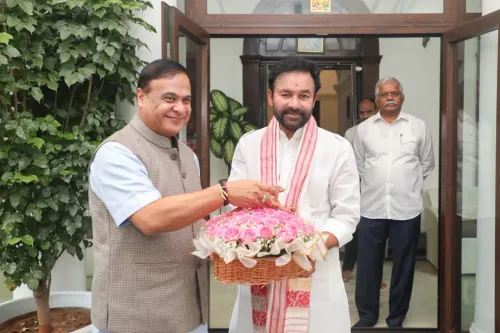
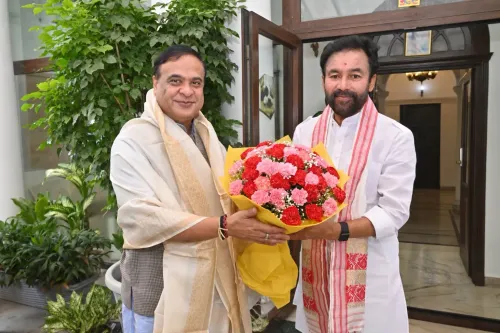
Assam Chief Minister Himanta Biswa Sarma held a focused meeting with Union Minister G. Kishan Reddy on 21 July 2026 to advance the development of the critical minerals sector in Assam, aligning with India's broader push to secure domestic supply chains for energy transition and defence under the Atmanirbhar Bharat framework.
Key Takeaways
CM Himanta Biswa Sarma met Union Minister G.
Kishan Reddy on 21 July 2026 to discuss developing Assam's critical minerals sector.
India notified a list of 30 critical minerals in 2023 to guide domestic exploration and cut import dependence, especially from China .
The 2023 MMDR amendments opened critical mineral block auctions to private players, making central-state coordination meetings more frequent.
Assam is being evaluated for exploration licences as part of the national resource-security push under Atmanirbhar Bharat .
Key sectors dependent on critical minerals include electric vehicles, renewable energy infrastructure and defence manufacturing.
Inclusion of Assam in the proposed National Critical Mineral Mission activities remains the immediate policy milestone to watch.
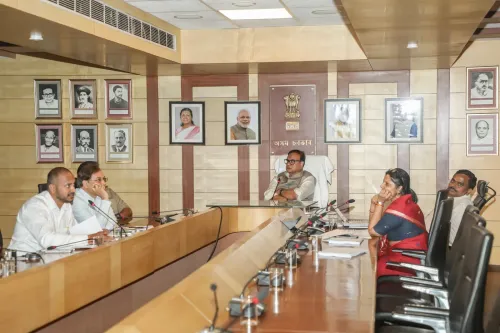
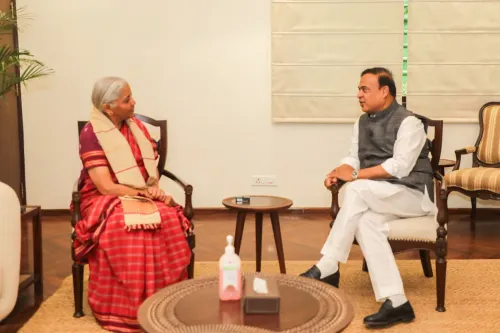
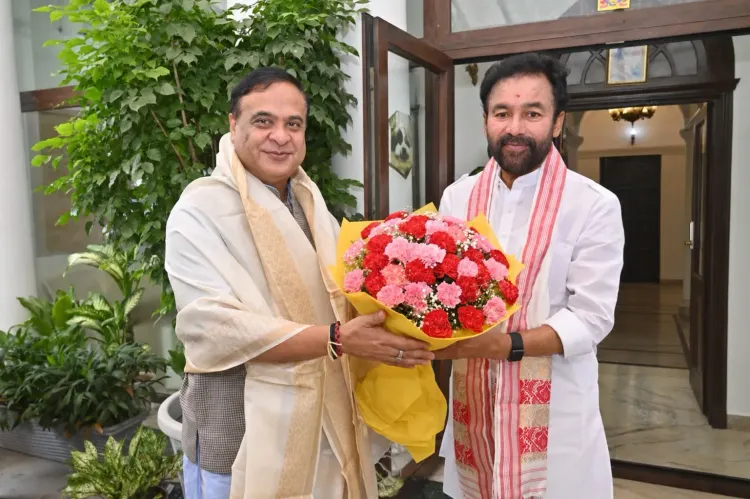
Assam Chief Minister Himanta Biswa Sarma met Union Minister G. Kishan Reddy on Tuesday, 21 July 2026 for a focused discussion on developing the critical minerals sector in Assam, signalling renewed central-state coordination on a resource domain that has gained strategic urgency across India's energy and defence supply chains.
Context
In a post on X, CM Sarma described the exchange as 'fruitful', noting that the conversation centred on developing the critical minerals sector in Assam. The meeting reflects the growing importance that both the state government and the Union Ministry of Mines are placing on northeastern India as a potential source of strategic raw materials.
Assam already has established reserves of oil, coal and limestone. The state is now being evaluated for its potential to yield minerals that are essential for electric vehicles, renewable energy infrastructure and modern electronics — resources that India currently imports heavily, particularly from China.
Policy Backdrop
The meeting comes against the backdrop of significant legislative and policy action at the national level. In 2023, the central government amended the Mines and Minerals (Development and Regulation) Act to allow auction of critical and strategic mineral blocks that were previously reserved exclusively for public sector undertakings, opening the door to private sector participation.
That same year, India notified a list of 30 critical minerals to guide domestic exploration priorities and reduce import dependence. Northeastern states, including Assam, have since been identified as promising targets for fresh exploration licences under this national resource-security framework linked to the Atmanirbhar Bharat initiative.
Central-state coordination meetings on mineral development have become markedly more frequent since the 2023 MMDR amendments unlocked auctions to private players, and CM Sarma's meeting with Kishan Reddy fits squarely within that accelerating pattern.
Stakeholders and Impact
The primary stakeholders in any expansion of critical mineral activity in Assam include state government agencies, private and public sector mining companies, and communities across the northeastern region who would be directly affected by new exploration and extraction activity.
For the state, successfully attracting critical mineral investment could diversify Assam's economic base beyond its traditional hydrocarbon and agricultural sectors. For the centre, securing domestic supply of materials such as lithium, cobalt and rare earths from within India's own territory would reduce vulnerability in the energy transition and defence manufacturing supply chains.
Private mining companies and battery manufacturers watching the development of India's critical minerals policy will be closely monitoring whether Assam is included in upcoming block auctions under the proposed National Critical Mineral Mission.
What's Next
The immediate focus will be on whether the discussions between CM Sarma and Union Minister Kishan Reddy translate into concrete steps — such as the notification of exploration licences, inclusion of Assam in critical mineral block auctions, or a dedicated state-level policy framework aligned with central guidelines.
As India deepens its push for self-reliance in critical materials, Assam's positioning within this national mission could determine the pace and scale of industrial investment flowing into the northeastern region over the next decade.
Point of View
Who has consistently sought to reposition Assam as an investment destination, securing a role in the critical minerals economy would be a significant economic diversification win. The 2023 MMDR amendments created the legislative architecture; what is now being negotiated is which states get first-mover advantage in block auctions and exploration licences. Assam's geographic proximity to mineral-rich corridors and its political alignment with the ruling dispensation at the centre may give it a structural advantage in that competition.
NationPress
21 Jul 2026
Frequently Asked Questions
What did CM Himanta Biswa Sarma discuss with Kishan Reddy?
CM Himanta Biswa Sarma held a meeting with Union Minister G. Kishan Reddy on 21 July 2026 focused on developing the critical minerals sector in Assam , as confirmed by CM Sarma in a post on X.
What are critical minerals and why do they matter for India?
Critical minerals are raw materials such as lithium, cobalt and rare earths that are essential for electric vehicles, renewable energy systems and defence electronics. India notified a list of 30 critical minerals in 2023 to reduce its heavy import dependence, particularly on China .
Does Assam have critical mineral reserves?
Assam has established reserves of oil, coal and limestone, and is now being evaluated for its potential to yield critical and strategic minerals under fresh exploration licences tied to national policy frameworks.
What is the MMDR Amendment and how does it affect Assam?
The Mines and Minerals (Development and Regulation) Act was amended in 2023 to allow auction of critical mineral blocks to private players, previously reserved for public sector undertakings. This opens the door for Assam to attract private mining investment through block auctions.
What is the National Critical Mineral Mission?
The National Critical Mineral Mission is a proposed central initiative aimed at securing domestic supply of minerals essential for India's energy transition and defence sectors. Inclusion of Assam in its activities is one of the key outcomes being watched following the CM Sarma - Kishan Reddy meeting.