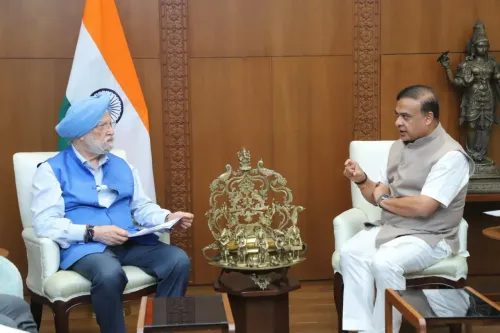
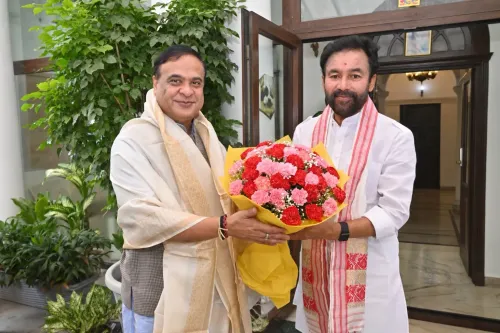
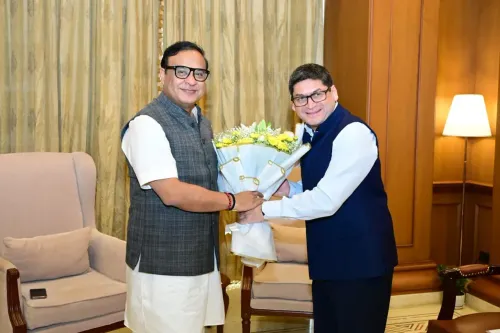
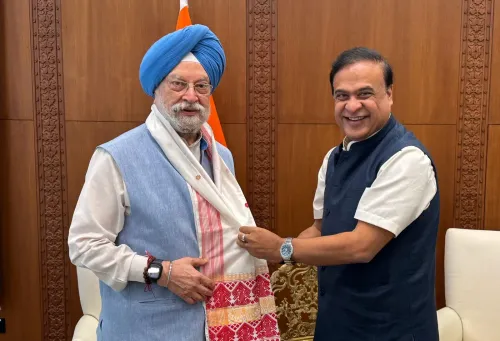
CM Himanta meets Union Minister Hardeep Puri in New Delhi
Synopsis
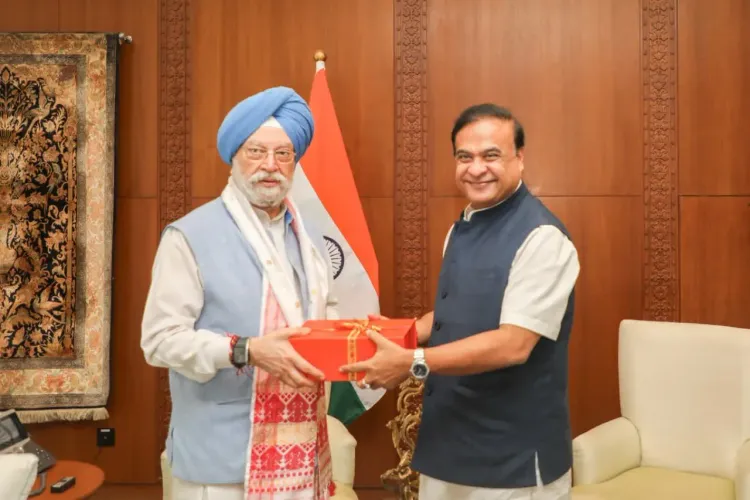
Chief Minister Dr. Himanta Biswa Sarma met Union Minister of Petroleum and Natural Gas Hardeep Singh Puri in New Delhi on 1 June 2026. The meeting reflects ongoing state-Centre coordination over Assam's significant onshore oil and gas sector and aligns with India's push to raise domestic hydrocarbon output.
Key Takeaways
Himanta Biswa Sarma met Union Minister Hardeep Singh Puri in New Delhi on 1 June 2026 .
Assam is home to some of India's oldest oilfields, including the historic Digboi fields, and is a notable contributor to onshore crude production.
The meeting falls within the framework of the Hydrocarbon Vision 2030 for the North-East , released in 2016 to expand exploration and energy infrastructure in the region.
Key stakeholders include oil and gas sector workers and residents of upper Assam districts who depend on hydrocarbon activity for livelihoods.
Follow-up developments to watch include new exploration licensing rounds and refinery capacity expansion announcements in Assam .
The Chief Minister's Office of Assam announced on Monday, 1 June 2026 that Chief Minister Dr. Himanta Biswa Sarma called upon Union Minister of Petroleum and Natural Gas Shri Hardeep Singh Puri in New Delhi, marking a high-level engagement between the state government and the Union ministry on matters pertaining to Assam's oil and gas sector.
Context
The meeting brings together two key figures in India's energy governance. Dr. Himanta Biswa Sarma has led the Assam government since May 2021, consistently engaging the Centre on infrastructure, resource development, and investment in the northeast. Shri Hardeep Singh Puri, as Union Minister of Petroleum and Natural Gas, oversees national policy on exploration, production, and refining of hydrocarbons across India.
Assam holds a distinctive place in India's energy map. The state is home to some of the country's oldest oilfields, including the historic Digboi fields, and continues to be a significant contributor to India's onshore crude oil and natural gas output. Engagement between the state's top executive and the Union petroleum minister is therefore a recurring feature of cooperative federalism in resource-rich northeastern states.
Policy Backdrop
The meeting takes place against the backdrop of India's broader push to raise domestic hydrocarbon output and reduce dependence on imports. The Hydrocarbon Vision 2030 for the North-East, released in 2016, laid out a strategic roadmap to expand exploration activity and energy infrastructure across Assam and neighbouring states. Progress on that vision has involved periodic coordination between state governments and the Ministry of Petroleum and Natural Gas.
The ministry is responsible for licensing rounds, state-level coordination on exploration blocks, and downstream project approvals — all areas where Assam has an active stake. Meetings of this nature typically address revenue-sharing arrangements, pending exploration licences, and the pace of refinery or pipeline capacity expansion in the region.
Stakeholders and Impact
The outcomes of such bilateral engagements have direct implications for oil and gas sector workers and residents of upper Assam districts, where the bulk of the state's hydrocarbon activity is concentrated. Any forward movement on new exploration blocks or downstream investment translates into employment, local revenue, and ancillary economic activity for communities in the region.
For the broader energy sector, Assam's onshore fields represent a critical component of India's domestic production base. Sustained policy attention from both the state and Union governments is seen as essential to arresting production decline in mature fields and unlocking potential in newer acreages.
What's Next
Observers will watch for any follow-up announcements on new exploration licensing rounds or refinery capacity expansion in Assam in the weeks ahead. References in upcoming parliamentary sessions or Union Budget allocations to northeastern hydrocarbon projects will also signal whether Monday's discussions have translated into concrete policy movement. The meeting underscores that Assam's ambition to leverage its energy resources remains firmly on the national agenda.
Point of View
Investment, and revenue sharing — to remain viable contributors to India's domestic production targets. The timing, coming in mid-2026, suggests the state is actively positioning itself ahead of any new licensing rounds or budget-cycle decisions affecting the northeast. Such engagements are a marker of how cooperative federalism functions in practice when a state's economic interests are directly tied to a Union ministry's policy levers.
NationPress
29 Jul 2026
Frequently Asked Questions
Why did CM Himanta Biswa Sarma meet Hardeep Singh Puri?
CM Dr. Himanta Biswa Sarma called upon Union Minister of Petroleum and Natural Gas Hardeep Singh Puri in New Delhi on 1 June 2026 to engage on matters related to Assam's oil and gas sector, including exploration, production, and downstream development.
What is Assam's role in India's oil and gas sector?
Assam is one of India's most significant onshore hydrocarbon-producing states, home to the historic Digboi oilfields and contributing meaningfully to the country's domestic crude oil and natural gas output.
What is the Hydrocarbon Vision 2030 for the North-East?
The Hydrocarbon Vision 2030 for the North-East is a policy framework released in 2016 that outlines strategies to expand oil and gas exploration, production, and infrastructure across Assam and neighbouring northeastern states.
Who is Hardeep Singh Puri?
Shri Hardeep Singh Puri is India's Union Minister of Petroleum and Natural Gas, responsible for national policy on exploration, production, refining, and distribution of hydrocarbons across the country.
What should we watch for after this meeting?
Key developments to monitor include any announcements on new exploration licensing rounds in Assam, refinery or pipeline capacity expansion, and references to northeastern hydrocarbon projects in upcoming parliamentary sessions or Union Budget allocations.