Puri meets Assam CM Himanta to discuss state energy sector
Synopsis
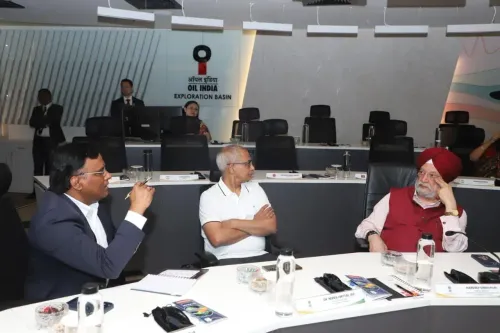
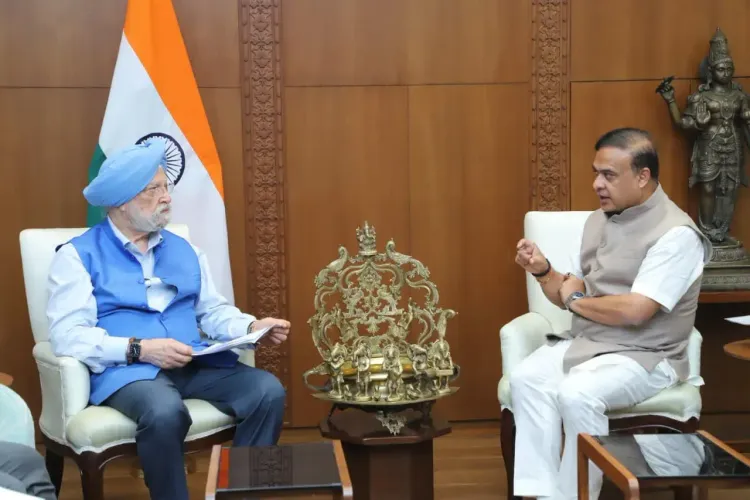
Union Petroleum Minister Hardeep Singh Puri met Assam Chief Minister Himanta Biswa Sarma on 27 July 2026 to discuss the state's energy sector. The leaders reaffirmed the North East's pivotal role in India's Viksit Bharat vision, building on the Hydrocarbon Vision 2030 and Act East Policy frameworks.
Key Takeaways
Union Petroleum Minister Hardeep Singh Puri met Assam CM Himanta Biswa Sarma in New Delhi on 27 July 2026 .
The meeting focused on Assam's energy sector and its role in India's national energy future.
Both leaders reaffirmed the North East Region as a 'key driver' of the Viksit Bharat vision targeting 2047 .
Assam hosts India's oldest commercial oilfield at Digboi and remains an active hydrocarbon producer.
The engagement builds on the Hydrocarbon Vision 2030 for North East India and the Act East Policy of 2014.
Follow-up announcements on exploration licensing or pipeline projects in the North East are anticipated.
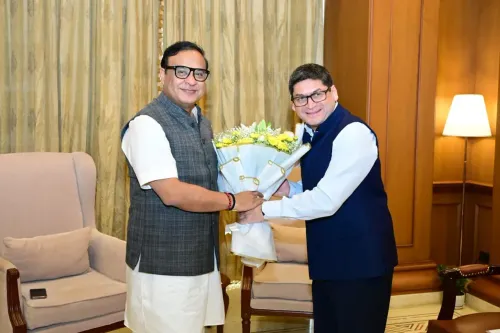
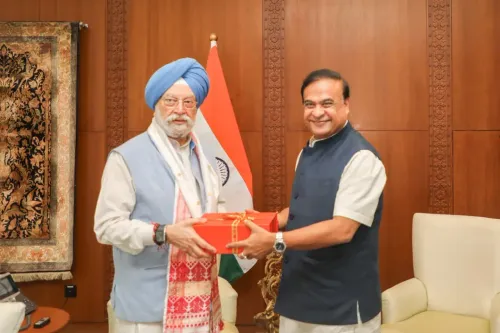
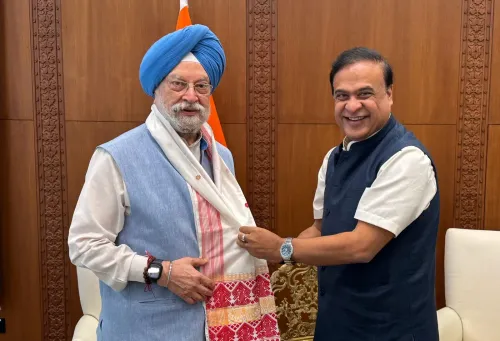
Union Petroleum Minister Hardeep Singh Puri on Monday, 27 July 2026, received Assam Chief Minister Himanta Biswa Sarma at his office in New Delhi for a focused discussion on the state's energy sector and its contribution to India's broader energy future.
Puri described the meeting as productive, noting that the North East Region, including Assam, would 'continue to be a key driver in realizing the vision of Viksit Bharat' under Prime Minister Narendra Modi. The two leaders discussed the pivotal role Assam plays in advancing India's energy ambitions.
Context
Assam holds a unique place in India's petroleum history. Digboi in upper Assam hosts India's oldest commercial oilfield, with production dating back to the late nineteenth century. The state remains an active contributor to domestic hydrocarbon output, making it a natural focal point in any national energy security conversation.
Chief Minister Himanta Biswa Sarma, who has led Assam since 2021, has consistently pushed for greater central investment in the state's infrastructure and resource sectors. His visit to the Petroleum Ministry signals continued coordination between the state government and the centre on energy planning.
Policy Backdrop
The meeting sits within a well-established policy framework. The Hydrocarbon Vision 2030 for North East India, released by the Ministry of Petroleum and Natural Gas in 2016, laid out a roadmap for exploration and production across the eight North Eastern states. That document has since guided licensing rounds, pipeline extensions, and refinery investments in the region.
The Act East Policy, announced in 2014, further elevated the North East's strategic importance by prioritising connectivity and economic integration with South-East Asia. Expansion of the Numaligarh Refinery in Assam — which received central approvals and phased funding after 2014 — is among the most visible downstream outcomes of this policy direction.
The overarching Viksit Bharat vision, targeting a fully developed India by 2047, explicitly emphasises self-reliance in energy. North East hydrocarbons are positioned as a key lever for reducing import dependence and strengthening domestic supply chains.
Stakeholders and Impact
The discussions are directly relevant to the oil and gas sector operating in Assam, including exploration and production companies active in the state's upstream blocks and the refining units supplying fuel to the wider North East market. State government agencies and local communities dependent on energy-linked employment also have a stake in the outcomes of such central-state engagements.
For the broader North East Region, sustained ministerial attention translates into potential acceleration of pipeline projects, exploration licensing, and energy access programmes. The region's eight states have historically faced infrastructure gaps that limit the commercial exploitation of their hydrocarbon endowment.
What's Next
Observers will watch for follow-up announcements from either the Ministry of Petroleum and Natural Gas or the Assam government on specific project clearances, exploration licensing rounds, or pipeline extension proposals stemming from this engagement. State budget allocations for energy infrastructure in the North East in the coming fiscal cycle will also serve as a barometer of how the political intent expressed in Monday's meeting translates into on-ground investment.
With the Viksit Bharat deadline of 2047 anchoring long-term planning, central-state coordination meetings of this kind are likely to become more frequent as both governments seek to convert the North East's resource potential into measurable energy output.
Point of View
It would mark a meaningful step in translating the Hydrocarbon Vision 2030 framework into measurable upstream output.
NationPress
26 Oct 2026
Frequently Asked Questions
Why did Assam CM Himanta Biswa Sarma meet Petroleum Minister Hardeep Singh Puri?
Assam CM Himanta Biswa Sarma met Petroleum Minister Hardeep Singh Puri on 27 July 2026 to hold discussions on Assam's energy sector and the state's contribution to India's national energy future under the Viksit Bharat vision.
What is the Viksit Bharat vision and how does Assam fit in?
Viksit Bharat is India's national goal to become a fully developed nation by 2047, with energy self-reliance as a core pillar. Assam, with its long history of hydrocarbon production including the Digboi oilfield, is positioned as a key contributor to meeting domestic energy targets.
What is the Hydrocarbon Vision 2030 for North East India?
The Hydrocarbon Vision 2030 for North East India is a policy roadmap released by the Ministry of Petroleum and Natural Gas in 2016 to guide oil and gas exploration, production, refining, and pipeline development across the eight North Eastern states.
What is the significance of Assam in India's oil and gas sector?
Assam hosts Digboi, India's oldest commercial oilfield, and continues to produce crude oil and natural gas. The state also has the Numaligarh Refinery, which has undergone central-backed expansion to increase refining capacity for the North East region.
What could come out of the Puri-Sarma energy meeting?
Possible outcomes include announcements on new exploration licensing rounds, pipeline extension projects, or increased central funding for energy infrastructure in Assam and the wider North East, though no specific agreements have been confirmed.