Puri Meets Assam CM Sarma, Discusses State Energy Role
Synopsis
Union Petroleum Minister Hardeep Singh Puri hosted Assam CM Himanta Biswa Sarma on 1 June 2026, congratulating him on the BJP's recent election result and discussing Assam's pivotal role in India's energy future — from the historic Digboi fields to new exploration frontiers.
Key Takeaways
Union Petroleum Minister Hardeep Singh Puri met Assam CM Himanta Biswa Sarma at his office on 1 June 2026 .
Puri congratulated Sarma on the BJP's performance in the recent Assam elections .
Discussions covered the energy sector, specifically referencing Digboi — site of India's first commercial oil discovery in 1889 .
Oil India Limited , headquartered in Assam, and ONGC are the principal PSUs anchoring upstream activity in the state.
The central government targets reducing oil import dependence to 50 per cent by 2030 , with Assam's mature and frontier basins central to that goal.
Faster state clearances under the Open Acreage Licensing Policy (OALP) remain the key operational lever for new exploration in the Assam-Arakan basin .
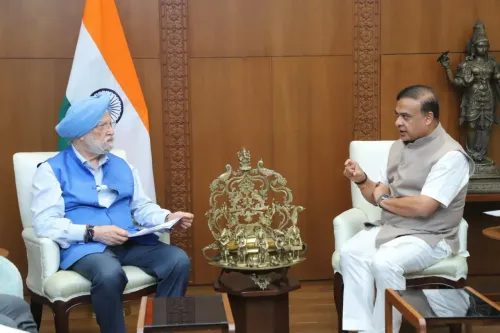
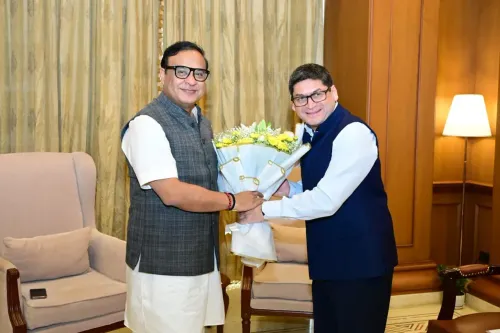
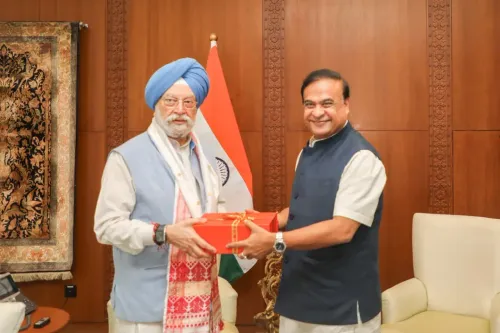
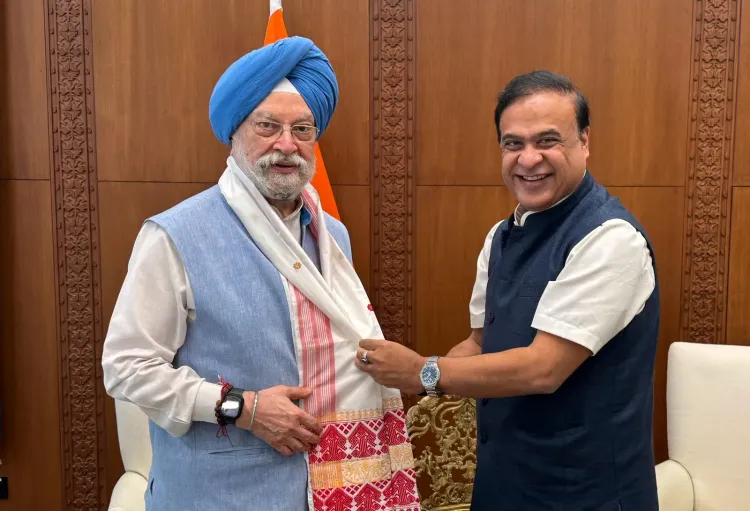
Union Petroleum Minister Hardeep Singh Puri met Assam Chief Minister Himanta Biswa Sarma at his office on Monday, 1 June 2026, congratulating him on the BJP's performance in the recent Assam elections and holding discussions on the state's energy sector priorities.
Context
Minister Puri described the meeting as an opportunity to extend 'heartfelt congratulations on the party's remarkable performance in the recent elections in Assam, reflecting the trust and confidence reposed by the people.' The visit to Puri's office signals the continued alignment between the BJP-led central government and the BJP government in Assam on both political and policy fronts.
The two leaders also turned to substantive ground, with Puri noting that discussions covered 'key issues related to the energy sector in the state.' He specifically invoked Digboi — the site of India's first commercial oil discovery in 1889 — as a symbol of Assam's deep-rooted place in the country's petroleum history.
Policy Backdrop
Assam is home to some of India's oldest producing oilfields and remains a critical contributor to domestic crude output. Oil India Limited, the Navratna PSU headquartered in Assam, traces its origins to 1959 when it was incorporated to develop the state's fields following nationalisation of the Assam Oil Company. ONGC also maintains significant upstream operations in the region.
The Hydrocarbon Exploration and Licensing Policy (HELP), introduced in 2016 to replace the earlier New Exploration Licensing Policy, extended uniform licensing and marketing freedom to blocks in the Northeast, including the Assam-Arakan basin. Under the subsequent Open Acreage Licensing Policy (OALP), successive bid rounds have sought to attract fresh investment into mature and frontier acreage across the state.
The central government's stated target of reducing India's oil import dependence to 50 per cent by 2030 — reiterated in successive Union Budgets since 2014 — explicitly relies on arresting production decline in legacy basins such as Assam while opening new exploration frontiers.
Stakeholders and Impact
The meeting brought together the political and administrative principals who must coordinate for upstream reforms to translate into actual drilling activity. The Assam state government controls land and environmental clearances that can accelerate or delay exploration timelines, making its alignment with central energy policy operationally significant for PSUs like Oil India Limited and ONGC.
Local communities and the state exchequer have a direct stake through royalty revenues and employment generated by oil projects. State assembly discussions on royalty-sharing and local hiring from oil operations are an ongoing dimension of the Centre-state energy relationship in Assam.
Minister Puri framed Assam's role within the larger national ambition, stating that the state 'will play an important role in advancing India's vision of a Viksit Bharat under the dynamic leadership of PM Narendra Modi.'
What's Next
Attention will now turn to the results of the next OALP bid round and whether new exploration blocks in the Assam-Arakan basin are awarded in the near term. Faster state-level clearances — a recurring ask from PSU explorers — remain the practical test of the political goodwill expressed at Monday's meeting.
With both the Centre and the state government aligned under the same party, the conditions for accelerated upstream activity in Assam appear favourable, though translating ministerial-level coordination into production gains from mature fields remains a long-term challenge for India's energy security calculus.
Point of View
Puri connects current exploration ambitions to a century-old legacy, lending historical weight to what are essentially bureaucratic clearance and investment decisions. The invocation of 'Viksit Bharat' places Assam's oil output within the ruling party's broader development narrative, making energy performance a reputational stake for both leaders. Watch whether this high-level alignment translates into concrete OALP block awards or expedited clearances in the months ahead — that will be the real measure of the meeting's substance.
NationPress
15 Oct 2026
Frequently Asked Questions
Why did Assam CM Himanta Biswa Sarma meet Petroleum Minister Hardeep Singh Puri?
Sarma visited Puri's office on 1 June 2026 for congratulations on the BJP's recent Assam election performance and to discuss key energy sector issues in the state, including exploration and production priorities.
What is the significance of Digboi in India's oil history?
Digboi in Assam is the site of India's first commercial oil discovery, made in 1889, and its legacy fields continue to be operated by Oil India Limited, making it a symbol of India's petroleum heritage.
What is Oil India Limited and where is it based?
Oil India Limited is a Navratna public sector undertaking headquartered in Assam, incorporated in 1959 to develop the state's oilfields; it remains a primary upstream operator in the Northeast under NELP and OALP regimes.
What is India's target for reducing oil import dependence?
The Indian government has set a target of reducing oil import dependence to 50 per cent by 2030, with increased output from mature basins like Assam's Assam-Arakan basin cited as a key contributor.
What is the Open Acreage Licensing Policy and how does it affect Assam?
The Open Acreage Licensing Policy allows companies to identify and bid for exploration blocks on a continuous basis; several blocks in the Assam-Arakan basin have been offered under successive OALP bid rounds to attract fresh upstream investment.