CM Himanta Meets Rijiju in Delhi Over Assam Flood Rehabilitation
Synopsis
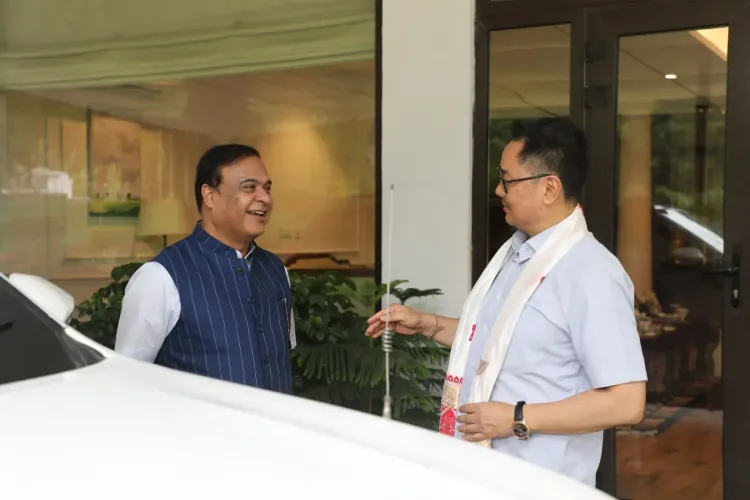
Assam Chief Minister Himanta Biswa Sarma met Union Minister Kiren Rijiju in New Delhi on 2 July 2026, thanking him for visiting flood-hit Assam and pledging to intensify rehabilitation for displaced residents. The meeting signals stepped-up Centre-state coordination as monsoon flooding continues to strain the Brahmaputra valley.
Key Takeaways
Himanta Biswa Sarma met Kiren Rijiju in New Delhi on 2 July 2026 to discuss Assam flood rehabilitation.
Sarma conveyed gratitude for Rijiju's recent on-ground visit to flood-affected areas of Assam.
The Chief Minister said the 'double engine government' will intensify efforts to rebuild livelihoods of flood-impacted residents.
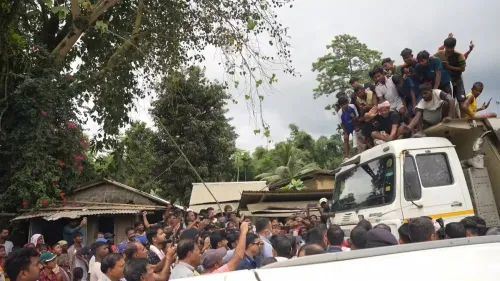
Assam's Brahmaputra valley faces annual monsoon flooding that displaces lakhs and damages crops, homes and livestock.
The Centre has previously channelled relief through the National Disaster Response Fund , including allocations in 2022 and 2023 .
Next steps may include release of supplementary central funds or new livelihood restoration schemes for flood-hit districts.
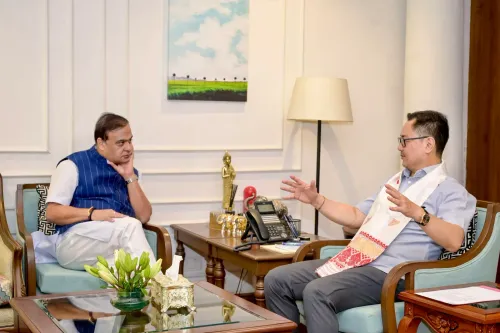
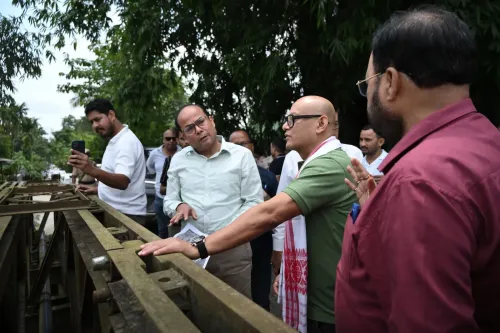
Assam Chief Minister Himanta Biswa Sarma met Union Minister Kiren Rijiju in New Delhi on 2 July 2026 to discuss the ongoing flood situation in Assam and the state government's rehabilitation push. Sarma thanked Rijiju for his recent visit to Assam to review flood conditions on the ground and said the minister shared 'very valuable observations' during the meeting.
Context
Chief Minister Sarma described the Delhi meeting as 'fruitful', conveying the state's gratitude for the Union Minister's field visit to flood-affected areas of Assam. Rijiju, a BJP leader from Arunachal Pradesh who has held portfolios spanning law, sports and parliamentary affairs, has been engaged with north-eastern states on disaster and development issues. The meeting signals active coordination between the Assam government and the Centre at a time when monsoon flooding continues to displace large numbers of residents across the state.
Sarma stated that the 'double engine government' — a term the BJP uses to describe simultaneous BJP administrations at the state and central levels — would 'intensify rehabilitation efforts' to help rebuild the livelihoods of all those impacted by the floods. The phrase underscores the party's framing of Centre-state alignment as a force multiplier in disaster response.
Policy Backdrop
Assam's Brahmaputra valley is one of India's most flood-prone regions, with annual monsoon inundation displacing lakhs of residents, destroying crops, homes and livestock across multiple districts. The state has historically depended on a combination of central funds, embankment reinforcement and dredging projects to manage recurring flood cycles.
Since 2014, the Centre has periodically released assistance through the National Disaster Response Fund (NDRF) for Assam flood relief, including allocations in 2022 and 2023. Meetings between the Assam Chief Minister and Union ministers have typically centred on expediting such fund releases and coordinating livelihood restoration packages for affected farmers and households.
Stakeholders and Impact
The primary stakeholders in this coordination are Assam's flood-affected residents, including farmers who lose standing crops and families who lose homes and livestock each monsoon season. Timely rehabilitation — covering housing, agricultural inputs and income support — is critical to preventing long-term economic distress in already vulnerable districts.
For the BJP at both the state and central levels, visible and swift rehabilitation also carries political weight in a state where flood management has long been a governance benchmark. Rijiju's personal visit to Assam ahead of this Delhi meeting indicates a degree of central attention to the ground situation that the state government has chosen to publicly acknowledge.
What's Next
The immediate focus will be on whether the Centre releases supplementary funds or approves targeted livelihood restoration schemes for flood-hit districts in Assam following this round of consultations. Longer-term, proposals around embankment strengthening and river management ahead of the 2027 monsoon season are expected to remain on the agenda between the state and central governments.
With Chief Minister Sarma signalling that rehabilitation efforts will be intensified, the coming weeks will test how quickly coordinated Centre-state action translates into measurable relief for displaced families and farmers across Assam's flood-affected belts.
Point of View
Which frames Centre-state alignment as a structural advantage in disaster response. By publicly thanking Rijiju for a field visit and signalling intensified rehabilitation, Sarma is both managing optics around a perennial crisis and applying soft pressure on the Centre for faster fund flows. Assam's annual flood cycle has historically been a litmus test for whichever government is in power, and visible coordination at the ministerial level is designed to pre-empt criticism of slow relief. The broader pattern suggests that any announcement of supplementary NDRF releases or new livelihood schemes in the coming weeks will be attributed to this Centre-state synergy.
NationPress
30 Sept 2026
Frequently Asked Questions
Why did Assam CM Himanta Biswa Sarma meet Kiren Rijiju in Delhi?
Chief Minister Himanta Biswa Sarma met Union Minister Kiren Rijiju in New Delhi on 2 July 2026 to discuss intensifying flood rehabilitation efforts in Assam and to thank him for his recent visit to review the flood situation on the ground.
What is the current flood situation in Assam in 2026?
Assam's Brahmaputra valley is experiencing its recurring annual monsoon flooding, which displaces lakhs of residents and causes damage to crops, homes and livestock across multiple districts each year.
What is the 'double engine government' referred to by CM Himanta?
'Double engine government' is a BJP term describing simultaneous BJP administrations at both the state and central levels, which the party argues enables faster and more coordinated governance, including disaster response and rehabilitation.
What central funds are available for Assam flood relief?
The Centre has historically released assistance to Assam through the National Disaster Response Fund (NDRF), with allocations made in years such as 2022 and 2023 to support flood relief and rehabilitation.
What are the next steps after the Himanta-Rijiju meeting on Assam floods?
The immediate next steps may include release of supplementary central funds or targeted livelihood restoration schemes for flood-hit districts, along with longer-term discussions on embankment strengthening ahead of future monsoon seasons.