Puri Visits Digboi, Calls It Foundation of India's Energy Revolution
Synopsis
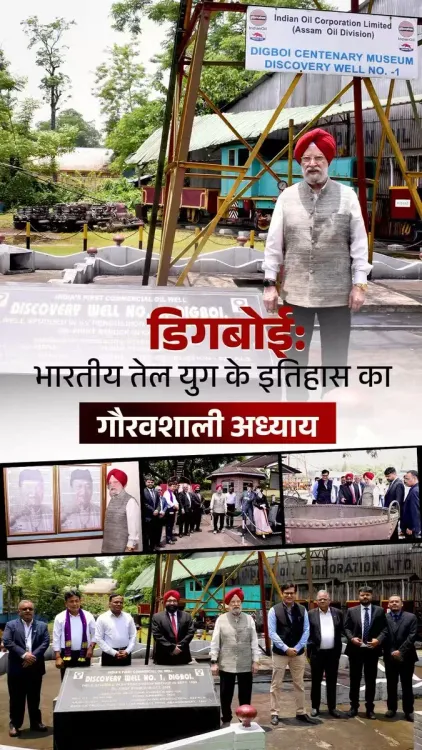
Union Petroleum Minister Hardeep Singh Puri visited Digboi in Assam on 24 June 2026, touring India's first commercial oil well site and one of the world's oldest refineries, and linked the 1889 heritage to PM Modi's energy security and Atmanirbhar Bharat agenda.
Key Takeaways
Union Petroleum Minister Hardeep Singh Puri visited Digboi, Assam on 24 June 2026 .
Digboi is the site of India's first commercial oil well , drilled in 1889 , and hosts one of the world's oldest operating refineries, commissioned in 1901 .
The refinery is currently operated by Indian Oil Corporation (IOC) .
Puri drew a direct line between Digboi's colonial-era legacy and PM Modi's goals of energy security, Atmanirbharata, and green energy .
The visit signals continued ministerial focus on upstream hydrocarbon development in the Northeast under the Open Acreage Licensing Policy .
No new scheme launch or operational statistics were announced during the visit.
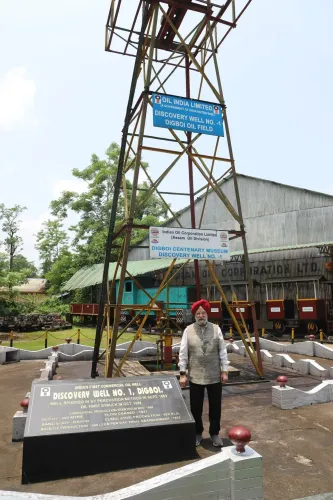
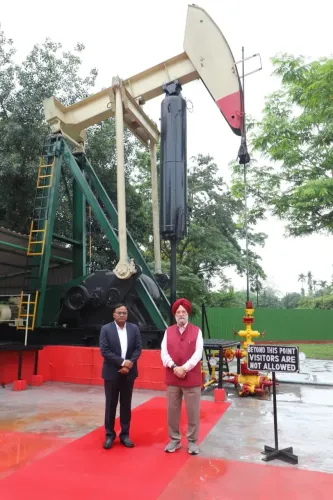
Union Petroleum Minister Hardeep Singh Puri visited Digboi in Assam on Wednesday, 24 June 2026, touring the site of India's first commercial oil well and one of the world's oldest operating refineries, calling the experience 'extremely inspiring' and linking the historic site to the country's contemporary energy ambitions under Prime Minister Narendra Modi.
Sharing a glimpse of the visit on social media, Minister Puri wrote — translated from Hindi — that 'learning about the history of India's first commercial oil well and one of the world's oldest refineries located in Digboi, Assam, was an extremely inspiring experience.' He added that as India sets new benchmarks in energy security, self-reliance, and green energy under PM Modi's leadership, 'Digboi's history reminds us that every great achievement begins with a small sign, a great resolve, and unwavering dedication to the national interest.'
Context
Digboi, a small town in Upper Assam, holds a singular place in India's industrial history. Oil was first struck here in 1889, making it the site of India's first commercial oil well. The refinery that followed, commissioned in 1901 under the colonial-era Assam Oil Company, is among the oldest continuously operating refineries in the world. The facility is today operated by Indian Oil Corporation (IOC) as part of the country's downstream petroleum network.
The minister described Digboi's legacy as 'not merely a story of the past, but a living chronicle of the dreams, struggles, and successes that laid the foundation of India's energy revolution' — ('ऊर्जा क्रांति की नींव').
Policy Backdrop
The visit comes as the Modi government pursues a twin-track energy strategy: sustaining upstream hydrocarbon output in mature basins such as Assam while simultaneously scaling renewable capacity. The Atmanirbhar Bharat initiative, launched in 2020, explicitly set targets for raising domestic oil and gas production and reducing import dependence — goals Minister Puri has consistently championed.
Exploration activity in the Northeast has been a focus area under the Open Acreage Licensing Policy (OALP), which invites bids for exploration blocks on a nomination basis. Digboi's basin remains part of India's active upstream landscape even as the refinery itself carries heritage status.
Stakeholders and Impact
The Digboi refinery, though modest in throughput compared to modern mega-refineries, is a significant employer and cultural anchor for the local community in Upper Assam. Its continued operation under Indian Oil Corporation is seen as both an economic and symbolic commitment to the Northeast. Workers in the oil sector and communities across the region track ministerial attention to the area as a signal of investment intent.
Successive governments have invoked Digboi's colonial-era legacy to frame contemporary hydrocarbon policy as a continuation of indigenous industrial capability. Minister Puri's post follows that tradition, explicitly connecting 1889's discovery to 2026's policy agenda.
What's Next
Observers will watch for any policy announcements tied to the visit — particularly regarding fresh exploration rounds in the Northeast under OALP or infrastructure upgrades at the Digboi refinery. Progress on the National Green Hydrogen Mission targets also forms part of the broader energy-security canvas the minister referenced. The ministerial visit, and the public framing around it, may presage a formal announcement on upstream or downstream investment in the region.
Point of View
The minister positions current hydrocarbon policy as patriotic continuity rather than mere extraction economics. The timing also keeps Northeast India — a region of electoral and strategic importance — visible in the petroleum ministry's public communications. Whether the visit translates into concrete upstream investment announcements will determine its policy weight beyond optics.
NationPress
23 Sept 2026
Frequently Asked Questions
Where is India's first commercial oil well located?
India's first commercial oil well is located in Digboi , a town in Upper Assam . Oil was first struck there in 1889 , and the associated refinery was commissioned in 1901 , making it one of the oldest operating refineries in the world.
Who operates the Digboi refinery today?
Indian Oil Corporation (IOC) operates the historic Digboi refinery as part of its downstream petroleum network in India.
Why did Hardeep Singh Puri visit Digboi?
Union Petroleum Minister Hardeep Singh Puri visited Digboi on 24 June 2026 to tour the site of India's first commercial oil well and one of the world's oldest refineries. He called the experience 'extremely inspiring' and linked the site's legacy to India's current energy security and Atmanirbhar Bharat goals.
What is the Atmanirbhar Bharat initiative in the context of energy?
The Atmanirbhar Bharat initiative, launched in 2020 , includes explicit targets for raising domestic oil and gas production and reducing India's dependence on energy imports. It is a key policy plank of the Modi government that the petroleum ministry has been tasked with advancing.
What is the Open Acreage Licensing Policy for Northeast India?
The Open Acreage Licensing Policy (OALP) allows companies to nominate exploration blocks for bidding on an ongoing basis. The Northeast , including Assam , has been a priority area under this policy to revive hydrocarbon output from mature basins like the one containing Digboi .