Puri Visits Digboi, Birthplace of India's Oil Industry
Synopsis
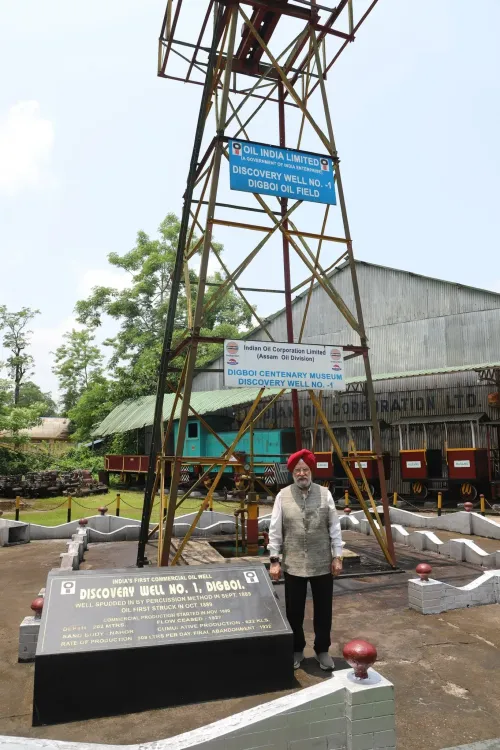
Union Petroleum Minister Hardeep Singh Puri visited the Digboi Centenary Museum in Assam on 23 June 2026, honouring the site where India's first commercial oil well was spudded in 1889. He linked the 135-year heritage to India's current push for energy security and green transition under PM Modi.
Key Takeaways
Union Petroleum Minister Hardeep Singh Puri visited the Digboi Centenary Museum at Digboi Refinery, Assam, on 23 June 2026 .
India's first commercial oil well, 'Discovery Well No.1,' was spudded in October 1889 and began producing 200 gallons per day from November 1890 .
The Digboi Refinery , established in 1901 , is the world's second-oldest operating refinery and is managed by Indian Oil Corporation .
Local lore credits the oil discovery to elephant footprints bearing oil stains, spotted by engineering staff and local residents.
Puri connected the historic site to India's ongoing energy agenda — including deep-sea, mountain, and desert exploration — under PM Narendra Modi's leadership.
The site continues to serve historians, students, and energy professionals through preserved original equipment and archival records.
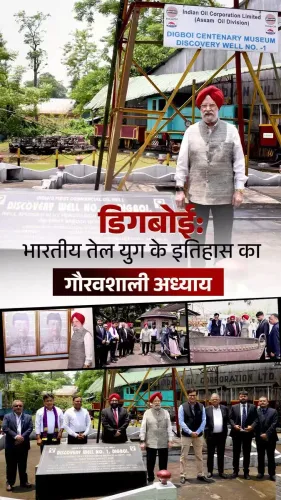
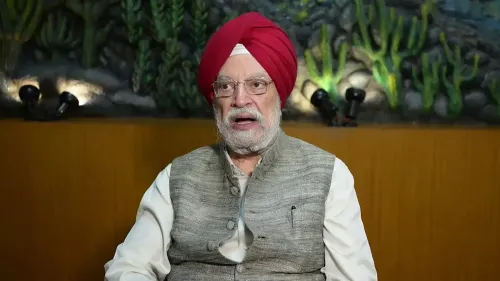
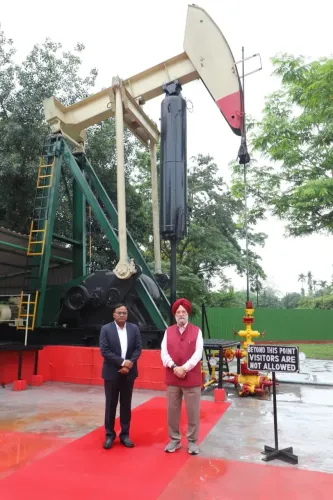
Union Petroleum Minister Hardeep Singh Puri on Tuesday, 23 June 2026, visited the Digboi Centenary Museum at the historic Digboi Refinery in Assam, calling it 'an overwhelming walk through the history of India's energy journey' and highlighting the site as the cradle of commercial petroleum exploration in the country.
Context
The minister's visit centred on Digboi, the town in Dibrugarh district, Assam, where India's first commercial oil well — 'Discovery Well No.1' — was spudded in October 1889 by the Assam Railways and Trading Company Limited. Production commenced a year later in November 1890, yielding 200 gallons per day and marking India's first commercial oil success.
Puri also shared a piece of local lore in his post, noting in Hindi that India's oil exploration began with a divine blessing of sorts: 'स्थानीय लोगों एवं इंजीनियरिंग कार्य में लगे स्टाफ़ ने हाथियों के पैरों पर तेल के धब्बे लगे देखे थे' — local people and engineering staff noticed oil stains on the feet of elephants, which led to the discovery of petroleum in the region.
Policy Backdrop
The Digboi Refinery, established in 1901, is recognised as the world's second-oldest operating refinery and is often called the 'Gangotri of the Indian Oil Industry.' It is managed today by Indian Oil Corporation (IOC) and continues to operate alongside modern facilities. Oil India Limited (OIL), headquartered in Duliajan, Assam, traces its exploration lineage to the same Digboi discovery.
India's upstream sector has evolved significantly since those early finds — from the establishment of ONGC in 1956 to the adoption of the Hydrocarbon Exploration and Licensing Policy (HELP) in 2016, which replaced the earlier New Exploration Licensing Policy to attract broader investment in frontier blocks including deep-water and unconventional plays.
Puri framed the visit within the current government's broader energy agenda, stating that 'as we conquer deep seas, towering mountains and scorching deserts to strengthen India's energy Exploration and Production efforts,' the historic artefacts at Digboi serve as a reminder of the distance the country has covered. He credited the trajectory to 'the visionary leadership of PM Sh Narendra Modi.'
Stakeholders and Impact
The Digboi Centenary Museum preserves original equipment, archival records, and historical narratives from the refinery's founding, attracting historians, students, and energy professionals from across India. The site functions as both a working industrial unit and a living heritage institution.
For Assam and the broader northeast, Digboi's continued relevance is significant — the region hosts upstream acreage under active exploration, and heritage recognition of its petroleum history reinforces its role in national energy policy discussions. Local communities in Dibrugarh have long been tied to the fortunes of the oil sector anchored in this area.
What's Next
The minister's visit is likely to draw renewed attention to upstream activity in Assam, including ongoing and future acreage auctions under the HELP framework. Parliamentary discussions on the next phase of India's National Energy Policy — which balances domestic production growth with the green transition — will be closely watched by industry stakeholders.
As India pursues energy security and self-sufficiency, the symbolic weight of Digboi — where it all began over 135 years ago — continues to anchor the national narrative of an industry that has moved from elephant-trail discoveries to deepwater frontiers.
Point of View
' the minister draws a symbolic line from colonial-era serendipity to today's frontier exploration policy, lending historical legitimacy to the current upstream push. The visit also carries a regional dimension: Assam, heading into a period of acreage auctions and upstream investment decisions, benefits from high-profile federal attention to its petroleum heritage. It fits a broader pattern of the government using sectoral milestones to signal continuity and ambition simultaneously.
NationPress
22 Sept 2026
Frequently Asked Questions
Where is Digboi Refinery located and why is it famous?
Digboi Refinery is located in Dibrugarh district, Assam . It is famous for being the site of India's first commercial oil well, spudded in 1889 , and for housing the world's second-oldest operating refinery , established in 1901 .
When was India's first commercial oil well drilled?
India's first commercial oil well, 'Discovery Well No.1,' was spudded in October 1889 by the Assam Railways and Trading Company Limited . Production began in November 1890 at 200 gallons per day .
Why did Hardeep Singh Puri visit Digboi in June 2026?
Union Petroleum Minister Hardeep Singh Puri visited the Digboi Centenary Museum on 23 June 2026 to explore the history of India's energy journey and highlight Digboi's role as the birthplace of commercial oil exploration in India.
What is the Digboi Centenary Museum?
The Digboi Centenary Museum is a heritage museum at the Digboi Refinery in Assam that preserves original equipment, archival records, and historical narratives from the refinery's founding in 1901 , attracting historians, students, and energy professionals.
Who manages the Digboi Refinery today?
The Digboi Refinery is managed by Indian Oil Corporation (IOC) , India's largest refiner, which operates it alongside modern refining facilities across the country.