CM Himanta Meets Korean Ambassador at Lok Sewa Bhawan
Synopsis
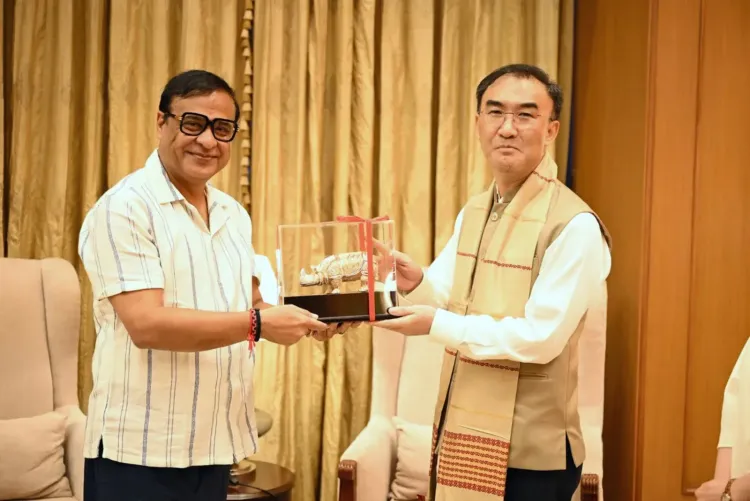
Assam Chief Minister Dr. Himanta Biswa Sarma hosted South Korean Ambassador Lee Seong-ho at Lok Sewa Bhawan on 24 September 2026, discussing economic cooperation, cultural exchange and bilateral ties as the state deepens its Act East Policy outreach.
Key Takeaways
Himanta Biswa Sarma received South Korean Ambassador Lee Seong-ho and his delegation at Lok Sewa Bhawan on 24 September 2026 .
Discussions covered bilateral ties, cultural exchange and economic cooperation between Assam and South Korea.
India and South Korea have operated under the Comprehensive Economic Partnership Agreement (CEPA) since 2010 , providing an established framework for trade and investment.
India's Act East Policy , strengthened from 2014 , positions northeastern states as bridges to East and Southeast Asia — making meetings like this a strategic priority.
No specific MoUs or commitments were announced following the meeting.
The visit reflects Assam's consistent pattern of direct diplomatic engagement with East Asian partners to attract investment and technology.
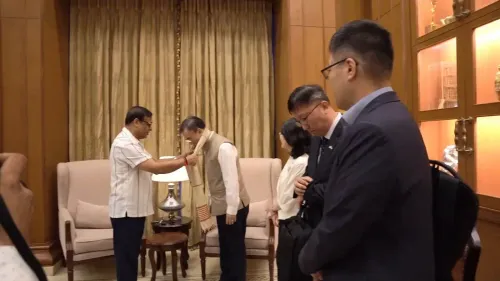
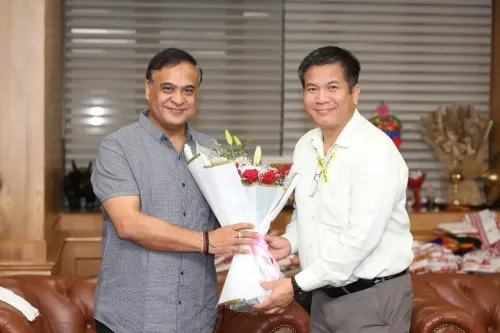
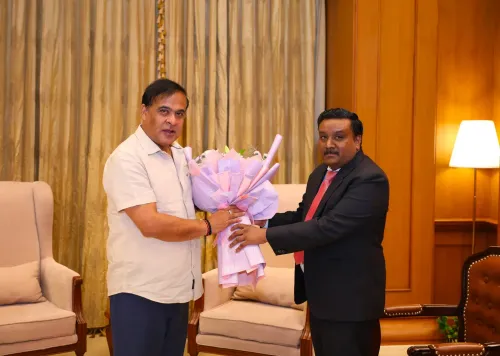
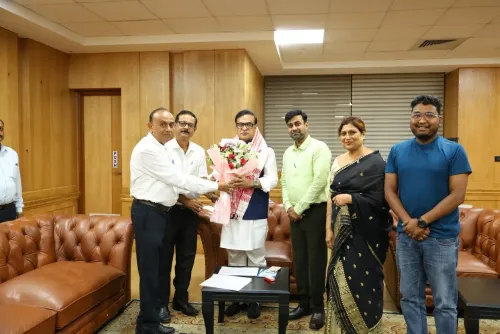
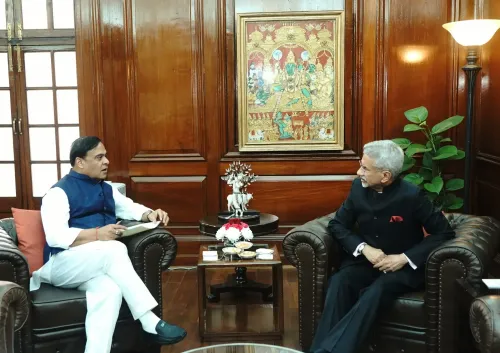
Korea came to Guwahati on Thursday — and Assam made sure the meeting counted. Chief Minister Dr. Himanta Biswa Sarma received H.E. Mr. Lee Seong-ho, Ambassador of the Republic of Korea to India, along with his delegation at Lok Sewa Bhawan on Thursday, 24 September 2026, for discussions on bilateral ties, cultural exchange and economic cooperation.
What brought the Korean Ambassador to Guwahati
The visit places Assam squarely on a diplomatic map that typically centres on Delhi. Ambassador Lee Seong-ho, who oversees South Korea's diplomatic and economic engagement across all of India, chose to travel to the Northeast — a signal that the state's active outreach is being noticed. The two sides described the discussions as 'productive', covering the full range of bilateral possibilities: formal ties, cultural programming and economic cooperation.
Assam has pursued a steady cadence of international engagements since Dr. Himanta Biswa Sarma took office in May 2021, with East Asian partners a consistent priority given the state's geographic gateway role to Southeast Asia.
The India-Korea framework Assam is plugging into
The meeting does not happen in a vacuum. India and the Republic of Korea have operated under a Comprehensive Economic Partnership Agreement (CEPA) since 2010, a framework that covers trade, investment and technology transfer. Korea is a significant presence in India's automobile, IT and electronics sectors, and the CEPA has steadily deepened that commercial footprint.
Equally important is India's Act East Policy, strengthened from 2014 onward, which explicitly tasks northeastern states with becoming active economic bridges to East and Southeast Asia. Assam, bordering Bhutan, Bangladesh, Arunachal Pradesh and Nagaland, is a natural conduit — and meetings like Thursday's are how that abstract policy intent turns into concrete conversations about investment, skills and culture.
What Assam stands to gain from deeper Korea ties
Korean industry brings strengths — manufacturing technology, electronics, automotive supply chains — that align with the kinds of industrial investment Assam has been pitching at successive summits. Cultural exchange, the third pillar of Thursday's agenda, has its own economic dimension: Korean soft power through film, music and food has generated real tourism and education flows across South Asia, and Assam's tourism sector stands to benefit from better Korean connectivity.
No specific MoUs or commitments were announced, and the details of the conversation remain within the room. But the pattern is clear: Assam is no longer waiting for investment to arrive at a trade fair in Delhi. It is going — and increasingly, receiving — at home.
Point of View
Whose CEPA with India is due for a potential renegotiation, building state-level relationships in the Northeast adds a layer of political insurance and market familiarity that a Delhi-only diplomatic posture cannot provide. CM Himanta's consistent East Asian outreach since 2021 has accumulated enough momentum that Korean industry and the embassy now treat Guwahati as a destination in its own right, not a detour. The open question is whether these recurring productive discussions eventually produce an anchor investment or a signed cultural programme — because warm meetings without consequential follow-through eventually lose their signalling value.
NationPress
25 Sept 2026
Frequently Asked Questions
Why did the South Korean Ambassador visit Assam?
Ambassador Lee Seong-ho visited Assam to meet Chief Minister Dr. Himanta Biswa Sarma at Lok Sewa Bhawan on 24 September 2026 for discussions on bilateral ties, cultural exchange and economic cooperation between South Korea and the state.
What is India's Act East Policy and how does it relate to Assam?
India's Act East Policy, strengthened from 2014, encourages northeastern states to actively engage with East and Southeast Asian economies for trade, connectivity and investment. Assam, as a geographic gateway, is central to this strategy.
What is the India-Korea CEPA?
The India-Korea Comprehensive Economic Partnership Agreement (CEPA), signed in 2010, is a bilateral trade and investment framework covering goods, services and technology transfer between India and the Republic of Korea.
What was agreed at the Assam-Korea meeting on 24 September 2026?
The meeting at Lok Sewa Bhawan was described as a 'productive discussion.' No specific MoUs or formal commitments were publicly announced following the visit.
How active is Assam in seeking foreign investment from East Asia?
Since CM Himanta Biswa Sarma took office in May 2021, Assam has conducted multiple diplomatic engagements with East Asian countries, consistent with India's national push to deepen ties in trade, technology and culture.