CM Himanta opens high school for Assam tea garden children

Synopsis
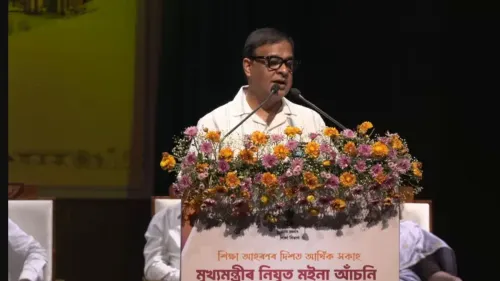
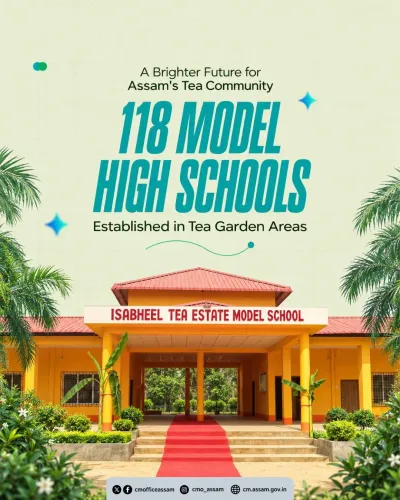
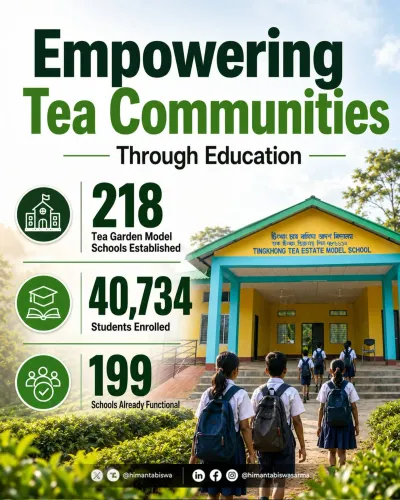
Assam CM Himanta Biswa Sarma has inaugurated a high school inside a remote tea garden estate, describing it as a dream generations of tea community children waited for since Independence — a milestone in the state's push to close historic education gaps in estate belts.
Key Takeaways
Assam CM Himanta Biswa Sarma announced the opening of a high school inside a remote tea garden estate on 31 October 2026 .
Tea garden communities in Assam have lacked dedicated secondary school infrastructure since Independence, forcing long commutes or early dropout.
The school sits in a remote corner of Assam's tea belt, an area historically underserved despite powering one of India's most iconic industries.
The inauguration fits the Sarma government's broader 'New Assam' development narrative, targeting historically marginalised communities with direct infrastructure delivery.
Tea tribe belts spread across districts such as Dibrugarh, Jorhat, Tinsukia, and Sonitpur form a significant electoral and demographic constituency in the state.
Secondary school access is the critical threshold determining whether tea estate children enter the formal workforce or remain in low-wage estate labour cycles.
Nestled among the rolling green of Assam's tea estates — communities that have powered one of India's most iconic industries for over a century and a half — children have for generations made the long journey out just to reach a secondary school. Assam Chief Minister Himanta Biswa Sarma announced on Saturday, 31 October 2026, that a new high school has been established inside a remote tea garden, calling it the fulfilment of a dream deferred since Independence.
A century of waiting in the tea belt
Assam's tea garden communities are among the state's most historically underserved populations. Brought to the northeast as migrant labour during the colonial era, generations of tea workers and their descendants have lived in estate clusters that sit far from urban amenities — and far from functioning secondary schools. Post-Independence governments periodically announced infrastructure drives for these communities, but the gap between declaration and delivery remained stubbornly wide. Access to high school, the critical bridge to board examinations and formal employment, was simply absent for many estates.
That structural absence is what Sarma is now directly addressing. 'In a remote corner of Assam, amid endless green tea gardens, stands a dream generations waited for since Independence: a high school of their own for the children of the tea garden community,' the Chief Minister wrote, framing the inauguration not as a routine administrative act but as the closing of a decades-long debt.
The 'New Assam' frame and what it signals
Himanta Biswa Sarma, who has led Assam since 2021, has built a signature development narrative around bringing state infrastructure to communities long overlooked by the mainstream — tea tribe belts, border districts, riverine villages. The inauguration of a dedicated high school inside a tea estate fits squarely into that messaging arc: concrete delivery in a postcard-perfect, symbolically charged setting.
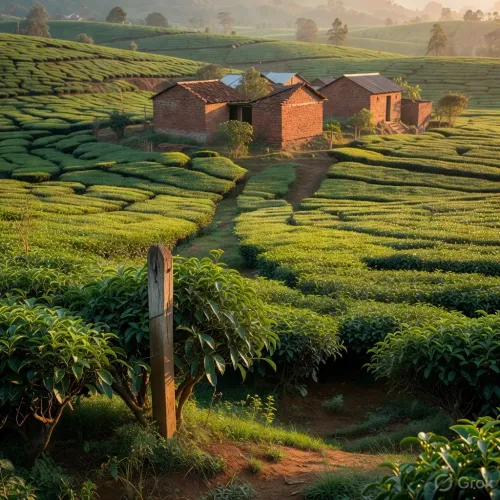
The tea garden community, spread across districts like Dibrugarh, Jorhat, Tinsukia, and Sonitpur, forms a significant electoral bloc in Assam. Dedicated school infrastructure in these areas addresses both a genuine welfare gap and a long-standing political demand. The post's accompanying video, shot among the tea rows, gives the announcement its visual punch — green canopy, red soil, and a building that is, by the Chief Minister's account, the first of its kind for that community in that corner of the state.
What school access means for tea garden children
Secondary education is the threshold that determines whether a child from a tea estate enters the formal workforce or remains tethered to low-wage estate labour. Without a local high school, families face the cost and logistics of boarding or daily commutes — often prohibitive. Economists and educationists tracking northeast India have long flagged dropout rates at the Class 8-10 transition in estate areas as one of the state's sharpest human-development bottlenecks. A school placed inside the garden eliminates that barrier at its root. The next test is staffing, curriculum quality, and retention — the metrics that will determine whether the building becomes a genuine ladder or simply a landmark.
Point of View
Which has consistently framed development in northeast India around communities skipped by the post-Independence state, this fits a deliberate pattern: visible, symbolic, and located precisely where electoral and developmental needs converge. The harder question the post leaves open is whether this is a one-off headline school or the first of a replicable model — the answer to that will define whether 'New Assam' is a slogan or a structural shift. Watch for the state education budget's line items on tea-belt school staffing in the next assembly session.
NationPress
31 Oct 2026
Frequently Asked Questions
Why did tea garden children in Assam not have a high school before?
Tea garden communities live in remote estate clusters, often far from towns. Post-Independence governments faced repeated demands for dedicated schools but infrastructure investment in estate belts remained patchy, leaving secondary education inaccessible without costly commutes or boarding.
Which tea garden districts in Assam are affected by this education gap?
Assam's tea belt spans several districts including Dibrugarh, Jorhat, Tinsukia, and Sonitpur, all of which have large populations of tea tribe workers and their families who historically lacked local secondary schools.
What is CM Himanta Biswa Sarma's 'New Assam' vision?
'New Assam' is the Sarma government's development messaging framework, focused on delivering infrastructure to historically underserved communities — including tea tribe belts, border districts, and riverine villages — as proof of governance change since 2021.
How does a local high school change outcomes for tea estate children?
With a school inside the estate, children no longer face the cost or logistics of long commutes, reducing dropout rates at the Class 8-10 transition — the point where most tea belt students historically left formal education and returned to low-wage estate work.
Who are the tea garden communities in Assam?
Assam's tea garden communities are descendants of migrant labourers brought to the northeast during the colonial era to work the British-era tea estates. They remain a significant demographic and electoral bloc in the state, concentrated in the upper Assam districts.