CM Himanta Orders Forensic Posts for 32 Mobile Units in Assam
Synopsis
Chief Minister Himanta Biswa Sarma directed creation of scientific posts for 32 Mobile Forensic Teams across Assam's police districts on November 14, ordering campus recruitment of forensic officers under the BNSS, 2023 to build evidence-based investigation capacity.
Key Takeaways
CM Himanta Biswa Sarma chaired a meeting on November 14, 2026 to plan scientific posts for 32 Mobile Forensic Teams in Assam.
Teams will be deployed at the district level for on-site, field-level forensic evidence collection.
The CM directed campus recruitment of qualified scientific officers and assistants to staff the units swiftly.
The drive is anchored to the Bharatiya Nagarik Suraksha Sanhita (BNSS), 2023 , which mandates forensic examination in serious criminal cases.
The move is part of a national shift away from confession-based policing toward evidence-based investigation, with other states undertaking similar capacity-building steps.
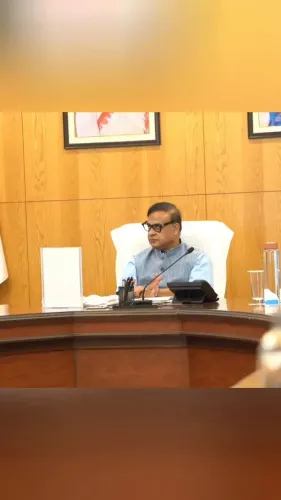
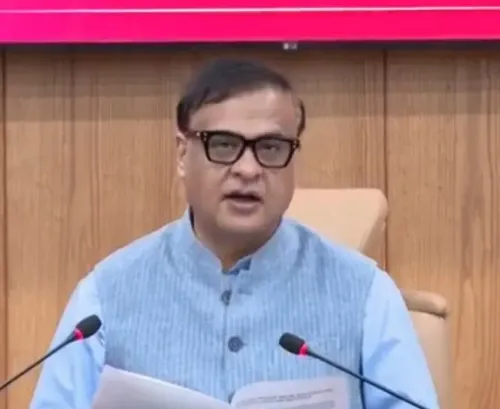
Assam is making a deliberate push to put science at the centre of its criminal justice system. Chief Minister Dr. Himanta Biswa Sarma chaired a high-level meeting on Saturday, November 14, 2026, directing authorities to create dedicated scientific posts for 32 Mobile Forensic Teams that will be deployed across the state's police districts — a move that signals a structural shift in how Assam's police will gather and present evidence in court.
32 Teams, One Mandate: Science Over Confession
The meeting focused squarely on building the human capital to run these mobile units. CM Himanta directed the competent authority to explore campus recruitment of qualified scientific officers and assistants — a faster, more targeted pipeline than conventional government hiring. Each of the 32 Mobile Forensic Teams will be equipped for on-site evidence collection at the district level, meaning forensic expertise arrives at crime scenes rather than waiting for samples to travel to central labs.
The push is explicitly tied to the Bharatiya Nagarik Suraksha Sanhita (BNSS), 2023 — the landmark central legislation that replaced the colonial-era Code of Criminal Procedure and mandates greater reliance on forensic evidence in serious criminal cases. By anchoring the recruitment drive to the BNSS framework, Assam is positioning itself to meet new evidentiary standards that courts will increasingly expect.
BNSS's Forensic Mandate and What It Demands of States
The BNSS, 2023 — enacted alongside two companion laws that overhauled India's criminal justice architecture — made forensic examination in serious offences not a best-practice suggestion but a procedural requirement. That shift placed a direct burden on state governments: build the labs, hire the scientists, deploy the teams, or risk cases collapsing on evidentiary gaps.
Across India, states have been scrambling to operationalise those provisions. Assam's decision to anchor 32 district-level mobile units with dedicated scientific staff is one of the more concrete steps any state has announced. Campus recruitment — typically used for technical roles in IT and engineering — applied to forensic science signals an urgency to fill these posts with trained specialists quickly, bypassing slower traditional channels.
What the Hire-and-Deploy Model Could Mean for Assam's Courts
Assam Police handles investigations across a geographically diverse and strategically sensitive state. Faster, field-level forensic collection reduces the window in which evidence can degrade, be tampered with, or simply be missed. For victims and prosecutors alike, that matters enormously when a case reaches trial.
The CM's direction to explore 'timely justice' through evidence-based investigation is a signal to the broader ecosystem — judges, public prosecutors, defence lawyers — that the state intends to build cases on scientific foundations, not merely on witness testimony or confession. That is the deeper promise of the BNSS, and Assam is now actively funding the infrastructure to keep it.
Notifications on the formal creation of scientific posts and the specifics of any campus recruitment drive will be the real measure of how quickly this intent converts into deployed capacity — and deployed officers.
Point of View
2023 is politically and administratively significant — it converts a central legislative mandate into tangible state infrastructure with a named number of teams and a recruitment mechanism. For CM Himanta, it reinforces a governance narrative built on modernisation and law-and-order reform. The campus recruitment angle is notable: it bypasses sluggish public service commission timelines, suggesting the government is treating forensic capacity as an urgent operational gap rather than a routine hiring exercise. If other states have moved more slowly, Assam's early concrete steps could set a benchmark — and a comparison point — for how seriously states are absorbing the BNSS's evidentiary revolution.
NationPress
14 Nov 2026
Frequently Asked Questions
What are Mobile Forensic Teams in Assam?
Mobile Forensic Teams are proposed district-level units in Assam equipped to conduct on-site scientific evidence collection at crime scenes, reducing dependence on centralised laboratories and speeding up the forensic pipeline for investigators.
What is the BNSS 2023 and why does it matter for police?
The Bharatiya Nagarik Suraksha Sanhita, 2023 replaced the old Code of Criminal Procedure and mandates greater use of forensic evidence in serious criminal cases, requiring state police forces to build forensic infrastructure and recruit trained scientific staff.
Why is Assam using campus recruitment for forensic officers?
CM Himanta Biswa Sarma directed campus recruitment to quickly bring in qualified scientific officers and assistants, bypassing slower conventional government hiring routes to rapidly staff the 32 planned Mobile Forensic Teams.
How many Mobile Forensic Teams is Assam planning to create?
Assam is planning to create 32 Mobile Forensic Teams , with dedicated scientific posts to be filled through campus recruitment of forensic science graduates and trained assistants.
Is Assam the only state building forensic capacity under the BNSS?
No. Following the 2023 criminal law overhaul, multiple Indian states have been directed to expand forensic infrastructure. Assam's move aligns with a broader national pattern, though its specific plan for 32 district-level mobile units with campus recruitment is among the more concrete steps announced.