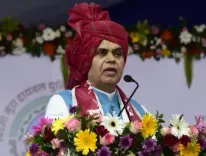
CM Himanta pays tribute at Swahid Smarak Kshetra, vows peaceful Assam

Synopsis
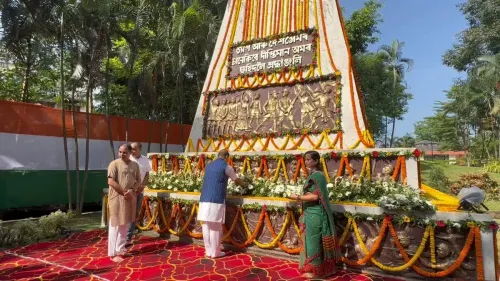
Assam Chief Minister Himanta Biswa Sarma paid tributes at the Swahid Smarak Kshetra on 17 June 2026, honouring the Bir Swahids and reaffirming his government's commitment to peace and progress guided by Prime Minister Narendra Modi's vision for the Northeast.
Key Takeaways
CM Himanta Biswa Sarma visited the Swahid Smarak Kshetra on 17 June 2026 to pay tributes to Assam's martyrs.
The Bir Swahids are primarily martyrs of the Assam Agitation (1979–85) , a mass movement against illegal immigration.
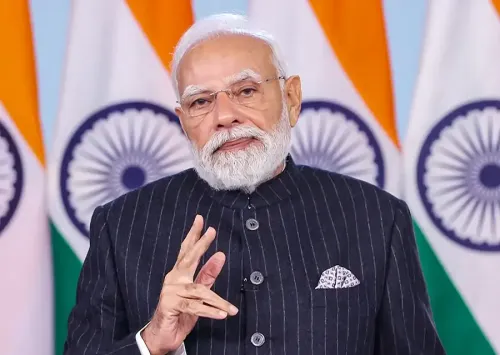
Sarma linked the tribute to PM Narendra Modi 's vision for a peaceful and prosperous Northeast India.
The Assam Accord of 1985 forms the foundational policy backdrop for ongoing peace and development efforts in the state.
BJP-led Assam governments since 2016 have combined martyr commemorations with peace accords and infrastructure development.
As NEDA convenor, Sarma's statements on regional stability carry implications for all BJP-aligned Northeast states.
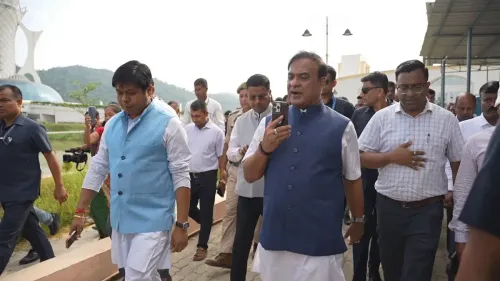
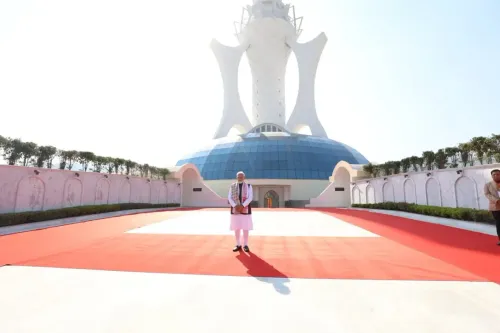
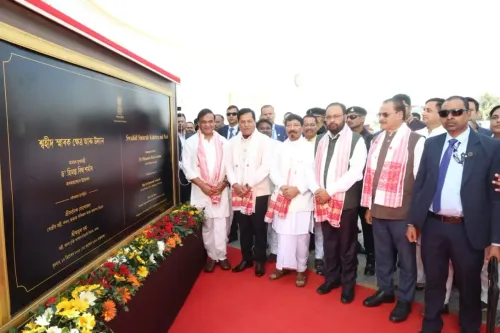
Assam Chief Minister Himanta Biswa Sarma paid tributes to the state's martyrs at the Swahid Smarak Kshetra on Wednesday, 17 June 2026, reaffirming his government's commitment to building a peaceful and prosperous Assam in line with Prime Minister Narendra Modi's vision for the Northeast.
Context
In his post, CM Sarma invoked the memory of the Bir Swahids — the martyrs whose sacrifices define Assam's modern political consciousness — stating: 'Our Bir Swahids dreamt of a peaceful and prosperous Assam.' The tribute at the Swahid Smarak Kshetra, a memorial complex dedicated to these martyrs, underscores the continued political salience of their legacy in the state's public life.
The Bir Swahids are primarily associated with the Assam Agitation of 1979–85, a mass movement against illegal immigration that resulted in significant loss of life and eventually led to the signing of the Assam Accord in 1985. Annual commemorations at memorials such as the Swahid Smarak Kshetra serve as a bridge between that historical sacrifice and the current government's policy agenda.
Policy Backdrop
Since 2016, successive BJP-led governments in Assam have paired martyr commemorations with active efforts on two fronts: peace negotiations with insurgent groups and accelerated infrastructure development. This dual approach mirrors the broader Northeast policy framework championed by Prime Minister Modi, which combines security measures with economic corridors and connectivity initiatives.
CM Sarma, who has helmed the state since May 2021, has been a central figure in this strategy, overseeing multiple peace accords with armed outfits and pushing for large-scale investment in the region. His reference to being 'guided by Adarniya Shri Narendra Modi Ji's vision' explicitly places the tribute within this wider national policy narrative, linking historical memory to present governance priorities.
Stakeholders and Impact
The primary stakeholders in this narrative are the people of Assam, particularly the families of those who lost their lives during the Assam Agitation and subsequent insurgency-related violence. For them, state-level commemorations carry both emotional and political weight, signalling that their sacrifices remain central to the government's sense of purpose.
More broadly, the BJP's consistent invocation of the Bir Swahids reinforces its claim to being the natural custodian of Assamese identity and aspirations. The framing of peace and progress as a fulfilment of the martyrs' dreams allows the ruling party to connect its contemporary development agenda — roads, connectivity, investment — to a deeply rooted historical sentiment.
What's Next
Observers will watch for concrete follow-through in the form of state budget allocations toward Assam's peace-building and development programmes, as well as any policy announcements linked to the anniversary of the Assam Accord or ongoing accord implementation reviews. Tributes of this nature typically precede or accompany formal government announcements on schemes benefiting communities most affected by the agitation era.
With CM Sarma also serving as convenor of the North-East Democratic Alliance (NEDA), gestures that reinforce regional stability carry significance beyond Assam's borders, signalling to partner states that the BJP-led bloc remains committed to the Northeast's long-term peace architecture.
Point of View
The Chief Minister frames contemporary development not as a party achievement but as a moral obligation to the martyred. This is consistent with a broader BJP strategy in the Northeast of converting historical memory into political legitimacy. The tribute also signals continuity ahead of potential policy announcements, reminding stakeholders that peace-building in Assam remains a live, high-priority agenda.
NationPress
20 Sept 2026
Frequently Asked Questions
Who are the Bir Swahids of Assam?
The Bir Swahids are the martyrs of the Assam Agitation (1979–85), a mass movement demanding the detection and deportation of illegal immigrants, during which hundreds lost their lives. Their memory is preserved at memorials like the Swahid Smarak Kshetra.
What is the Swahid Smarak Kshetra?
The Swahid Smarak Kshetra is a memorial complex in Assam dedicated to the martyrs of the Assam Agitation and related movements. It serves as a site of official state commemorations and public remembrance.
Why did CM Himanta Biswa Sarma visit the Swahid Smarak Kshetra on 17 June 2026?
CM Sarma paid tributes to the Bir Swahids at the Swahid Smarak Kshetra on 17 June 2026, reaffirming his government's commitment to fulfilling the martyrs' dream of a peaceful and prosperous Assam guided by PM Modi's Northeast vision.
What is the Assam Accord and why does it matter?
The Assam Accord, signed in 1985, was an agreement between the central government and leaders of the Assam Agitation to address the issue of illegal immigration. It laid the groundwork for subsequent peace processes and remains a key reference point in Assam's political and policy discourse.
What is NEDA and what is Himanta Biswa Sarma's role in it?
The North-East Democratic Alliance (NEDA) is a BJP-led political coalition of parties from India's northeastern states. Himanta Biswa Sarma serves as its convenor, making him a central figure in coordinating BJP-aligned governance across the region.