CM Himanta Reviews APDCL Functioning, Power Sector Progress
Synopsis
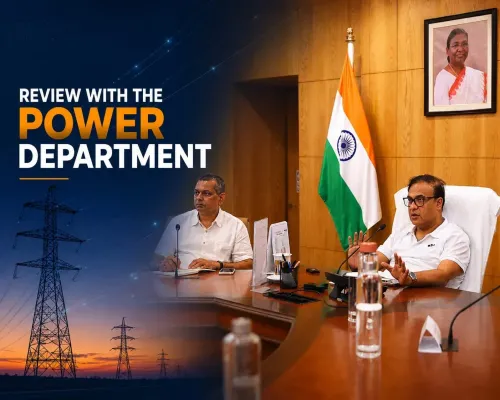
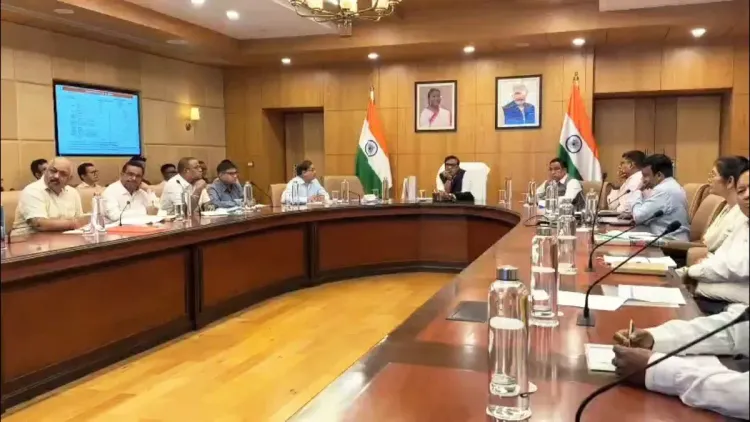
Chief Minister Himanta Biswa Sarma on 16 June 2026 reviewed APDCL's operations and key power projects in Assam, with a focus on cutting transmission and distribution losses to deliver reliable, affordable electricity to all households.
Key Takeaways
Himanta Biswa Sarma reviewed the functioning of APDCL on 16 June 2026 .
The review assessed generation capacity , peak-hour demand , and ongoing modernisation efforts.
Reducing Transmission and Distribution (T&D) losses was identified as a central priority.
Assam has been eligible for the Revamped Distribution Sector Scheme (RDSS) since 2021 , providing central funding for smart metering and feeder separation.
The state joined the UDAY debt-restructuring scheme in 2015 to address DISCOM financial stress.
The review is expected to inform upcoming power sector capital expenditure decisions and regulatory filings.
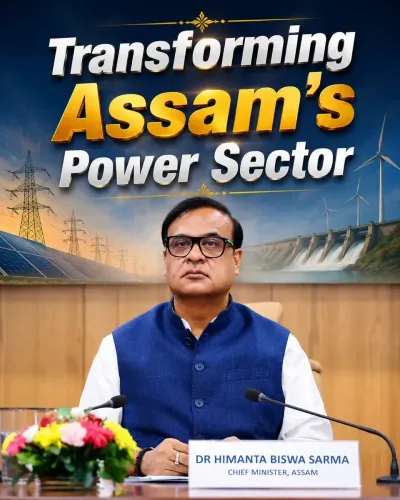
The Chief Minister's Office of Assam announced on Tuesday, 16 June 2026 that Chief Minister Dr. Himanta Biswa Sarma conducted a comprehensive review of the functioning of the Assam Power Distribution Company Limited (APDCL) and assessed the progress of key power sector projects across the state.
Context
The review covered APDCL's generation capacity, peak-hour demand, and ongoing modernisation efforts. A central focus was placed on reducing Transmission and Distribution (T&D) losses to ensure reliable and affordable electricity reaches all households in Assam. The Chief Minister's Office stated that the assessment was aimed at improving service delivery for consumers across the state.
APDCL is the state-owned utility responsible for electricity distribution and billing in Assam. The organisation has historically faced challenges common to power utilities in the northeastern region, including elevated T&D losses and uneven supply reliability across urban and rural areas.
Policy Backdrop
Assam's power sector reform journey has been shaped by two significant central government interventions. In 2015, the state joined the Ujwal DISCOM Assurance Yojana (UDAY) scheme, which targeted restructuring of distribution company debt and reduction of Aggregate Technical and Commercial (AT&C) losses. Subsequently, in 2021, Assam became eligible for the Revamped Distribution Sector Scheme (RDSS), which provides central funding for smart metering infrastructure and feeder separation.
These reforms sit within the broader national 24x7 Power for All framework, which envisions round-the-clock electricity access for every household. Assam has pursued incremental improvements through hydro and gas-based generation projects alongside grid modernisation, aligning state priorities with national targets.
Stakeholders and Impact
The primary beneficiaries of a successful T&D loss reduction drive are Assam's households and APDCL consumers, who stand to gain from more stable supply and potentially lower tariffs over time. Industrial consumers and small businesses dependent on uninterrupted power also have a direct stake in the modernisation agenda.
Reducing transmission and distribution losses directly affects the financial health of APDCL itself — lower losses translate to reduced revenue leakage, improved cost recovery, and a stronger balance sheet that enables further capital investment. For the state government, a financially stable utility reduces the burden of budgetary support and subsidies.
What's Next
Reviews of this nature in Assam's power sector have historically preceded budget allocations for capital expenditure or tariff filings with the state electricity regulatory commission. Observers will watch for announcements tied to the state's upcoming budget cycle and any mid-term utilisation reports submitted to the Ministry of Power under the RDSS framework.
The emphasis on peak-hour demand management also signals a potential focus on demand-side interventions and grid balancing measures as Assam's electricity consumption continues to grow alongside industrial expansion and household electrification drives in the region.
Point of View
Ahead of likely budget planning cycles — suggests the Himanta government is positioning power sector reform as a deliverable ahead of the next electoral and fiscal calendar. The focus on T&D loss reduction is politically astute: it is a metric that directly affects consumer experience and utility finances without requiring new generation capacity. By anchoring the review to household affordability, the Chief Minister's Office frames a technocratic exercise in terms voters can relate to. The alignment with central schemes like RDSS also signals an intent to maximise grant utilisation, which has been uneven across northeastern states.
NationPress
15 Sept 2026
Frequently Asked Questions
What did CM Himanta Biswa Sarma review regarding APDCL?
CM Himanta Biswa Sarma reviewed the overall functioning of APDCL on 16 June 2026, covering generation capacity, peak-hour demand, ongoing modernisation projects, and strategies to reduce Transmission and Distribution losses.
What is APDCL and what does it do?
APDCL stands for Assam Power Distribution Company Limited. It is the state-owned utility responsible for electricity distribution and billing across Assam.
What is the RDSS scheme and how does it benefit Assam?
The Revamped Distribution Sector Scheme (RDSS) is a central government programme that provides funding for smart metering infrastructure and feeder separation. Assam became eligible for the scheme in 2021, enabling upgrades to its distribution network.
Why is reducing T&D losses important for Assam's power sector?
Reducing Transmission and Distribution losses improves revenue recovery for APDCL, lowers the cost of supplying electricity, and enables more reliable and affordable power for households and businesses across the state.
What schemes has Assam used to reform its power sector?
Assam joined the UDAY scheme in 2015 to restructure DISCOM debt and reduce AT&C losses. Since 2021, the state has also been eligible for the RDSS scheme, which funds smart metering and grid modernisation.