CM Himanta meets Meghalaya CM Sangma, vows to resolve border dispute
Synopsis
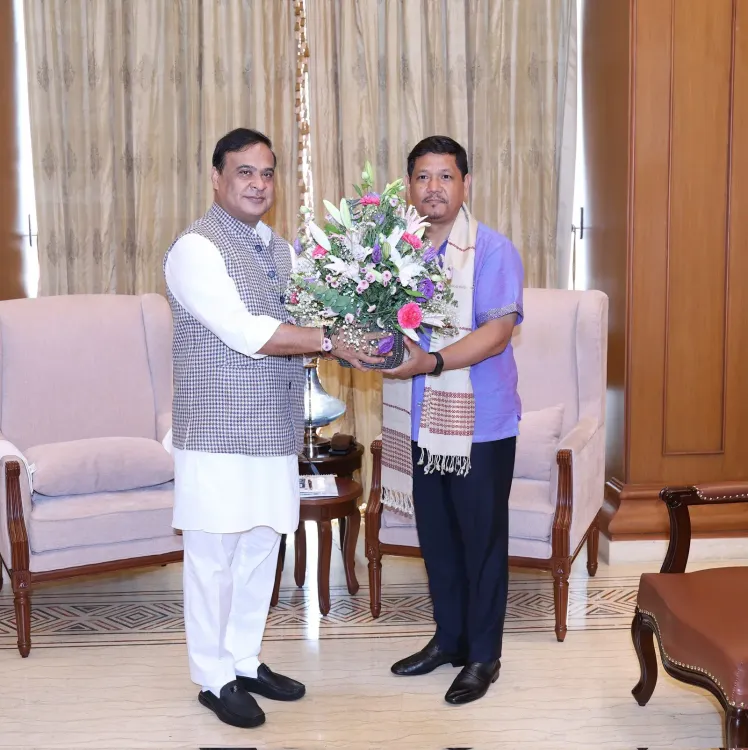
Assam CM Himanta Biswa Sarma hosted Meghalaya CM Conrad Sangma at Lok Sewa Bhawan on 29 May 2026, with both leaders agreeing to expedite the Assam-Meghalaya boundary demarcation process and deepen regional cooperation under the Ek Bharat, Shreshtha Bharat framework.
Key Takeaways
Assam CM Himanta Biswa Sarma hosted Meghalaya CM Conrad Sangma at Lok Sewa Bhawan on 29 May 2026 .
Both leaders agreed to expedite the boundary demarcation process and work toward a lasting resolution of inter-state border disputes.
The Assam-Meghalaya boundary dispute dates to 1972 when Meghalaya was carved out of Assam, and spans 12 sectors .
The two states are exploring cooperation under the Ek Bharat, Shreshtha Bharat programme launched in 2015 .
Both CMs cited the Ashtalakshmi framework as the basis for collective economic growth across the eight northeastern states.
Follow-up work by Assam-Meghalaya boundary committees , including joint surveys, is expected to be the next step.
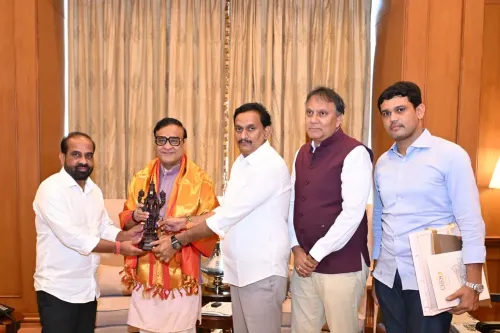
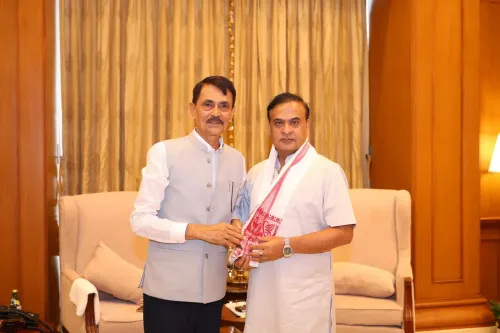
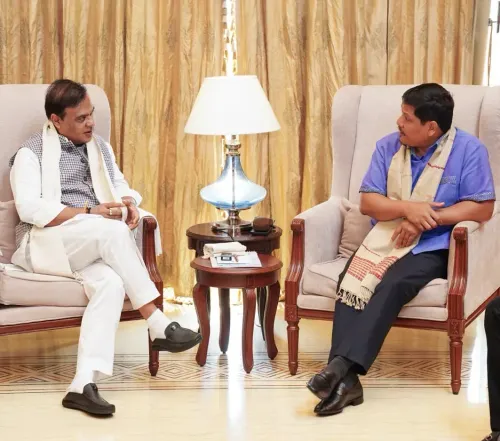
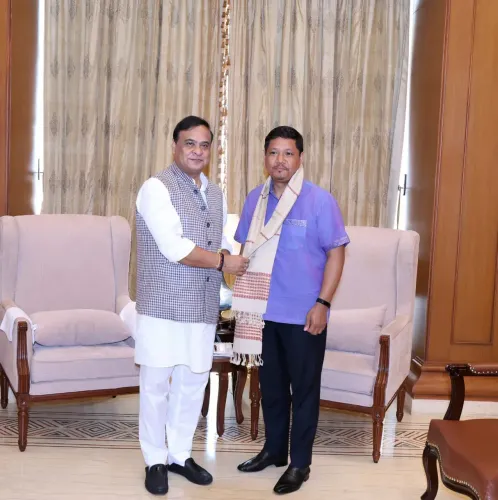
Assam Chief Minister Himanta Biswa Sarma on Friday, 29 May 2026 hosted Meghalaya Chief Minister Conrad Sangma at Lok Sewa Bhawan in Guwahati for high-level talks aimed at resolving long-standing inter-state boundary disputes and exploring avenues for regional economic cooperation.
Context
The two chief ministers described the meeting as productive, with CM Sarma stating they had made 'some good progress on long standing legacy issues.' On the boundary demarcation process specifically, both leaders agreed to 'expedite the ongoing process and bring a lasting solution to this matter.' The meeting underscores the continued political will at the state level to address a dispute that has persisted since Meghalaya was carved out of Assam in 1972.
Conrad Sangma leads the National People's Party (NPP) in Meghalaya and has maintained a working relationship with Sarma, who serves as convenor of the North-East Democratic Alliance (NEDA) — a BJP-led coalition of northeastern parties that includes the NPP.
Policy Backdrop
The Assam-Meghalaya boundary dispute spans 12 sectors and has been the subject of bilateral committees and inter-state talks for over five decades. Efforts to resolve the dispute through structured dialogue gained renewed momentum in recent years, with both states submitting joint reports on several sectors to the central government.
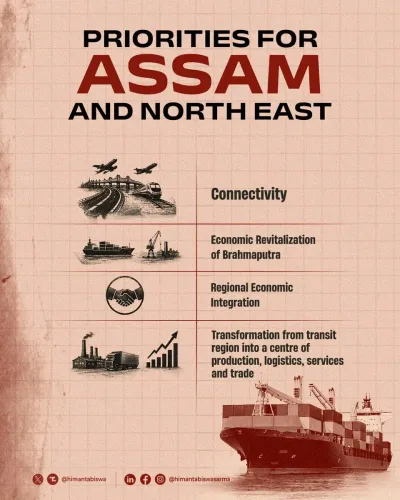
The Ek Bharat, Shreshtha Bharat programme — a central government initiative launched in 2015 to promote cultural and developmental linkages between Indian states — was cited by CM Sarma as the guiding spirit of the collaboration. The two states are also exploring synergies to boost the growth of the Ashtalakshmi region, a term the central government uses to describe the eight northeastern states as a collective economic bloc.
Stakeholders and Impact
Residents of border communities in disputed sectors stand to benefit most from a lasting boundary settlement, as unresolved demarcation has historically led to localised tensions, restricted infrastructure development, and uncertainty over land and resource rights. A durable agreement would also facilitate smoother movement of goods and people between the two states.
The broader northeastern region stands to gain from the economic cooperation angle. Both states share connectivity, trade, and agricultural interests, and coordinated planning under the Ashtalakshmi framework could unlock investment and infrastructure projects that individual states cannot pursue in isolation.
What's Next
The immediate focus will be on the follow-up work of the Assam-Meghalaya boundary committees, including any joint survey or notification processes for the remaining disputed sectors. The agreement to 'expedite' the process signals that both administrations intend to move beyond committee-level deliberations toward concrete, notifiable outcomes.
Observers will watch whether the momentum from this bilateral meeting translates into formal notifications or gazette updates on the demarcated sectors — a step that would mark a tangible advance over the decades-long status quo and set a precedent for similar border resolutions elsewhere in the Northeast.
Point of View
Shreshtha Bharat' and the 'Ashtalakshmi region' is deliberate: it positions what is essentially a contentious territorial negotiation within a cooperative, development-oriented narrative. For Sarma, progress on the Meghalaya border would add to his record of advancing similar talks with Arunachal Pradesh and Nagaland, reinforcing his role as the Northeast's principal political broker through NEDA. The real test will come at the committee and gazette-notification stage, where past efforts have repeatedly stalled.
NationPress
12 Oct 2026
Frequently Asked Questions
What is the Assam-Meghalaya border dispute about?
The Assam-Meghalaya border dispute covers 12 sectors along the inter-state boundary and dates to 1972 when Meghalaya was carved out of Assam. The two states have differing claims over land and administrative jurisdiction in these sectors, leading to decades of localised tensions and unresolved demarcation.
What was decided at the Himanta Biswa Sarma and Conrad Sangma meeting on 29 May 2026?
Both chief ministers agreed to expedite the ongoing boundary demarcation process and bring a lasting solution to the dispute. They also discussed broader cooperation under the Ek Bharat, Shreshtha Bharat framework and the Ashtalakshmi regional development agenda.
What is the Ashtalakshmi region?
Ashtalakshmi is a term used by the central government to refer to the eight northeastern states of India as a collective economic bloc. The concept emphasises coordinated investment, connectivity, and growth across the region.
What is Ek Bharat Shreshtha Bharat?
Ek Bharat, Shreshtha Bharat is a central government initiative launched in 2015 to strengthen national integration by promoting cultural exchanges and developmental partnerships between Indian states and union territories.
What is NEDA and what role does Himanta Biswa Sarma play in it?
The North-East Democratic Alliance (NEDA) is a BJP-led coalition of political parties across the northeastern states. Himanta Biswa Sarma serves as its convenor and has used the platform to coordinate governance and political cooperation across the region, including with Conrad Sangma's National People's Party in Meghalaya.