CM Himanta meets Meghalaya delegation, boundary talks held
Synopsis
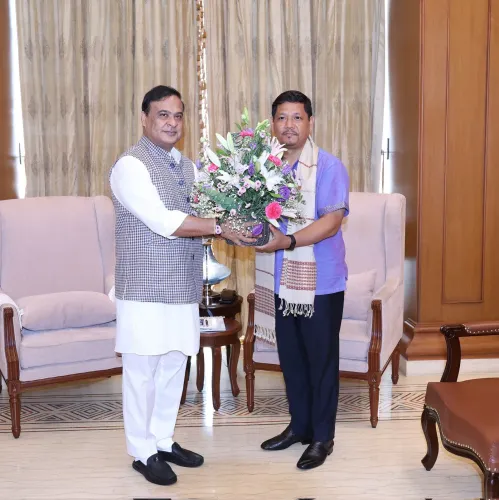
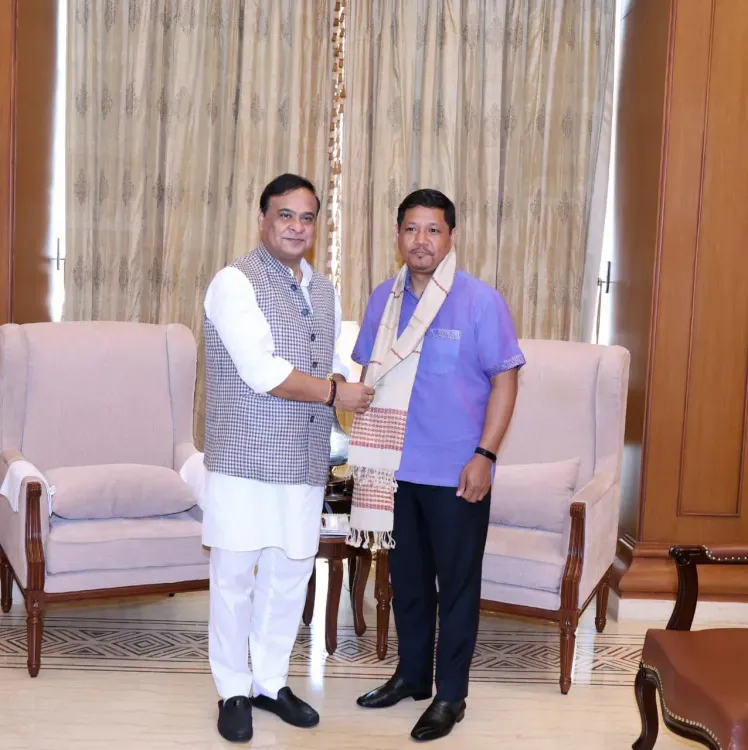
Assam Chief Minister Himanta Biswa Sarma met Meghalaya Chief Minister Conrad Sangma and Deputy Chief Minister Sniawbhalang Dhar in Guwahati on 29 May 2026. Talks focused on the long-running Assam-Meghalaya boundary dispute, with both sides reaffirming commitment to dialogue and mutual respect as negotiations over the remaining disputed sectors continue.
Key Takeaways
Himanta Biswa Sarma hosted a Meghalaya delegation in Guwahati on 29 May 2026 .
The delegation was led by Meghalaya CM Conrad Sangma and Deputy CM Sniawbhalang Dhar .
Discussions centred on the Assam-Meghalaya boundary , which spans approximately 884 km with 12 disputed sectors .
Both states had signed an MoU in January 2022 to resolve six of the twelve sectors through joint surveys.
Both sides reaffirmed commitment to 'mutual respect, friendship and continued dialogue.' Focus now turns to joint technical committee reports on the remaining six disputed sectors .
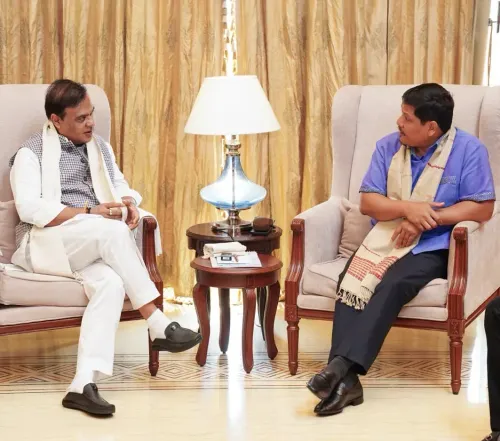
The Chief Minister's Office of Assam announced on Friday, 29 May 2026 that Chief Minister Dr. Himanta Biswa Sarma met a Meghalaya delegation in Guwahati, led by Meghalaya Chief Minister Conrad Sangma and Deputy Chief Minister Sniawbhalang Dhar. The high-level meeting centred on inter-state matters, with the Assam-Meghalaya boundary dispute featuring prominently in the discussions.
Context
The two chief ministers, along with the Meghalaya deputy chief minister, held discussions that the official communique described as focused on 'key inter-state matters, including the Assam-Meghalaya boundary.' Both sides reaffirmed their 'commitment to mutual respect, friendship and continued dialogue,' signalling a continued preference for bilateral engagement over adversarial approaches.
The meeting in Guwahati marks a fresh round of political-level contact between the two neighbouring states, whose shared border has been a subject of structured negotiation for several years.
Policy Backdrop
The Assam-Meghalaya border stretches approximately 884 kilometres and encompasses 12 disputed sectors that have been contested since Meghalaya was carved out of Assam in 1972. The dispute has its roots in colonial-era boundary demarcations that left several areas with overlapping administrative claims.
A landmark step came in January 2022, when both states signed a Memorandum of Understanding to resolve disputes in six of the twelve sectors through joint surveys and mutual concessions — the first such agreement in decades. That MoU was widely seen as a template for resolving the remaining six sectors through the same consensus-driven model.
The broader Northeast India boundary framework has moved away from litigation and central arbitration toward bilateral dialogue, with Assam also engaged in similar processes with Arunachal Pradesh and Nagaland.
Stakeholders and Impact
The most directly affected parties are border villagers in the disputed sectors, whose land rights, access to government services, and day-to-day administration hinge on which state exercises jurisdiction. Prolonged ambiguity has historically led to sporadic tensions, making political-level engagement critical for maintaining ground-level calm.
State administrations on both sides also have an institutional interest in resolution: clear boundaries streamline revenue collection, law enforcement, and infrastructure project planning. The reaffirmation of 'mutual respect and friendship' at the level of chief ministers is significant in setting the tone for technical committees that handle the granular boundary-pillar work.
What's Next
Attention will now shift to the joint technical committees tasked with preparing reports on the remaining six disputed sectors. The May 2026 meeting is expected to inject fresh political momentum into those committee-level deliberations.
Agreed boundary pillars from the 2022 MoU sectors are also pending physical implementation on the ground, and any timelines announced following this meeting will be closely watched by affected communities and governance observers across the Northeast.
Point of View
But its repetition at this level matters: it keeps the political temperature low enough for technical committees to function. For Himanta Biswa Sarma, visible progress on the boundary file serves a dual purpose — demonstrating governance capacity at home and positioning Assam as the anchor state for Northeast regional diplomacy. The unresolved six sectors remain the harder test, and the pace at which this political momentum translates into ground-level boundary pillar implementation will be the real measure of the process.
NationPress
13 Oct 2026
Frequently Asked Questions
What is the Assam-Meghalaya boundary dispute?
The Assam-Meghalaya boundary dispute involves 12 sectors along the approximately 884 km border between the two states, with overlapping administrative claims dating to Meghalaya's creation as a separate state in 1972.
What happened at the Assam-Meghalaya meeting on 29 May 2026?
Assam CM Himanta Biswa Sarma met Meghalaya CM Conrad Sangma and Deputy CM Sniawbhalang Dhar in Guwahati to discuss inter-state matters, particularly the boundary dispute, with both sides reaffirming commitment to dialogue.
What was the 2022 Assam-Meghalaya MoU about?
In January 2022, Assam and Meghalaya signed an MoU to resolve disputes in six of the twelve disputed border sectors through joint surveys and mutual concessions, marking the first such agreement in decades.
How many sectors of the Assam-Meghalaya border remain disputed?
After the 2022 MoU addressed six sectors, six more disputed sectors remain under negotiation between the two states.
Who is Conrad Sangma?
Conrad Sangma is the Chief Minister of Meghalaya, in office since 2018, and leads the National People's Party. He has been a key figure in boundary negotiations with Assam.