CM Conrad Sangma Thanks Himanta Sarma Over Lapangap Resolution

Synopsis
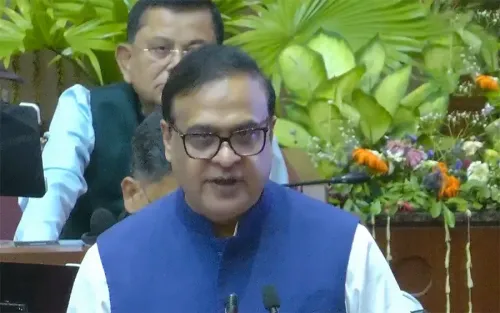
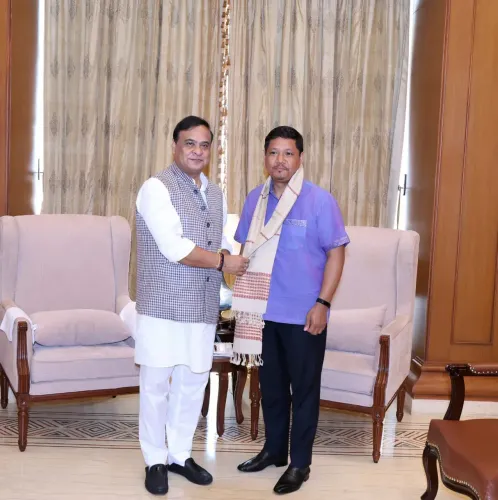
Meghalaya Chief Minister Conrad Sangma has thanked Assam counterpart Himanta Biswa Sarma and tagged Union Home Minister Amit Shah after both states moved to amicably address concerns at Lapangap, a border village in West Khasi Hills, reaffirming a dialogue-first approach to long-pending Assam–Meghalaya boundary issues.
Key Takeaways
Conrad Sangma thanked stakeholders and Assam CM Himanta Biswa Sarma over Lapangap.
Lapangap is a border village in the West Khasi Hills sector adjoining Assam.
Both states reaffirmed dialogue and sensitivity to residents' welfare.
Union Home Minister Amit Shah was tagged, signalling Centre's facilitation role.
Follows the March 2022 MoU resolving six of twelve disputed border sectors.
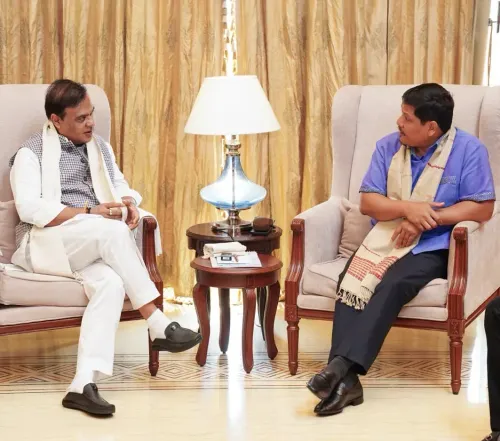
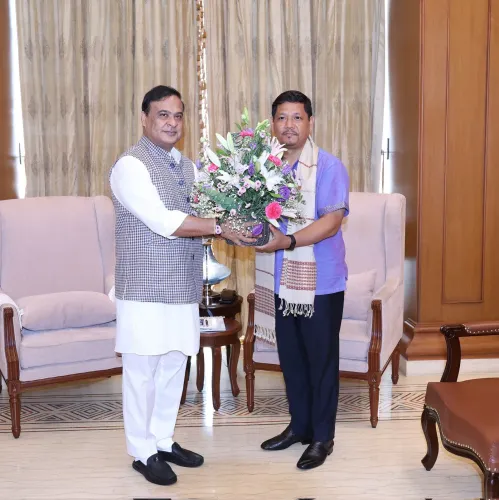
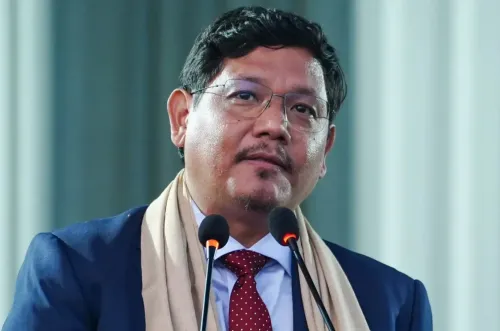
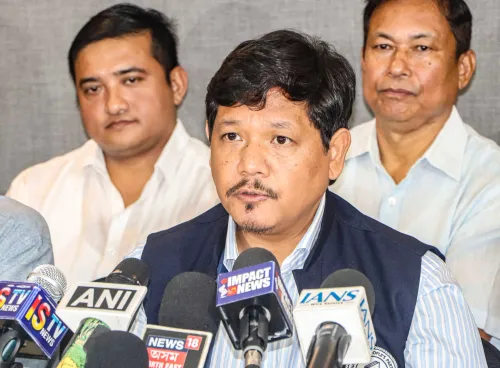
Meghalaya Chief Minister Conrad Sangma on Wednesday, 3 June 2026 publicly thanked stakeholders, officials and community leaders for joining hands to address concerns at Lapangap, a sensitive village along the Meghalaya–Assam border. In a post on X, he singled out Assam Chief Minister Himanta Biswa Sarma for cooperating on what he described as an 'amicable resolution', and tagged Union Home Minister Amit Shah, whose ministry has been facilitating Northeast boundary talks.
Context
'Sincerely thank all stakeholders, officials, and community leaders for coming together to address the concerns surrounding Lapangap,' Sangma wrote, adding 'special thanks to the Hon'ble Chief Minister of Assam, Dr. Himanta Biswa ji for the cooperation shown in working toward an amicable resolution.' He said both governments had 'committed to resolve the matter through dialogue and sensitivity keeping in mind the welfare and concerns of Lapangap residents'.
The Meghalaya Chief Minister, who also serves as national president of the National People's Party, framed the engagement as part of a wider commitment to citizen safety, stating that the 'priority remains the well-being and safety of every citizen' and that the two states 'will continue working together to ensure peace and lasting solutions'.
Policy backdrop
Lapangap lies in the West Khasi Hills belt where Meghalaya's boundary meets Assam, a frontier shaped by colonial-era demarcations that have long generated competing claims. The two states have, since 2021, pursued a phased, dialogue-first approach to settling these disputes rather than litigating or escalating them.
That track yielded a landmark Memorandum of Understanding signed in New Delhi on 29 March 2022, when Sangma and Sarma, in the presence of Home Minister Amit Shah, resolved six of twelve disputed sectors through the work of joint regional committees. Subsequent rounds have sought to tackle the remaining, more contested stretches through joint surveys and community consultations.
Stakeholders and impact
For residents of Lapangap and surrounding border hamlets, the immediate stakes involve land use, administrative jurisdiction, access to public services and policing — issues that have, in the past, triggered flashpoints along the roughly 884-kilometre Assam–Meghalaya boundary. Sangma's framing places those residents at the centre of the negotiation rather than at its margins.
The tag to Amit Shah signals that the Union Home Ministry remains in the loop as a guarantor of the bilateral track. For the National People's Party, which leads the Meghalaya Democratic Alliance, a peaceful settlement also reinforces a governance pitch built around regional cooperation with the BJP-led Assam government and the Centre.
What's next
Attention now turns to whether the two governments will issue a joint official statement detailing the contours of the Lapangap understanding, and whether it feeds into a broader notification on the still-unresolved sectors. Joint inspection visits, revenue mapping and confidence-building measures at the village level are typically the next operational steps under the existing framework.
With the Northeast's boundary architecture being rewritten village by village, Sangma's message frames Lapangap less as a one-off flashpoint and more as a test of whether the dialogue-first template can hold across the rest of the disputed stretch.
Point of View
In place since 2021, is still delivering at the village level even on the harder residual sectors. By naming Himanta Biswa Sarma and tagging Amit Shah, he ties a local resolution to the larger Centre-facilitated Northeast boundary architecture. The careful 'welfare and safety' framing also pre-empts community anxieties that have historically derailed such pacts. The real test will be whether Lapangap becomes a template or an exception as remaining disputed stretches come up for settlement.
NationPress
21 Oct 2026
Frequently Asked Questions
What is the Lapangap issue between Assam and Meghalaya?
Lapangap is a border village in Meghalaya's West Khasi Hills region adjoining Assam, where local concerns over jurisdiction and residents' welfare prompted bilateral talks. Both state governments have said they are working toward an amicable, dialogue-based resolution.
Who is Conrad Sangma?
Conrad Sangma is the Chief Minister of Meghalaya and the national president of the National People's Party, which leads the Meghalaya Democratic Alliance government.
What did Conrad Sangma say about Himanta Biswa Sarma?
Sangma thanked Assam Chief Minister Himanta Biswa Sarma for the cooperation shown in working toward an amicable resolution of the Lapangap matter, describing it as a dialogue conducted with sensitivity to residents.
How many Assam–Meghalaya border disputes have been resolved?
Under a Memorandum of Understanding signed on 29 March 2022, Assam and Meghalaya resolved six of twelve disputed sectors. The remaining sectors are being addressed through joint regional committees.
Why was Amit Shah tagged in the post?
Amit Shah, as Union Home Minister, oversees the Centre's facilitation of inter-state boundary settlements in the Northeast. Tagging him signals that the Home Ministry remains a key stakeholder in the ongoing Assam–Meghalaya process.