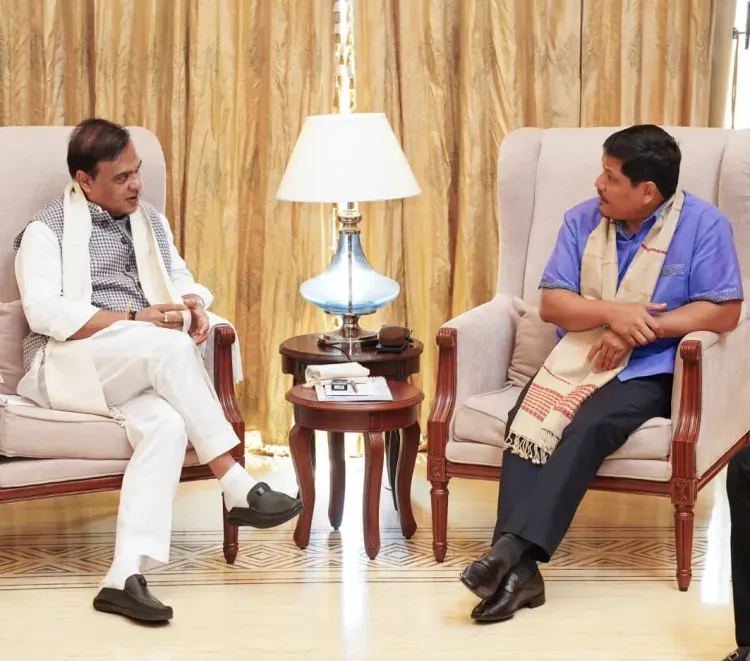
CM Conrad Sangma meets Assam CM Sarma over Lapangap border tensions
Synopsis
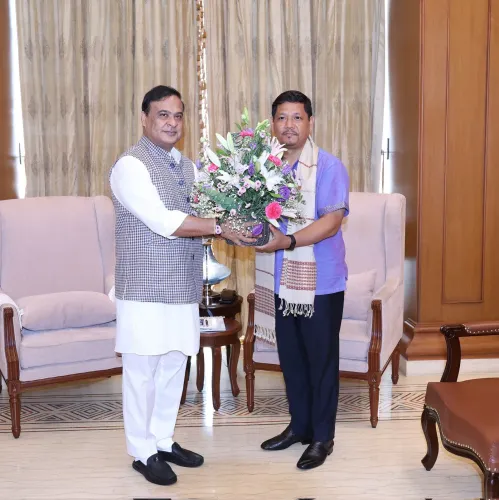
Meghalaya CM Conrad Sangma met Assam CM Himanta Biswa Sarma on May 29, 2026, to discuss tensions at the border village of Lapangap. Both leaders held constructive talks and pledged joint de-escalation measures, urging residents on both sides to maintain peace while a permanent boundary solution is pursued.
Key Takeaways
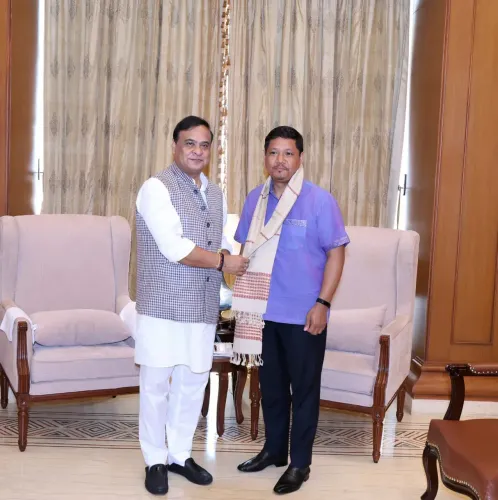
Conrad Sangma and Himanta Biswa Sarma met on May 29, 2026 to address tensions at Lapangap , a village on the Meghalaya-Assam border.
Both chief ministers described the discussion as 'constructive' and committed to jointly de-escalating tensions in border areas.
Sangma urged residents on both sides to maintain peace while a permanent solution to the border issue is worked out.
The Assam-Meghalaya border dispute spans 12 sectors ; a 2022 framework agreement addressed six of them through joint demarcation.
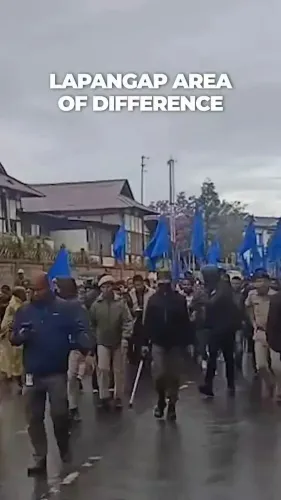
Lapangap lies along the boundary between Meghalaya's West Khasi Hills and Assam's Kamrup district , a historically sensitive stretch.
No specific details of joint measures have been publicly announced; further official-level talks are expected.
Meghalaya Chief Minister Conrad Sangma met with Assam Chief Minister Dr. Himanta Biswa Sarma on Friday, May 29, 2026, to discuss tensions involving residents of the border village of Lapangap and neighbouring communities along the inter-state boundary. Sangma said the two leaders held a 'constructive discussion' on measures to ease tensions and maintain peace and law and order in the area.
Context
The meeting centred on concerns faced by residents of Lapangap, a village situated along the boundary between Meghalaya's West Khasi Hills and Assam's Kamrup district. Sangma urged residents on both sides of the border to 'maintain peace and work constructively' as authorities seek a permanent resolution to the boundary issue. He also expressed gratitude to Himanta ji for his 'assurance to jointly address our concerns and work together towards de-escalating tensions in the future.'
Policy Backdrop
The Assam-Meghalaya border dispute is one of the most long-standing inter-state boundary conflicts in the Northeast, rooted in colonial-era demarcations and the creation of Meghalaya as a separate state in 1972. In March 2022, the two states signed a landmark framework agreement to resolve six of twelve disputed sectors through joint demarcation and survey teams — a significant step that was widely regarded as a model for bilateral dispute resolution in the region. Despite that progress, several pockets along the boundary, including areas around Lapangap, have remained sensitive to periodic flare-ups between communities.
Successive governments in both states have favoured CM-level bilateral engagement and joint peace committees over central adjudication, reflecting a broader pattern of managing these disputes through direct dialogue rather than litigation or federal intervention.
Stakeholders and Impact
The communities most directly affected are the residents of border villages on both the Meghalaya and Assam sides, whose daily lives — access to farmland, markets, and civic services — are frequently disrupted when inter-village tensions escalate. Conrad Sangma, who also serves as national president of the National People's Party (NPP), has a political stake in demonstrating responsive governance to constituents in the hill districts bordering Assam. Himanta Biswa Sarma of the BJP faces similar pressure to protect the interests of Assamese villagers while sustaining the cooperative relationship built through the 2022 framework agreement.
The assurance of joint action from both chief ministers signals that neither state intends to allow the Lapangap situation to deteriorate into a broader confrontation, which has historically drawn national attention and strained Centre-state relations in the Northeast.
What's Next
Both chief ministers have indicated a commitment to joint measures for de-escalation, but the specifics of those measures — whether through a formal peace committee, additional security deployment, or accelerated demarcation in the Lapangap sector — are yet to be announced publicly. The next round of official-level talks between Assam and Meghalaya will be closely watched for any announcement on confidence-building measures or a timeline for resolving the remaining disputed sectors beyond the six addressed in the 2022 pact. A durable solution for communities in the border areas will likely require both administrative follow-through and sustained political will from both state governments.
Point of View
This meeting also underscores that even a negotiated pact leaves residual flashpoints that require continuous political tending. The durability of the peace process will ultimately depend on whether the goodwill expressed at the top translates into concrete administrative action — demarcation, community outreach, and security coordination — at the ground level.
NationPress
12 Oct 2026
Frequently Asked Questions
Why did Conrad Sangma meet Himanta Biswa Sarma in May 2026?
Meghalaya CM Conrad Sangma met Assam CM Himanta Biswa Sarma to discuss tensions involving residents of the border village of Lapangap and to seek joint measures for de-escalation and maintaining peace along the inter-state boundary.
Where is Lapangap village located?
Lapangap is a border village situated along the boundary between Meghalaya's West Khasi Hills district and Assam's Kamrup district, a historically sensitive stretch of the Assam-Meghalaya inter-state border.
What is the Assam-Meghalaya border dispute?
The Assam-Meghalaya border dispute involves 12 sectors of contested inter-state boundary rooted in colonial-era demarcations and the creation of Meghalaya as a separate state in 1972. In March 2022, both states signed a framework agreement to resolve six of the twelve disputed sectors through joint demarcation and survey teams.
What did the 2022 Assam-Meghalaya border agreement cover?
The March 2022 framework agreement between Assam and Meghalaya addressed six of the twelve disputed border sectors through joint demarcation and survey teams, and was regarded as a significant step toward resolving the long-standing inter-state boundary conflict.
What are the next steps after the Sangma-Sarma meeting on Lapangap?
Both chief ministers have pledged joint de-escalation measures, but specific steps have not yet been publicly announced. The next round of official-level talks between the two states is expected to outline confidence-building measures and possibly a timeline for resolving remaining disputed sectors.