CM Conrad Sangma Meets Eastern Command Chief Lt Gen Bhuvana Krishnan
Synopsis
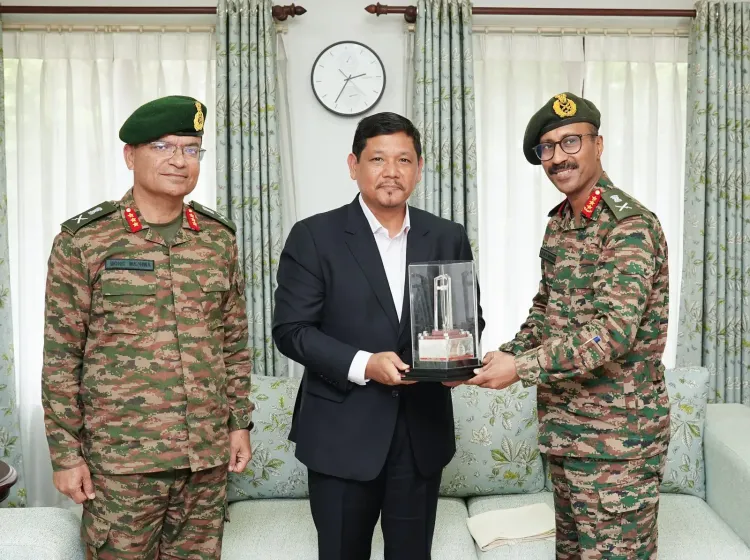
Meghalaya Chief Minister Conrad Sangma received Lieutenant General V. M. Bhuvana Krishnan, GOC-in-C of the Indian Army's Eastern Command, on June 14, 2026. The courtesy call reflects the established civil-military coordination framework between northeastern state governments and the Eastern Command on border security and development.
Key Takeaways
Meghalaya Chief Minister Conrad Sangma met Lieutenant General V.
Bhuvana Krishnan , GOC-in-C of the Indian Army's Eastern Command , on June 14, 2026 .
The Eastern Command , headquartered in Kolkata , oversees India's northeastern frontier including borders with China and Bangladesh .
Such courtesy calls are part of a structured civil-military coordination framework between northeastern chief ministers and the Eastern Command.
The Command has run civic outreach programmes such as Operation Sadbhavana across the Northeast since the 1990s .
Meghalaya borders Bangladesh and is a state where civil-military cooperation is central to border management and internal security.
The meeting aligns with India's Act East Policy , under which the Northeast has seen increased investment in border infrastructure and connectivity.
Meghalaya Chief Minister Conrad Sangma received Lieutenant General V. M. Bhuvana Krishnan, General Officer Commanding-in-Chief of the Indian Army's Eastern Command, in a courtesy call on Sunday, June 14, 2026. Sangma extended his wishes to the General and the personnel of the Eastern Command for continued strength and success in national service.
Context
Posting on X, Chief Minister Sangma wrote: 'Lieutenant General V. M. Bhuvana Krishnan, General Officer Commanding-in-Chief of the Eastern Command of the Indian Army called on me today. Wishing him and the brave personnel of the Eastern Command continued strength and success in service to the nation.' The meeting underscores the active civil-military interface maintained between northeastern state governments and the Army's regional command structure.
Such courtesy calls are a well-established part of the coordination framework between Eastern Command and the chief ministers of states that fall within its area of responsibility. Meghalaya, which shares sensitive borders with Bangladesh and is flanked by Assam, sits squarely within the Command's operational and civic purview.
Policy Backdrop
The Eastern Command, headquartered in Kolkata, is one of the Indian Army's six operational commands and bears responsibility for the entire northeastern frontier, including borders with China and Bangladesh. It has historically anchored counter-insurgency and civic outreach efforts across the region, including Operation Sadbhavana, a sustained humanitarian and goodwill initiative running since the 1990s.
Under India's Act East Policy, the Northeast has seen accelerated investment in border infrastructure and connectivity. The Eastern Command plays an integral role in the security architecture that underpins these development initiatives, coordinating closely with state administrations on both security and civic action fronts.
Stakeholders and Impact
Meghalaya has a history of insurgency and remains a state where civil-military coordination carries tangible significance for border management and internal security. Chief Minister Sangma, who has led the state since 2018 and serves as national president of the National People's Party (NPP), has consistently engaged with central security institutions on issues affecting the Northeast.
For the personnel of the Eastern Command, such high-level acknowledgements from elected state leadership reinforce the civil-military partnership that is central to stable governance in the region. Defence forces, state administrations, and border communities are the primary stakeholders in the outcomes of this ongoing coordination.
What's Next
Meetings of this nature typically precede or accompany the Eastern Command's annual review cycle, during which follow-up coordination on border infrastructure, civic action projects, and security assessments is carried out with state governments. Observers will watch for any formal announcements regarding joint initiatives in Meghalaya stemming from this engagement.
The interaction signals continued alignment between the Sangma government and the Army's regional leadership at a time when northeastern border dynamics remain a priority for New Delhi. Sustained civil-military dialogue of this kind is seen as foundational to the integrated security and development approach the Centre has pursued across the Northeast.
Point of View
Development, and diplomacy intersect — particularly given Meghalaya's border with Bangladesh and proximity to the China frontier — such engagements are not merely ceremonial. Sangma's public acknowledgement of the Army's service reinforces the NPP government's posture of close alignment with central security institutions, which carries political weight in a state with a history of insurgency. The timing, within the Eastern Command's likely annual review cycle, suggests these interactions feed into concrete coordination on border infrastructure and civic action rather than being purely protocol-driven.
NationPress
13 Sept 2026
Frequently Asked Questions
Why did the Eastern Command chief visit Meghalaya CM Conrad Sangma?
Lieutenant General V. M. Bhuvana Krishnan called on Chief Minister Conrad Sangma as part of the routine courtesy visits that Eastern Command chiefs make to northeastern state governments to maintain civil-military coordination on security and development matters.
What is the Indian Army's Eastern Command responsible for?
The Eastern Command, headquartered in Kolkata, is one of the Indian Army's six operational commands. It is responsible for northeastern India, including border security along sensitive frontiers with China and Bangladesh.
Who is Conrad Sangma?
Conrad Sangma has been the Chief Minister of Meghalaya since 2018 and is the national president of the National People's Party (NPP), a regional party with significant influence in northeastern India.
What is Operation Sadbhavana?
Operation Sadbhavana is a long-running Indian Army civic action and humanitarian initiative in the Northeast, conducted by the Eastern Command since the 1990s to build goodwill among border communities and support local development.
How does the Act East Policy relate to the Eastern Command?
India's Act East Policy prioritises connectivity and development in the Northeast, and the Eastern Command provides the security framework that underpins these infrastructure and border management initiatives in coordination with state governments.