CM Himanta secures Classical Assamese Centre at Tezpur University
Synopsis
Assam CM Himanta Biswa Sarma announced the Union government's approval of a Centre of Excellence for Studies in Classical Assamese at Tezpur University, marking a major step in preserving and promoting Assamese linguistic and literary heritage after its Classical Language recognition.
Key Takeaways
The Union government has approved a Centre of Excellence for Studies in Classical Assamese at Tezpur University .
CM Himanta Biswa Sarma announced the development on 2 October 2026 , calling it a proud moment for Assamese people worldwide.
The Centre will focus on four pillars: research, digitisation, preservation, and dissemination of Assamese linguistic and literary heritage.
The announcement follows Assamese being accorded the status of a Classical Language by the Government of India.
Sarma credited Prime Minister Narendra Modi and Union Education Minister Pralhad Joshi for approving the Centre.
Tezpur University is a central university located in Sonitpur district, Assam, and is a key research institution in the northeast.
A language that stretches back over a millennium just got a permanent home for its future. Assam Chief Minister Himanta Biswa Sarma announced on Friday, 2 October 2026 that the Union government has approved a Centre of Excellence for Studies in Classical Assamese at Tezpur University — a dedicated institutional anchor for the research, digitisation, and preservation of one of India's newest Classical Languages.
From Classical status to a dedicated Centre — the journey so far
Assamese joining the roster of Classical Languages was itself a landmark — a recognition of the language's ancient literary lineage and its deep roots in the Brahmaputra valley's civilisational story. But a title, as Sarma's announcement implicitly acknowledges, is only the beginning. The real work of preserving manuscripts, digitising centuries-old texts, and training the next generation of scholars requires infrastructure. That infrastructure now has a formal shape.
The Centre of Excellence at Tezpur University is designed to do exactly that: anchor serious linguistic and literary research, bring rare Assamese texts into digital form, and create pathways for the language's heritage to reach audiences far beyond the Brahmaputra delta — in Assam, across India, and in the global Assamese diaspora.
Why Tezpur University and what it means for the northeast
Tezpur University, a central university in Sonitpur district of Assam, has long been a hub of humanities and science research in the northeast. Placing the Classical Assamese Centre there signals a deliberate institutional bet: that frontier scholarship on a Classical Language belongs inside a fully-resourced central university, not dispersed across underfunded state colleges. It also cements Tezpur's status as an intellectual capital of the region.
Sarma called it 'a proud moment for every Assamese, in Assam, across India and around the world,' and extended 'heartfelt gratitude' to Prime Minister Narendra Modi and Union Education Minister Pralhad Joshi for the decision — underscoring that this was a sustained advocacy effort, not an overnight grant.
Preservation, digitisation, and the race against time
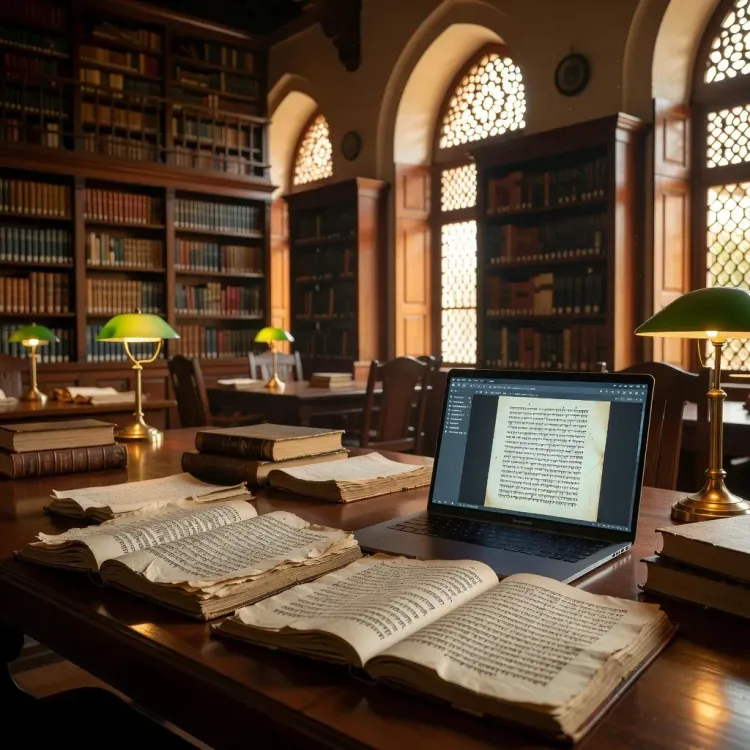
Classical language centres are not merely symbolic. They carry a concrete preservation mandate: tracking down physical manuscripts that are deteriorating, converting them to searchable digital archives, and publishing critical editions that scholars worldwide can access. For Assamese — a language with a rich tradition of Vaishnava literature, historical chronicles called buranjis, and a distinct script — the digitisation task is both urgent and enormous.
The Centre's four stated pillars — research, digitisation, preservation, and dissemination — map directly onto that challenge. Each one is a multi-decade programme in itself.
A signal to India's other Classical Language communities
India now recognises several languages as Classical, and the institutional support each receives varies widely. The approval of a dedicated Centre for Classical Assamese at a central university raises the bar — and will almost certainly sharpen demands from other Classical Language communities for equivalent infrastructure. In that sense, this announcement travels well beyond Guwahati. It sets a precedent.
The glory of Assamese literature, Sarma wrote, must reach 'generations to come.' With a Centre of Excellence now on the map, that aspiration has a postcode.
Point of View
A pattern that resonates strongly with the government's broader civilisational-heritage narrative. For CM Sarma, it is a deliverable that consolidates his standing as a cultural champion in the northeast, reinforcing NEDA's soft-power strategy of tying regional identity to national policy wins. The choice of a central university also signals intent: Classical Language scholarship is being treated as a federal responsibility, not a state afterthought. Other Classical Language communities will watch closely to see whether this model is replicated.
NationPress
2 Oct 2026
Frequently Asked Questions
What is the Centre of Excellence for Studies in Classical Assamese?
It is a dedicated academic centre approved by the Union government at Tezpur University, Assam, focused on research, digitisation, preservation, and dissemination of Classical Assamese language and literature.
Where is the Classical Assamese Centre located?
The Centre is located at Tezpur University, a central university in Sonitpur district of Assam.
When was Assamese declared a Classical Language?
The exact date of Classical Language status for Assamese is prior to this announcement; CM Sarma's post confirms the status had already been accorded before the Centre was approved in October 2026.
Who approved the Classical Assamese Centre at Tezpur University?
The Union government approved the Centre; CM Himanta Biswa Sarma credited Prime Minister Narendra Modi and Union Education Minister Pralhad Joshi for the decision.
What will the Centre of Excellence for Classical Assamese do?
It will strengthen research into Assamese language and literature, digitise rare manuscripts and texts, preserve the linguistic heritage, and disseminate knowledge to future generations in Assam and beyond.