CM Himanta shares PM Modi's call on youth powering AI, space & deep tech
Synopsis
Assam CM Himanta Biswa Sarma amplified PM Modi's statement on India's youth leading advances in AI, space, and deep tech — a signal of alignment between Dispur and Delhi as the IndiaAI Mission rolls out and private space startups multiply.
Key Takeaways
CM Himanta Biswa Sarma shared PM Narendra Modi 's statement on August 3, 2026 crediting India's youth with driving AI, space, and deep tech advances.
The IndiaAI Mission is in active rollout, targeting compute infrastructure, foundational AI models, and large-scale skilling.
Space sector reforms introduced in 2020 via IN-SPACe have enabled private participation in launch and satellite services.
NITI Aayog 's National Strategy for Artificial Intelligence ( #AIForAll ), released in 2018 , provided the foundational policy blueprint.
New deep tech procurement rules and space startup funding in the upcoming Union Budget are the next key policy milestones to watch.
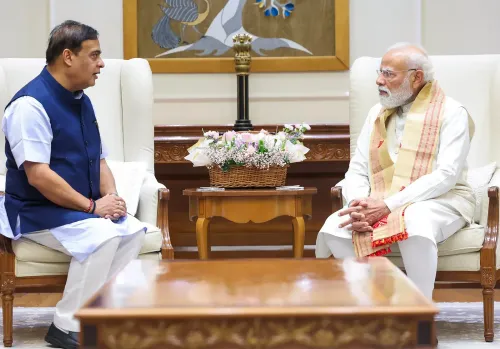
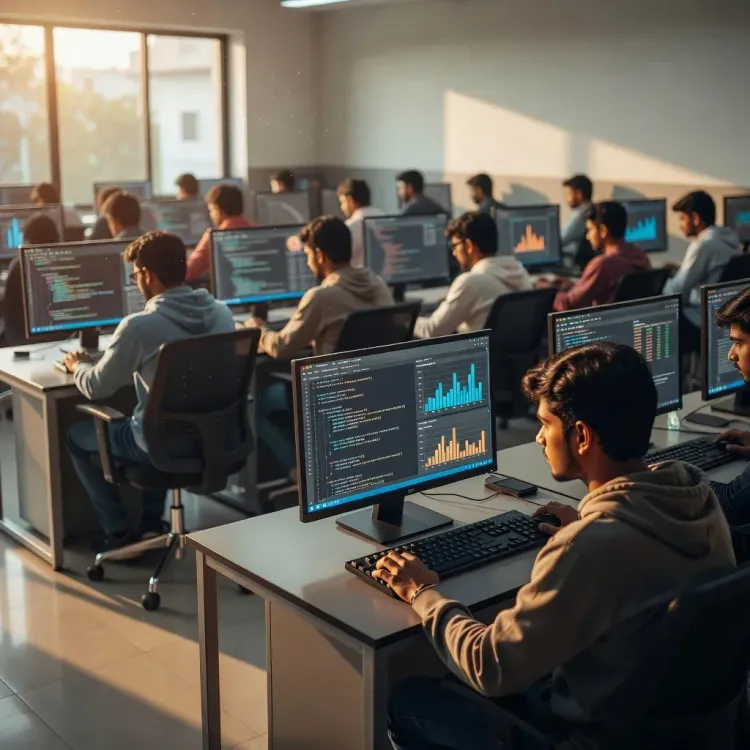
India's next technological leap may already be underway — and it is being built by the young. Assam Chief Minister Himanta Biswa Sarma on Monday, August 3, 2026, amplified Prime Minister Narendra Modi's assertion that India's youth are at the forefront of advances in artificial intelligence, space, and deep technology.
Modi's message: youth as the engine of India's tech future
PM Modi has consistently framed India's demographic dividend as its most potent strategic asset. His latest remarks — 'India's youth driving advances in AI, space and deep tech' — land at a moment when the country's technology ambitions are backed by concrete policy architecture. The IndiaAI Mission, a flagship national programme, is in active rollout, targeting compute infrastructure, indigenous foundational models, and AI skilling at scale.
On the space front, reforms introduced in 2020 opened the sector to private players through the IN-SPACe regulatory body, catalysing a wave of homegrown launch and satellite startups. India's deep tech ecosystem — spanning quantum computing, semiconductors, and advanced materials — has similarly drawn increased public-private investment under the broader Atmanirbhar Bharat framework.
Why Himanta's amplification matters for the North-East
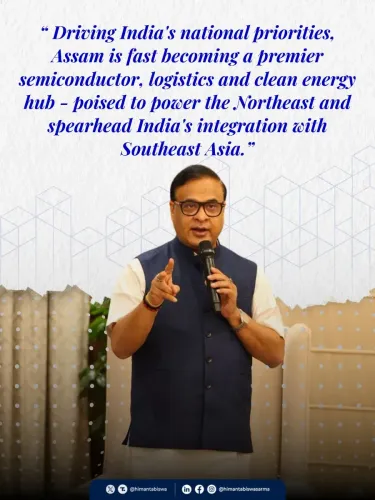
CM Sarma, who also serves as convenor of the North-East Democratic Alliance (NEDA), routinely uses his platform to connect national policy narratives to the region's aspirations. The North-East has been a focal point for digital connectivity drives, with Assam in particular pushing STEM education and startup ecosystems as part of its economic diversification agenda. Sharing the PM's technology message signals alignment between Dispur and Delhi on making the region a participant — not a bystander — in India's tech rise.
What the IndiaAI Mission and space reforms mean for STEM youth
India's National Strategy for Artificial Intelligence, first outlined by NITI Aayog in 2018 under the #AIForAll banner, laid the conceptual groundwork. What has followed is a scaling-up: dedicated GPU compute clusters, AI centres of excellence at universities, and skilling programmes targeting millions of students. For space, the pipeline of private launch vehicles and earth-observation satellites has created a new category of engineering jobs that simply did not exist a decade ago.
The next signal to watch: new deep tech procurement guidelines and space startup funding provisions in the upcoming Union Budget, which could translate political rhetoric into rupees on the ground.
India's youth are not waiting to be handed a technology future — they are already building it. The question now is whether policy keeps pace with their ambition.
Point of View
Sarma is doing double duty: reinforcing the BJP's national narrative on Atmanirbhar Bharat while positioning Assam and the North-East as stakeholders in India's deep tech ambitions. The timing is deliberate — as the IndiaAI Mission moves from announcement to implementation, state-level buy-in from influential CMs like Sarma helps build political momentum for budget allocations. The broader arc here is a governing coalition that has made technology nationalism — indigenous AI, homegrown rockets, domestic semiconductors — a central electoral and policy identity heading into the next cycle.
NationPress
3 Aug 2026
Frequently Asked Questions
What did PM Modi say about India's youth and technology?
PM Modi stated that India's youth are driving advances in artificial intelligence, space, and deep technology — remarks amplified by Assam CM Himanta Biswa Sarma on August 3, 2026.
What is the IndiaAI Mission?
The IndiaAI Mission is a national programme focused on building AI compute infrastructure, developing indigenous foundational models, and skilling India's workforce in artificial intelligence at scale.
What is IN-SPACe and how does it help Indian space startups?
IN-SPACe (Indian National Space Promotion and Authorisation Centre) was established following 2020 space sector reforms to regulate and enable private companies to participate in satellite and launch services alongside ISRO.
Why did Himanta Biswa Sarma share PM Modi's technology statement?
As Assam CM and NEDA convenor, Sarma regularly connects national policy to North-East priorities; sharing Modi's tech message signals the region's alignment with India's AI and space ambitions.
What is India's National Strategy for Artificial Intelligence?
Released by NITI Aayog in 2018 under the #AIForAll initiative, it is India's foundational policy blueprint for AI adoption across sectors including healthcare, agriculture, education, and infrastructure.