CM Himanta Shares Valmiki Ramayana Verse on Social Media

Synopsis
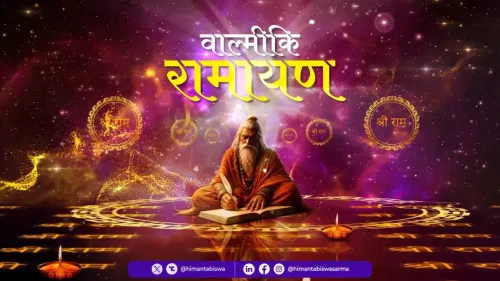
Assam Chief Minister Himanta Biswa Sarma cited Valmiki Ramayana, Balakanda, Canto 31, Verse 11 on X in both Assamese and Hindi on May 21, 2026. The post, accompanied by a video, continues his pattern of scriptural outreach and cultural bridge-building across Northeast India and the Hindi-speaking belt.
Key Takeaways
Himanta Biswa Sarma , Chief Minister of Assam, posted a verse from the Valmiki Ramayana on May 21, 2026 .
The specific citation is Balakanda, Canto 31, Verse 11 of the ancient Sanskrit epic.
The post was written in both Assamese and Hindi scripts, reflecting deliberate bilingual outreach.
A video was attached to the post, adding an audio-visual dimension to the cultural message.
The post aligns with a broader BJP pattern of using Hindu scriptural references on social media to assert civilisational continuity.
Observers will watch for possible Assam state-level announcements on Ramayana or Sanskrit education following the post.
Assam Chief Minister Himanta Biswa Sarma on Thursday, May 21, 2026, shared a verse from the Valmiki Ramayana on his official X account, citing Balakanda, Canto 31, Verse 11 of the ancient Sanskrit epic. The post, written in both Assamese and Hindi, was accompanied by a video and reflects a continuing pattern of cultural outreach by the BJP leader.
Context
The post references Balakanda — the first of seven kandas (books) of the Valmiki Ramayana — which covers the early life and origins of Lord Rama, including cosmological and creation narratives. Sarma cited the verse in both Assamese script and Devanagari, signalling outreach to audiences across the linguistic spectrum of Northeast India as well as the broader Hindi-speaking belt.
The Valmiki Ramayana is among the oldest and most revered Sanskrit texts in Indian civilisation, attributed to the sage Valmiki. Its verses are widely studied in classical Sanskrit scholarship and remain central to Hindu devotional practice across the country.
Policy Backdrop
Since 2014, BJP-led governments at the Centre and in states have actively promoted the study of classical Indian texts, Sanskrit, and epics through heritage education initiatives in public institutions. This has included support for Sanskrit academies, Ramayana study programmes, and cultural festivals anchored in ancient literary traditions.
In Assam, CM Sarma has pursued parallel efforts to strengthen indigenous faith traditions and language preservation, often weaving together local Assamese identity with pan-Indian Hindu cultural narratives. Observers note that the use of both Assamese and Hindi scripts in a single post is itself a deliberate act of cultural bridge-building between the Northeast and the Indian mainland.
Stakeholders and Impact
The post speaks directly to Hindu devotees, classical scholars, and students of Sanskrit literature, a constituency that BJP leaders have consistently engaged with through scriptural outreach on social media. For cultural organisations working on Ramayana studies and Sanskrit education in Assam and the wider Northeast, such high-profile citations by the Chief Minister lend institutional visibility to their work.
BJP politicians across India have routinely posted verses from Hindu scriptures to underscore what they describe as civilisational continuity, and Sarma's post fits squarely within that established practice. The bilingual framing — Assamese and Hindi — also carries significance for the North-East Democratic Alliance (NEDA), which Sarma convenes, as it reinforces cultural solidarity across the region's diverse linguistic communities.
What's Next
Cultural analysts and education policy watchers will look for any follow-through at the state level, including possible announcements around Ramayana or Sanskrit study modules in Assam's school curriculum, state-sponsored cultural festivals, or publications tied to the epic's classical tradition. Such social media posts by sitting chief ministers have in the past preceded formal policy or institutional announcements in the cultural and education space.
For now, the post adds to a growing archive of scriptural engagement by CM Sarma, reinforcing his public positioning at the intersection of regional identity, classical Indian heritage, and BJP's broader civilisational politics.
Point of View
One that reinforces ideological positioning without requiring a formal policy announcement. For Sarma specifically, as NEDA convenor, such posts also serve a regional integration function, framing the Northeast as an organic part of India's Sanskritic civilisational heritage rather than a peripheral zone. The question that follows every such post is whether it precedes a concrete cultural or educational policy move at the state level.
NationPress
9 Oct 2026
Frequently Asked Questions
What verse did Himanta Biswa Sarma post from the Valmiki Ramayana?
CM Himanta Biswa Sarma cited Valmiki Ramayana, Balakanda, Canto 31, Verse 11 in his May 21, 2026 post on X, sharing it in both Assamese and Hindi scripts.
Why did Himanta Biswa Sarma post a Ramayana verse in Assamese and Hindi?
The bilingual post in Assamese and Hindi reflects Sarma's effort to bridge Northeast India's distinct linguistic identity with the broader Hindi-speaking Hindu cultural mainstream, a recurring strategy in his public communication.
What is the Balakanda of the Valmiki Ramayana?
The Balakanda is the first of seven books of the Valmiki Ramayana, covering the origins and early life of Lord Rama, including cosmological narratives and the circumstances of his birth.
Is it common for BJP leaders to post Hindu scripture on social media?
Yes, BJP politicians across India routinely share verses from Hindu epics and scriptures on social media as part of a broader cultural outreach strategy that underscores civilisational continuity and connects with traditionalist voters.
Could this Ramayana post signal a new education policy in Assam?
Analysts note that such social media posts by sitting chief ministers have in the past preceded formal announcements on cultural or education policy; watchers will look for possible Ramayana or Sanskrit study initiatives in Assam schools.