CM Himanta: Sivasagar Power Restoration 80% Complete as Floods Recede
Synopsis
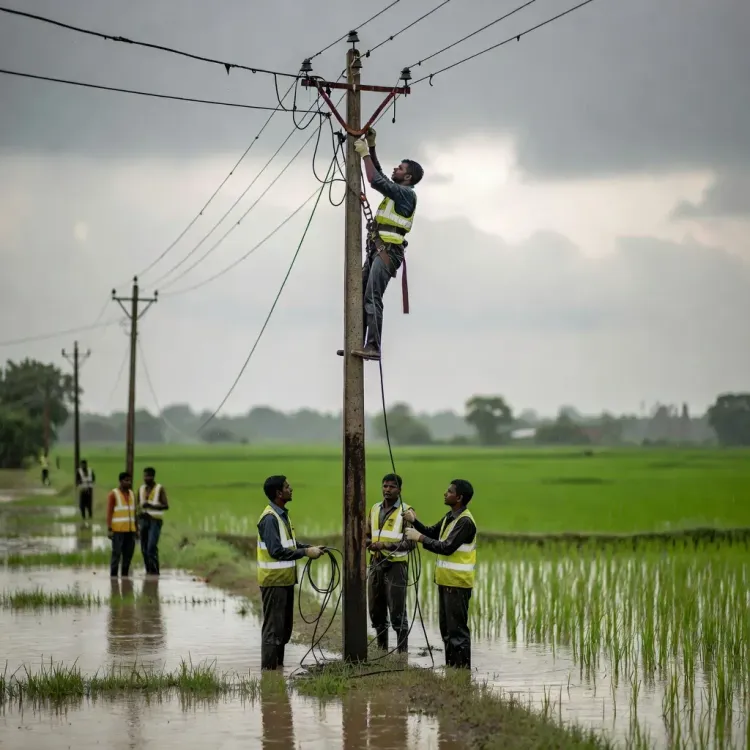
Assam Chief Minister Himanta Biswa Sarma announced that power restoration in flood-hit Sivasagar district is nearly 80% complete, with crews working round the clock as floodwaters recede across the Brahmaputra floodplains.
Key Takeaways
Assam CM Himanta Biswa Sarma posted an update on August 2, 2026 on power restoration in Sivasagar district .
The number of flood-affected electricity consumers in Sivasagar has fallen by nearly 80 percent over the past few days.
Restoration crews are working round the clock to reconnect every remaining household safely.
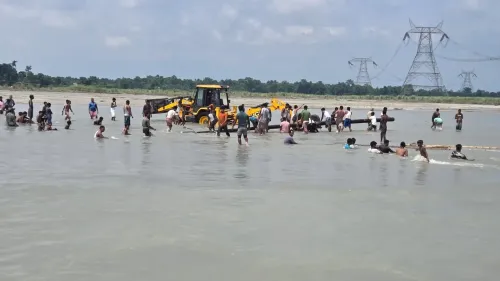
Sivasagar lies in the Brahmaputra floodplains of eastern Assam, one of India's most flood-prone zones.
Annual monsoon flooding in Assam routinely damages power distribution infrastructure across multiple districts.
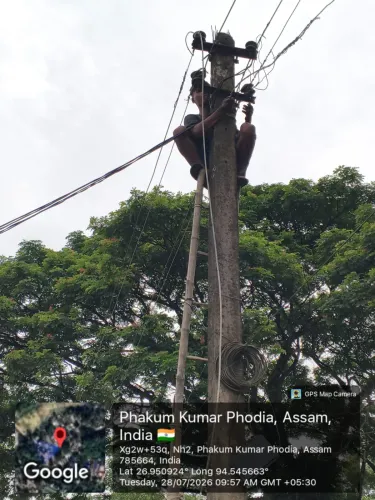
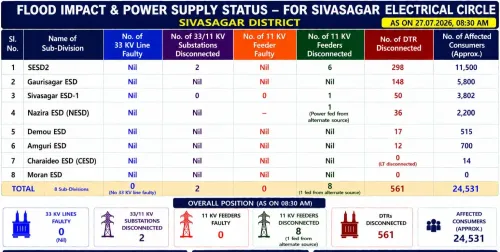
As floodwaters pull back from Sivasagar district in eastern Assam, the state's power restoration machinery has shifted into high gear — and the numbers are showing results. Assam Chief Minister Himanta Biswa Sarma announced on Sunday, August 2 that the number of affected electricity consumers in the district has dropped by nearly 80 percent over the past few days, with round-the-clock crews working to reconnect every remaining household.
Sivasagar's 80% recovery — and the crews behind it
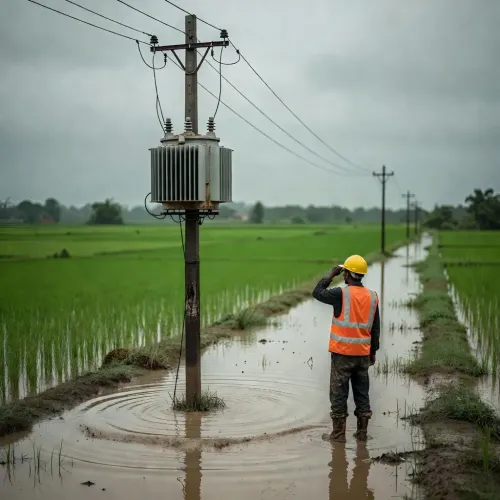
Sivasagar, a district nestled in the Brahmaputra floodplains of eastern Assam, is among the zones most exposed to annual monsoon inundation. When waters rise, power infrastructure — transformers, distribution lines, substations — takes a direct hit, leaving thousands of homes in the dark for days or weeks at a stretch. The current restoration push, running 24 hours a day, signals the state's effort to compress that recovery window as tightly as possible.
Chief Minister Sarma's update confirmed that work is continuing until every remaining consumer is safely reconnected — a signal that the administration is tracking individual household-level reconnection, not just bulk supply restoration.
Assam's recurring flood-power cycle
The Brahmaputra valley's monsoon flooding is not a one-off crisis — it is a seasonal reality that Assam has battled for decades. Each year, rising waters damage distribution networks across multiple districts, and each year, state power utilities launch phased restoration drives once the water recedes. Sivasagar's current situation fits squarely into that pattern.
What has changed in recent years is the visibility of the response. Real-time updates from the Chief Minister's office — tracking percentage reductions in affected consumers — reflect a growing administrative emphasis on accountability and public communication during disaster recovery, not just relief delivery.
With the bulk of Sivasagar's consumers back on the grid, attention will now shift to whether the remaining households — likely in harder-to-reach or more severely damaged pockets — can be reconnected swiftly, and whether the state uses this cycle to push forward on flood-resilient power infrastructure that can withstand the next monsoon.
Point of View
Communicated directly by the Chief Minister, reflects a broader shift in how Indian state governments manage disaster optics — quantified progress updates replacing vague assurances. For Assam, where Brahmaputra flooding is structurally annual, the real policy test is not speed of recovery but whether each flood cycle translates into more resilient distribution infrastructure. Sarma's public tracking of consumer-level reconnection also signals electoral attentiveness to a constituency that has long suffered prolonged post-flood blackouts. The next benchmark will be whether Sivasagar's remaining households — likely the hardest to reach — are reconnected before the next monsoon surge.
NationPress
2 Aug 2026
Frequently Asked Questions
What is the current status of power restoration in Sivasagar after the 2026 Assam floods?
Assam Chief Minister Himanta Biswa Sarma announced on August 2, 2026 that the number of flood-affected electricity consumers in Sivasagar has reduced by nearly 80 percent, with restoration crews working round the clock to reconnect remaining households.
Why does Sivasagar get flooded every year?
Sivasagar district lies in the Brahmaputra floodplains of eastern Assam, making it highly vulnerable to annual monsoon flooding from the Brahmaputra river and its tributaries, which regularly inundate low-lying areas and damage power infrastructure.
Who is overseeing the Assam flood relief and power restoration efforts?
Chief Minister Himanta Biswa Sarma is directly monitoring and communicating updates on flood relief and power restoration efforts across affected Assam districts, including Sivasagar.
How does flooding affect electricity supply in Assam?
Rising floodwaters damage transformers, distribution lines, and substations across Assam districts each monsoon season, cutting off power to thousands of households until waters recede and repair crews can safely restore connections.
What is NEDA and what role does Himanta Biswa Sarma play in it?
The North-East Democratic Alliance (NEDA) is a BJP-led political coalition of parties in India's north-eastern states. Himanta Biswa Sarma, Assam's Chief Minister, serves as its convenor and is one of the most influential political figures in the region.