CM Himanta spotlights Darrang's women-led mustard oil brand
Synopsis
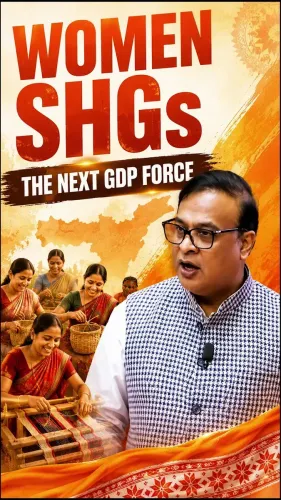
Assam CM Himanta Biswa Sarma has highlighted Darrangi Golden Drops, a mustard oil brand co-owned by 509 women shareholders in Darrang, as a model of rural women's entrepreneurship and agricultural self-reliance in the state.
Key Takeaways
Darrangi Golden Drops is a mustard oil brand in Darrang district, Assam , owned collectively by 509 women shareholders .
The enterprise covers the full value chain — from mustard cultivation to oil processing and brand building — keeping margins within the community.
Assam CM Himanta Biswa Sarma highlighted the initiative on October 23, 2026 , framing it as part of the drive for a self-reliant Assam.
The model aligns with the national Atmanirbhar Bharat Abhiyan (2020) push for local agricultural value addition.
The Assam BJP government has actively promoted women-led self-help groups and farmer producer organisations as rural economic anchors in the North-East.
Darrang's mustard-belt geography and the scalability of this model raise the prospect of similar women-led agri-brands across the Brahmaputra valley.
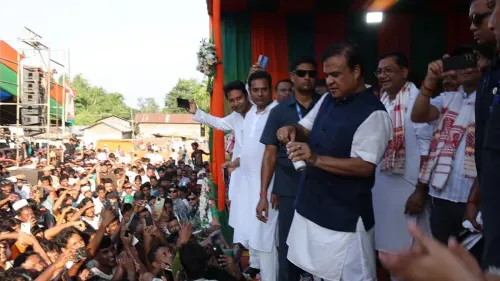
Five hundred and nine women shareholders in Darrang, Assam, didn't just grow mustard — they built a brand. Assam Chief Minister Himanta Biswa Sarma took to X on Friday, October 23, 2026, to spotlight Darrangi Golden Drops, a mustard oil label that has travelled the full distance from field to market shelf, owned entirely by the women who made it happen.
From field to bottle: how Darrangi Golden Drops was built
Darrang district in central Assam has long been mustard country — flat alluvial plains, seasonal cultivation, and generations of farming families. What changed is ownership. The 509 shareholders behind Darrangi Golden Drops didn't sell their harvest to a middleman; they retained the value chain, pressed the oil, named the brand, and put it to market themselves. That compression of steps — cultivation, processing, branding — is precisely what separates a farmer producer organisation from a conventional agricultural cooperative.
CM Sarma's post framed it in terms that echo the Atmanirbhar Bharat playbook: 'building a self-reliant Assam.' The language is deliberate. Since the Atmanirbhar Bharat Abhiyan was launched in 2020, state governments across India have been pushed to demonstrate local value addition in agriculture — and Assam's current administration has made women-led self-help groups and farmer producer organisations a visible part of that story.
Assam's push for women-led agri-enterprises in the North-East
Darrangi Golden Drops is not an isolated case study — it sits inside a broader pattern. Under the BJP government in Assam, women's self-help groups have been actively encouraged to move beyond raw-produce sales into processing and branding. The logic is straightforward: a kilogram of mustard seed earns a fraction of what a litre of branded mustard oil earns. Capturing that margin locally keeps money inside the community.
The model also has a multiplier effect that CM Sarma gestured at directly: 'When women farmers grow, entire communities flourish.' In rural Assam, women's income is more consistently recycled into household nutrition, children's education, and local spending than income that flows to outside aggregators. A brand like Darrangi Golden Drops, if it scales, becomes an economic anchor for an entire cluster of villages in Darrang.
What the Darrangi Golden Drops model signals for Assam's agricultural districts
The question now is replication. Darrang is one of Assam's central districts, but similar mustard-growing belts exist across the Brahmaputra valley. Whether the state follows with structured support — cold-chain access, packaging subsidies, market linkage programmes — will determine if Darrangi Golden Drops remains a showcase or becomes a template.
For the 509 shareholders in Darrang, the answer is already on a bottle. For every other women's farming collective in Assam watching this moment, that bottle is also a question: what's stopping us?
Point of View
Implicitly, state support. The broader arc here is Assam positioning itself within the Atmanirbhar Bharat framework not through large-scale industry alone, but through distributed, women-led micro-enterprises that decentralise economic agency into rural communities. The real test of intent will be whether the state follows spotlight with structural support — market linkages, packaging infrastructure, and credit access — to take the Darrang model from showcase to system.
NationPress
23 Oct 2026
Frequently Asked Questions
What is Darrangi Golden Drops?
Darrangi Golden Drops is a women-led mustard oil brand based in Darrang district, Assam, co-owned by 509 shareholders who handle everything from mustard cultivation to oil processing and branding.
How many shareholders does Darrangi Golden Drops have?
The brand has 509 shareholders , all women farmers from the Darrang region of Assam.
Why did Assam CM Himanta Biswa Sarma highlight this brand?
CM Sarma shared the initiative to showcase women-led rural entrepreneurship and agricultural self-reliance as part of Assam's broader development narrative, aligning with the Atmanirbhar Bharat vision.
Where is Darrang district located in Assam?
Darrang is a central Assam district situated in the Brahmaputra valley, known for mustard cultivation and rural agricultural communities.
What is a farmer producer organisation in India?
A farmer producer organisation (FPO) is a collective of farmers who pool resources to add value to their produce — through processing, branding, or bulk sales — so that the economic gains stay with the growers rather than intermediaries.